Isabella Covert
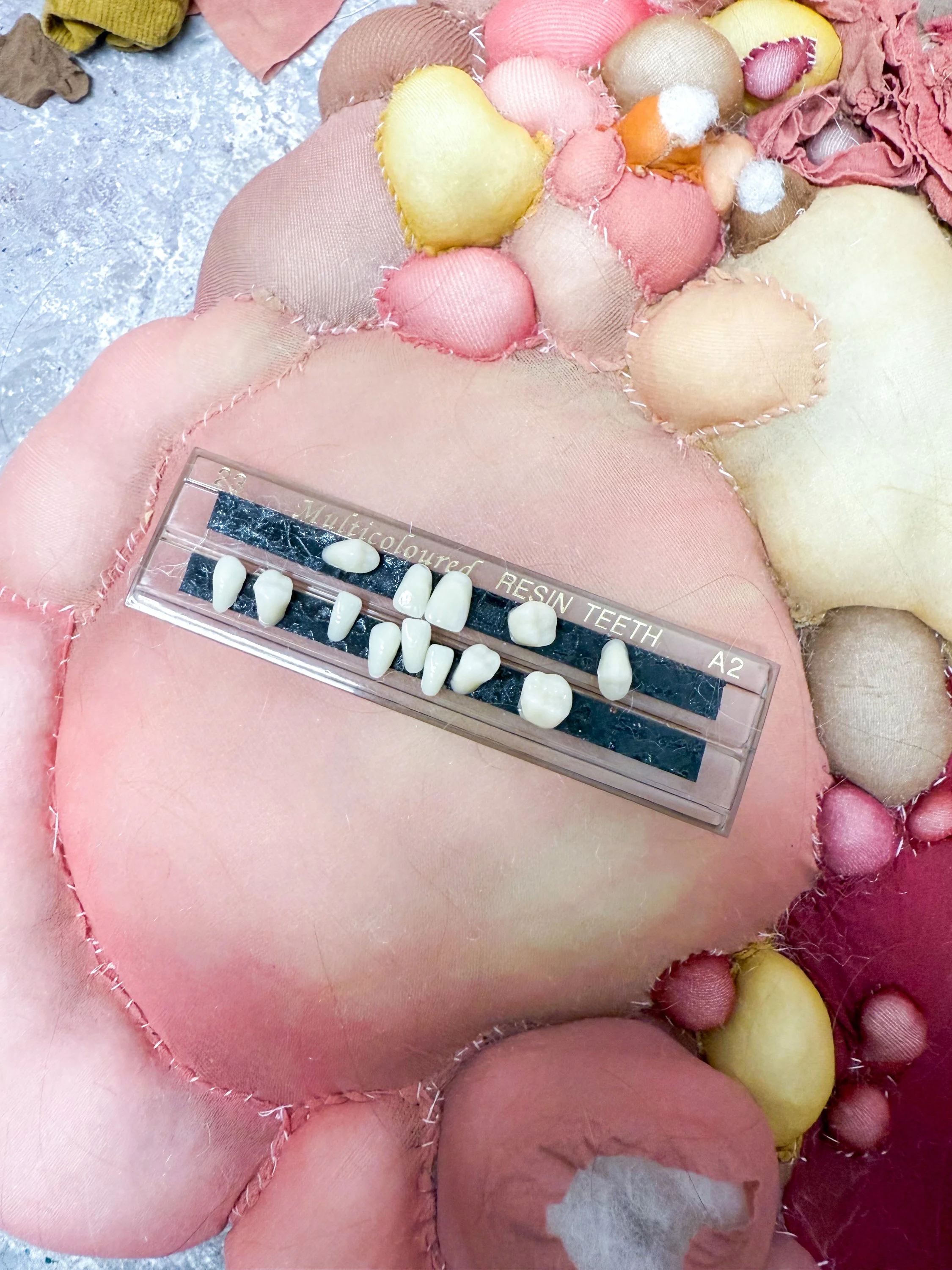
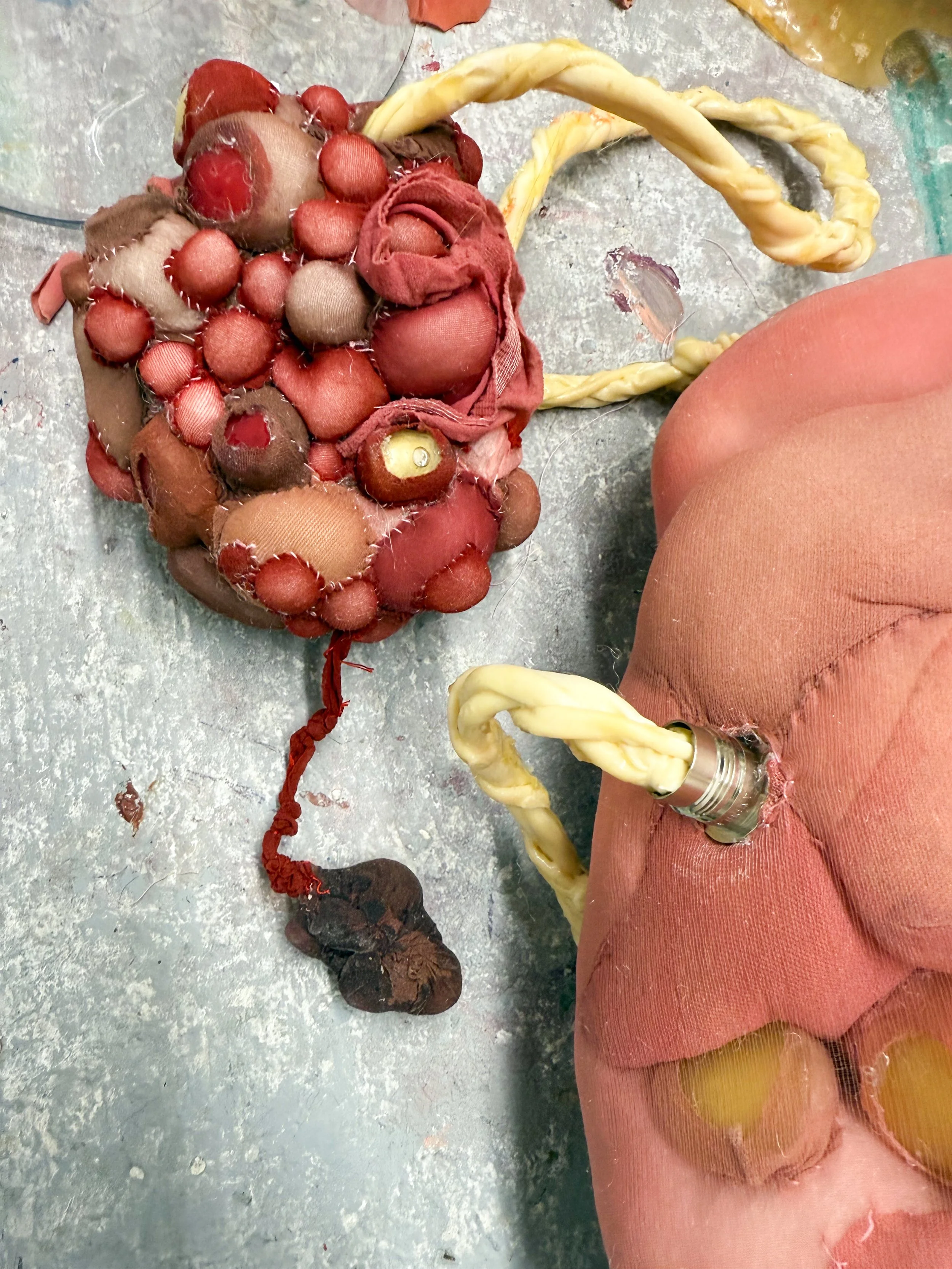
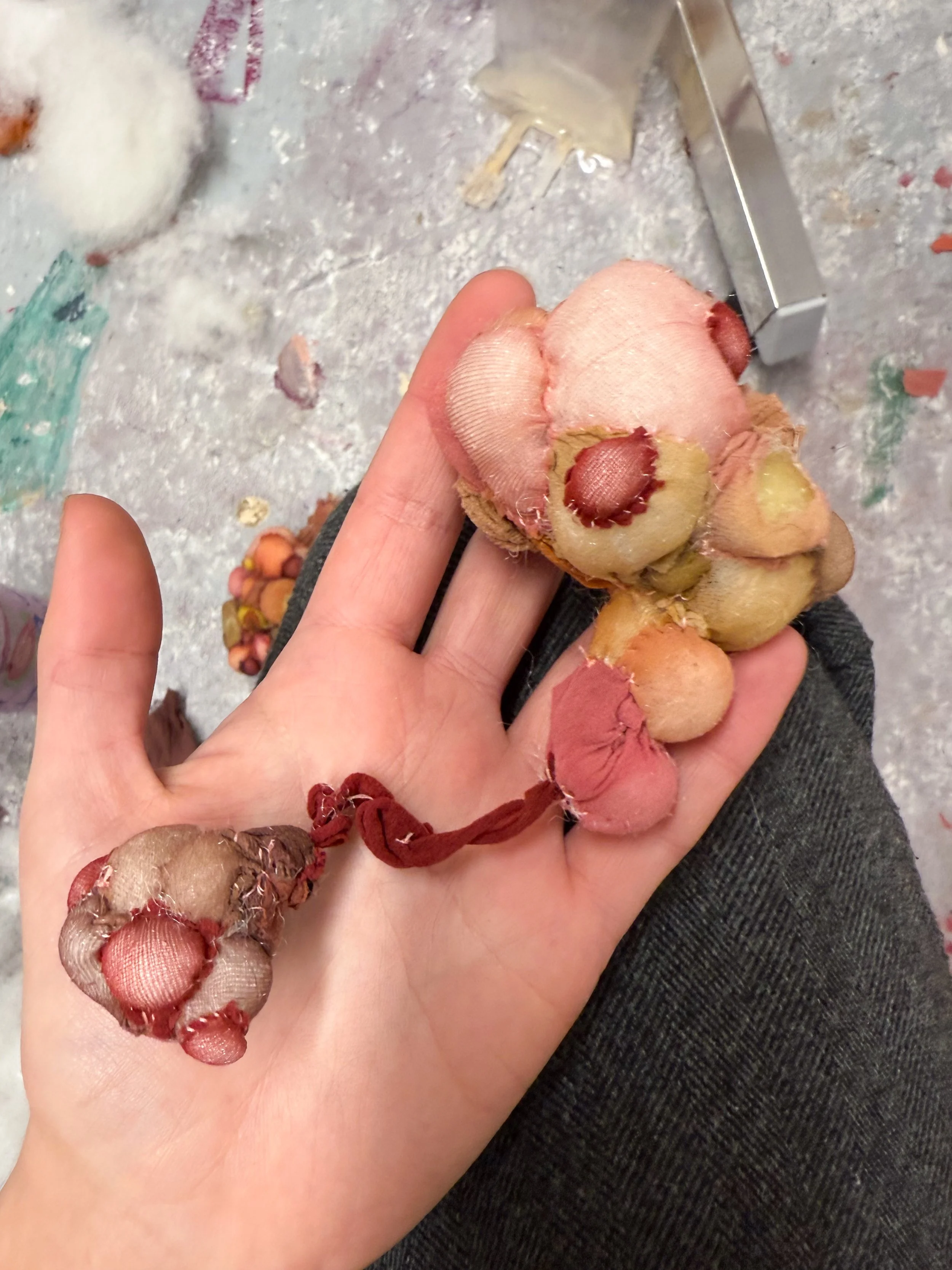
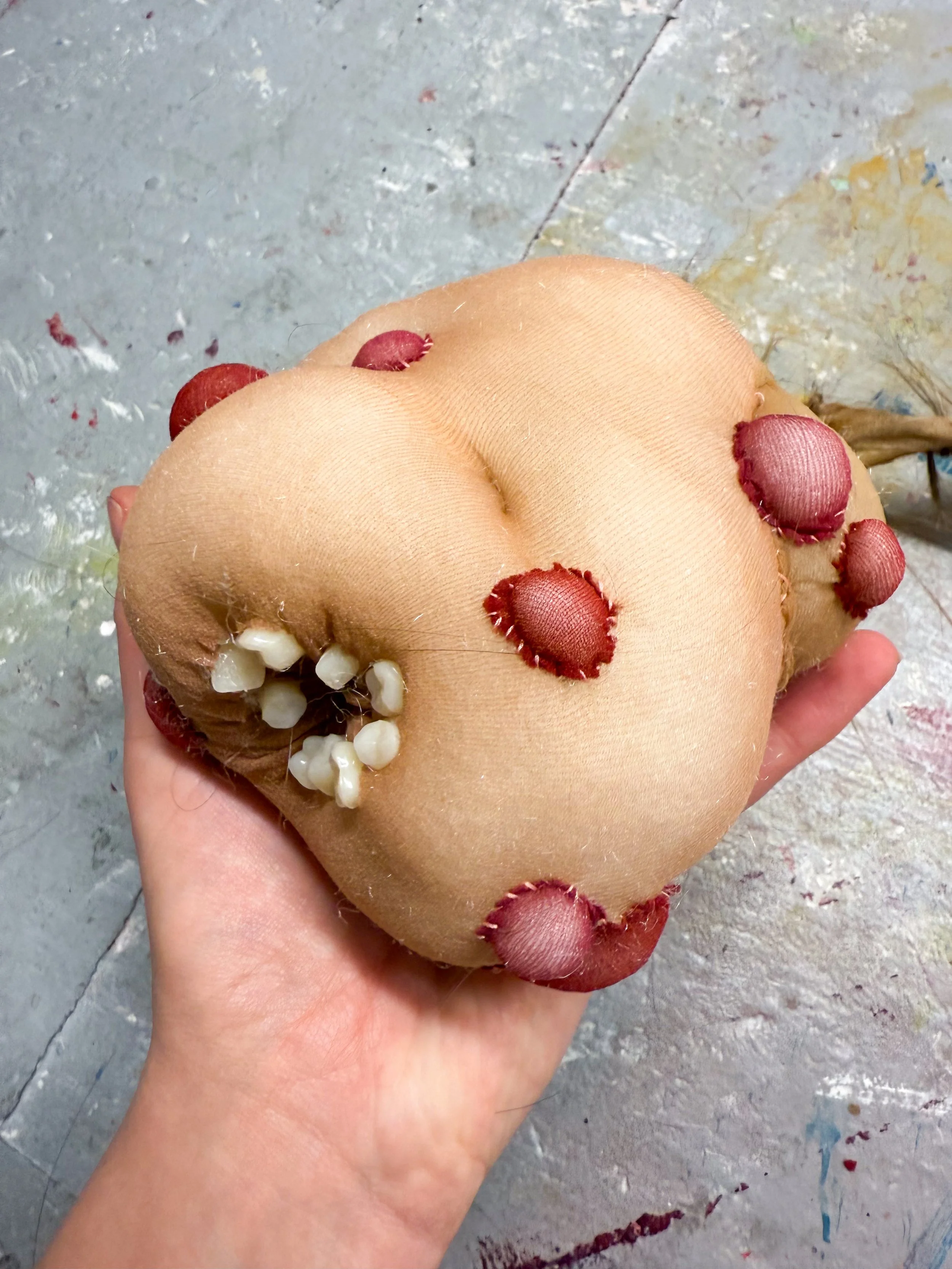
I am an interdisciplinary artist working across sculpture, painting, and installation. My work references body horror and the boundary-less nature of the body, examining the relationship of reproducing bodies within current biopolitical frameworks. Prodding at expanding posthuman potentialities of the body, my work investigates liberation and contradiction within synthetic biologies, and current notions of reproduction, gender, gestational labor, and family structures. My work serves as a surrogate for the body and the afflictions of bodily containment. I wrestle in the goo of abjection, subverting the marginalizing nature of disgust with materials like calcified latex, hair, and artificial teeth. Bodies here are unstable and boundary-less; biologically synthetic mutants that tamper with tactile relationships, promoting rapid aging, discoloration, and festering. I work in a space of untangling entrails, of autopsying contradictions. In assuming the role of the surrogate, these are bodies that grow and mature until I can leave, like a mother. Shedding my skin, repairing wounds, peeling blisters, picking scabs, and excreting the self, I scratch at the relationship of the body and the structural tendencies they exist in. The kinetic forms in my work challenge the biopolitics of reproducing bodies as subordinated vessels for collective future, suggesting an alternative posthuman relationship between power and reproduction. Drawing from feminist posthuman theory, my work challenges current notions of reproduction, gender, and family structures, suggesting alternative, cyborgian reimaginings of the body. Investigating liberation and contradiction within synthetic biology, these anatomies are birthed from the gut and play in the viscera. Shifting perspective on gestational labor and the leaky excess of bodily production, my work questions the decisions surrounding biotech, who has the authority to determine how human developments are distributed, and how these advancements can restructure liberation.
Process
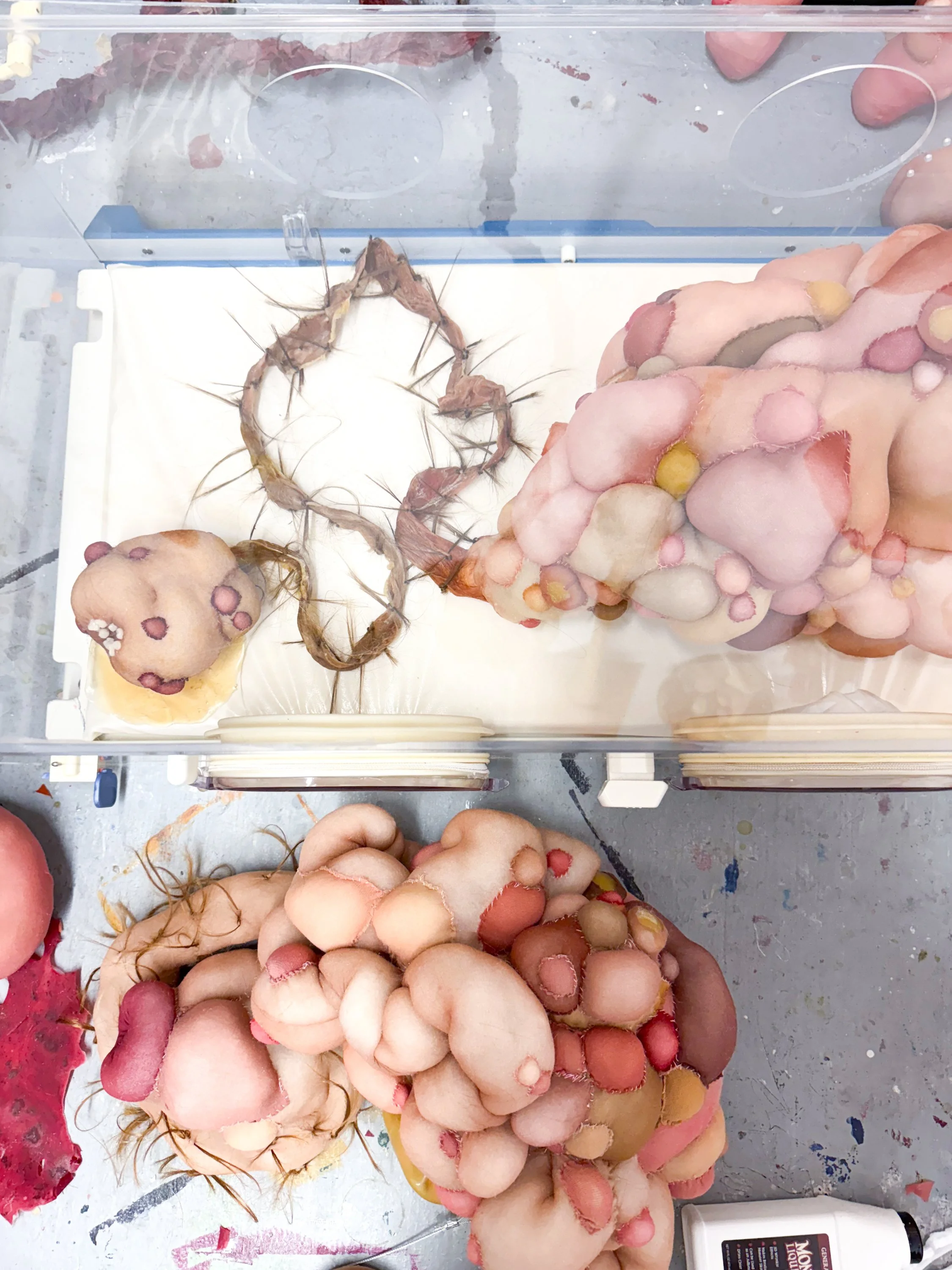
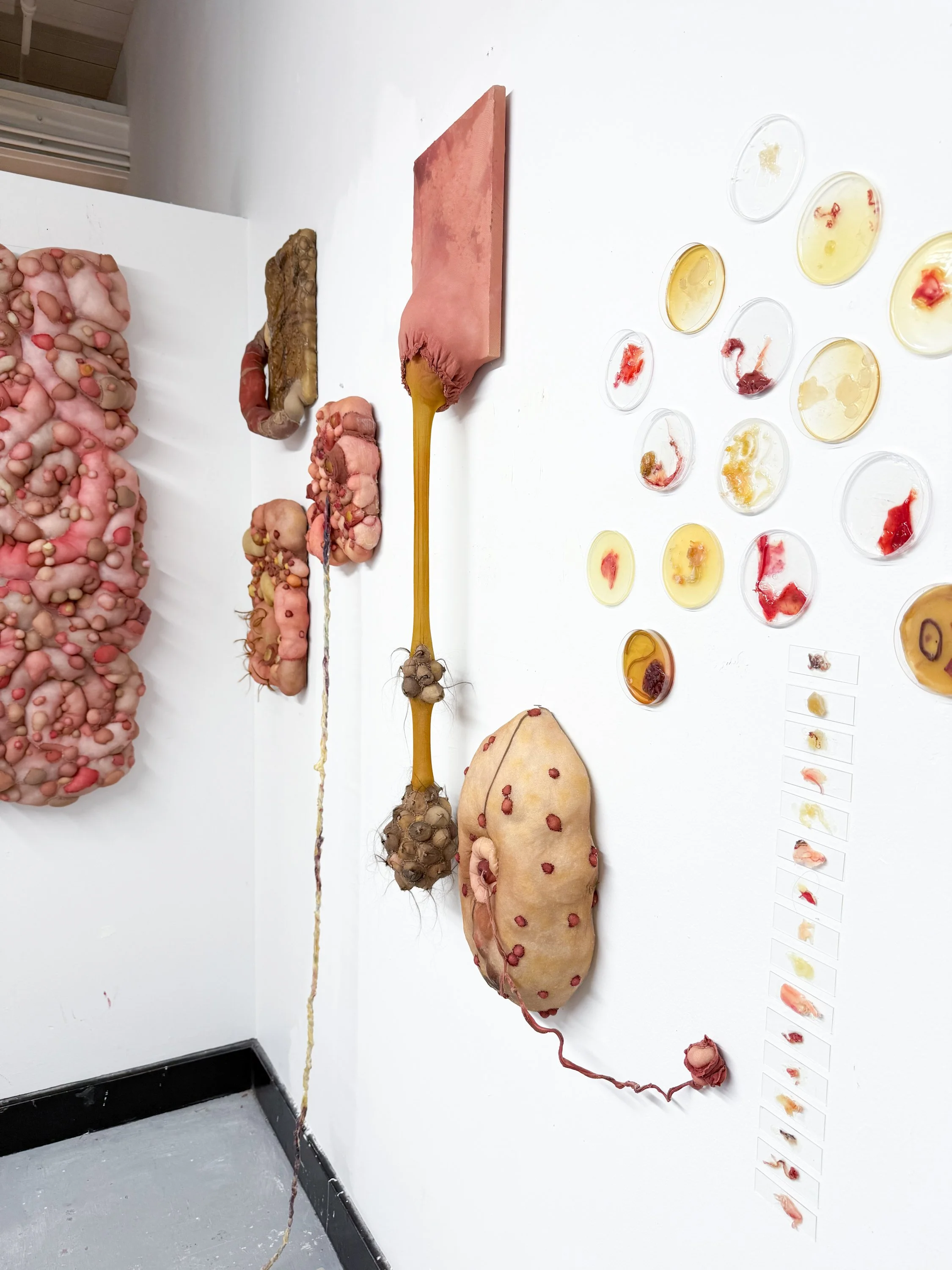
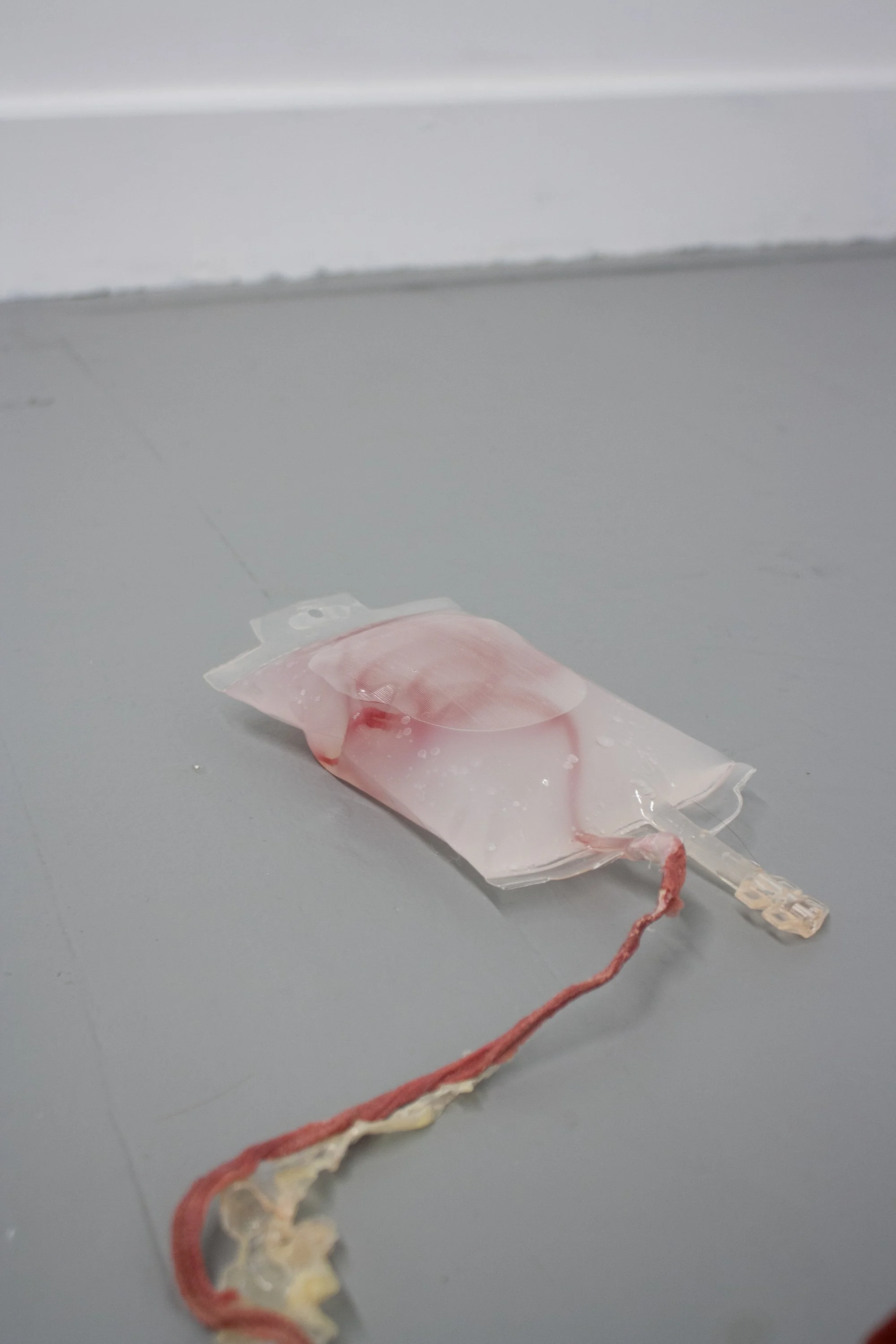
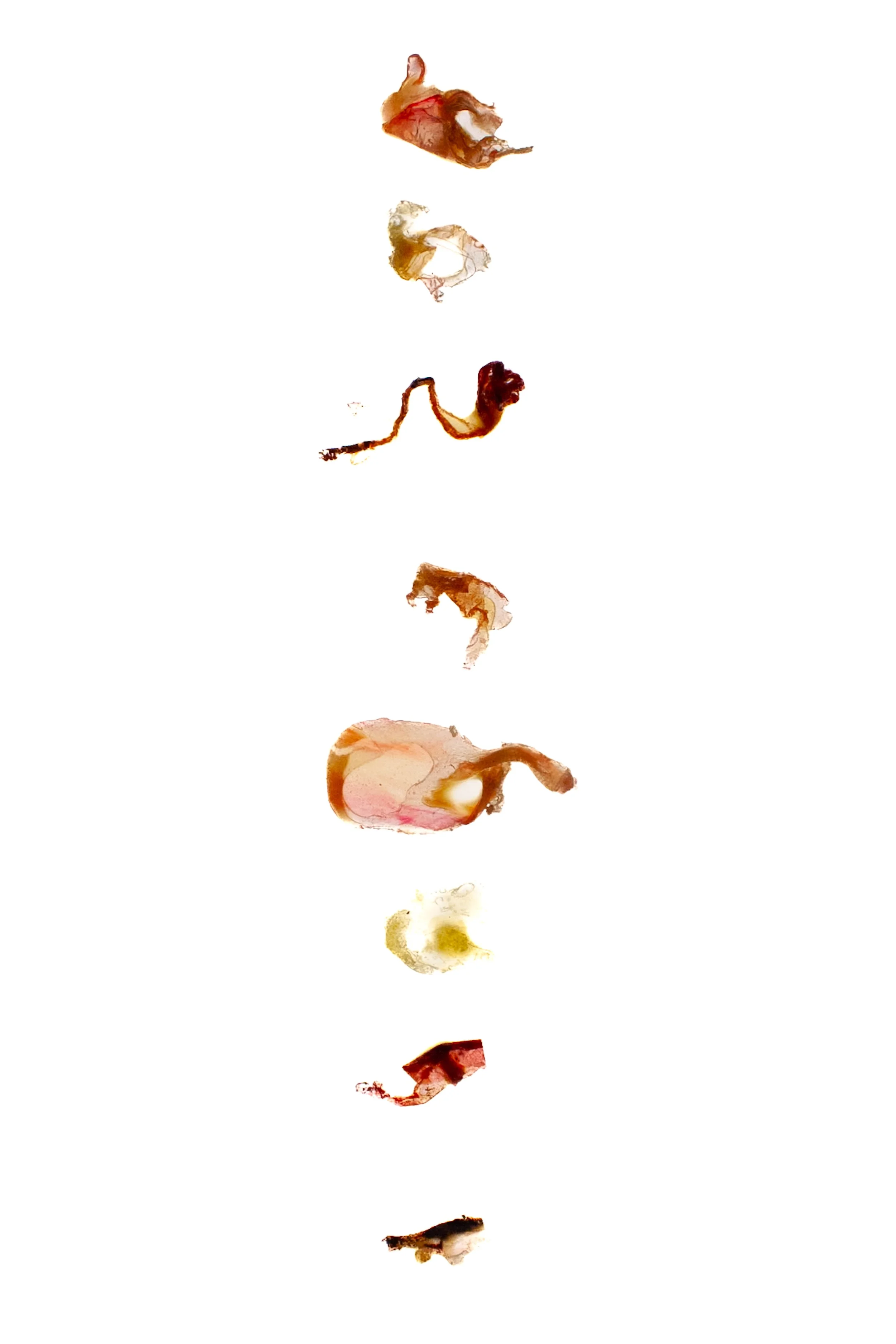
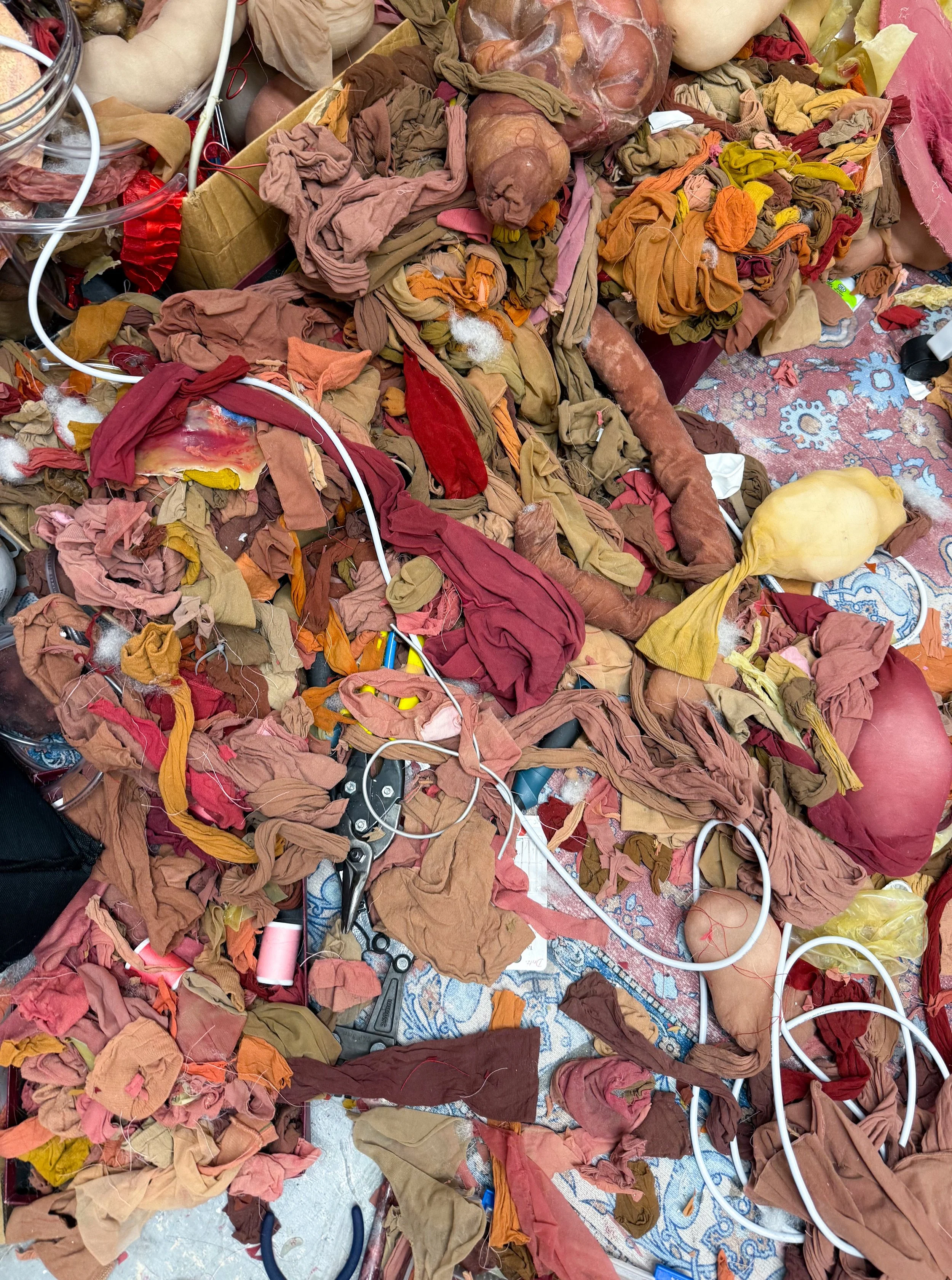
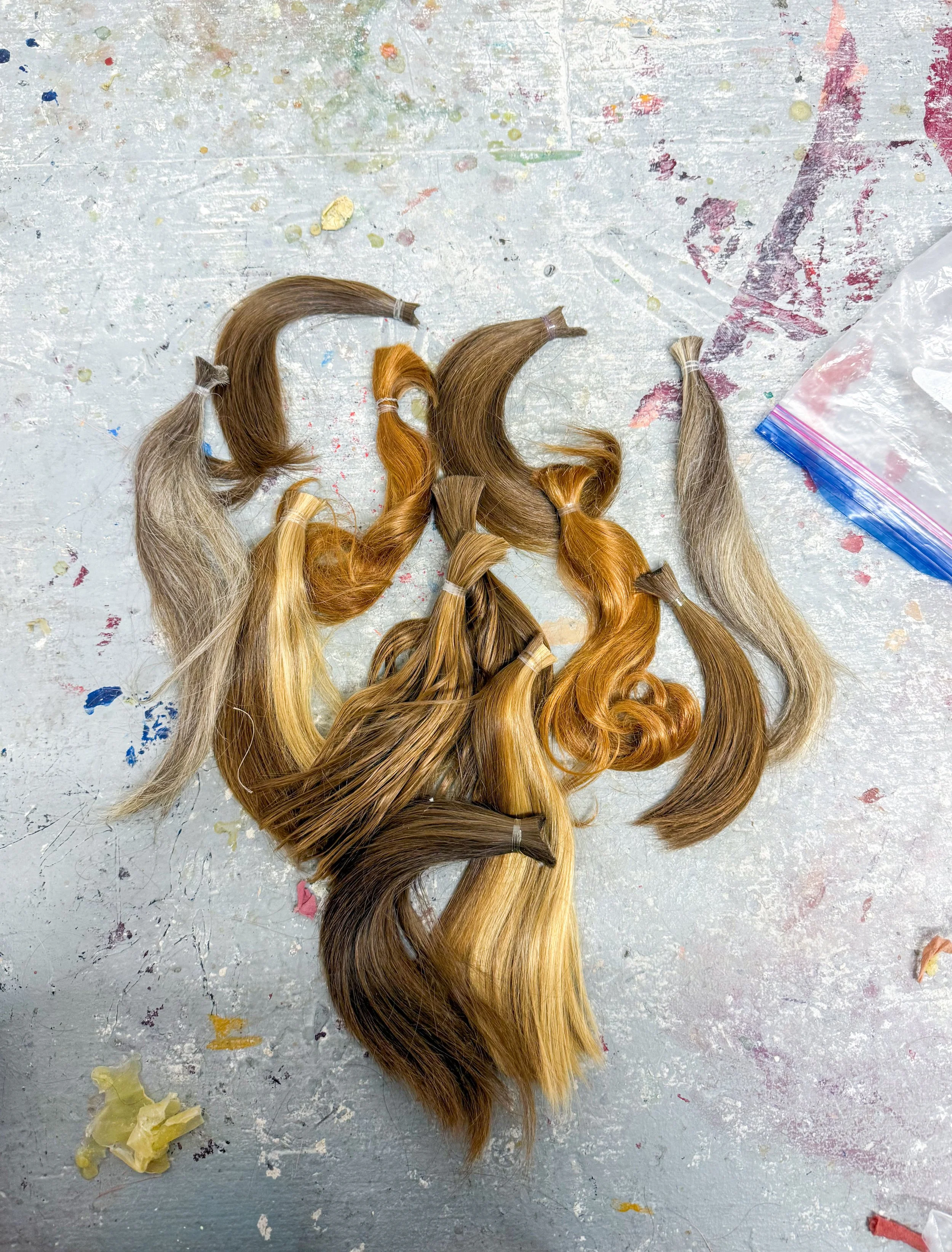
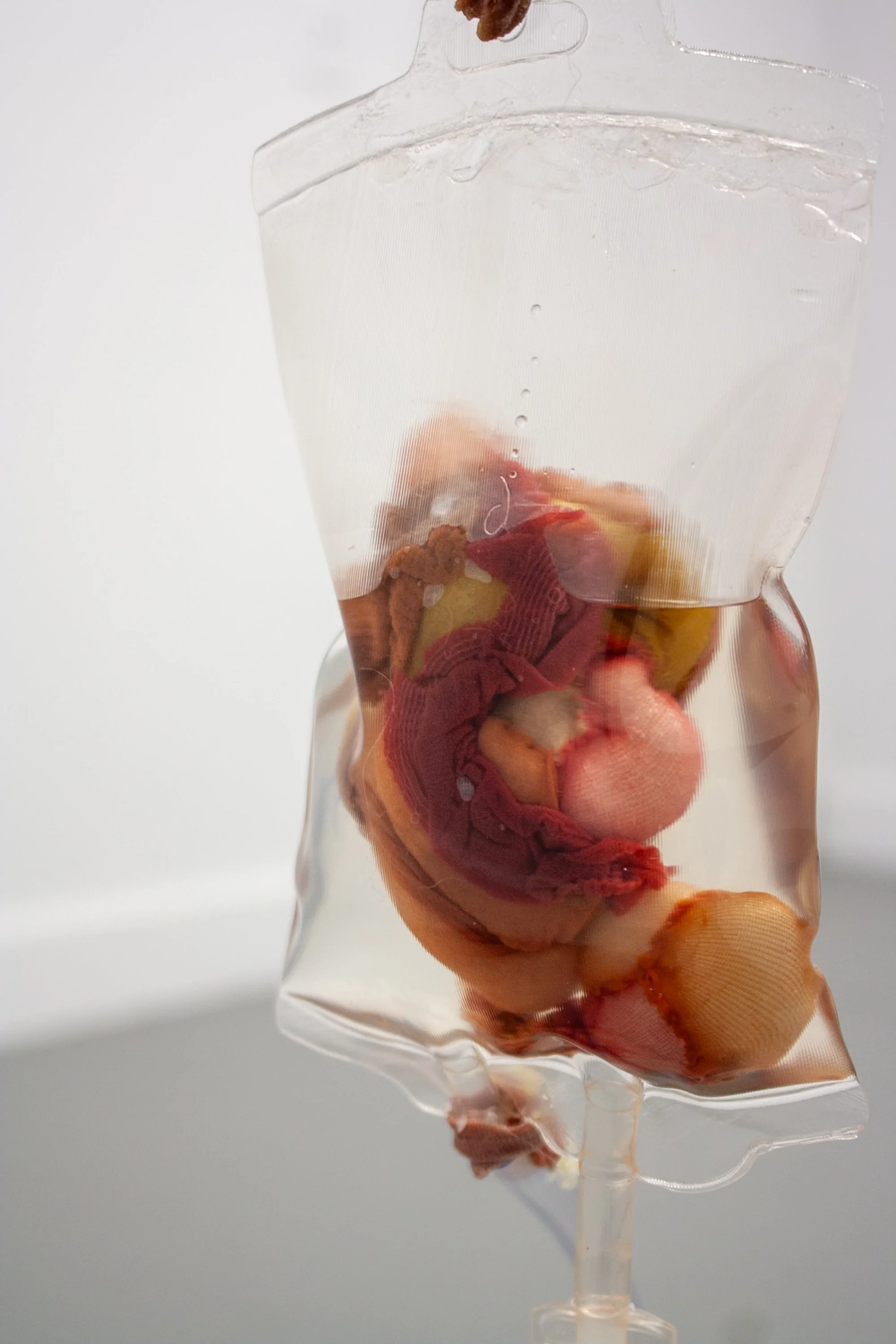
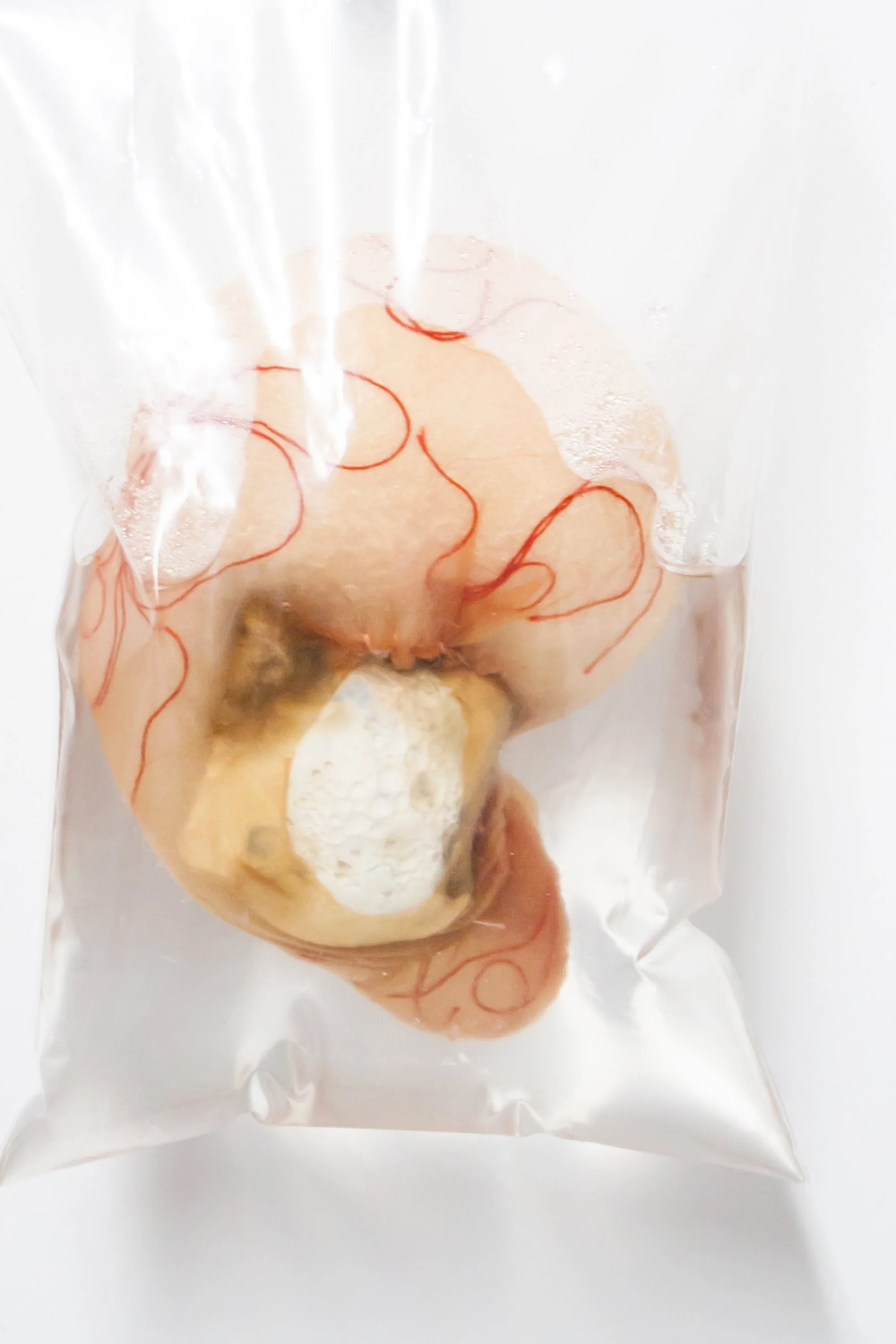
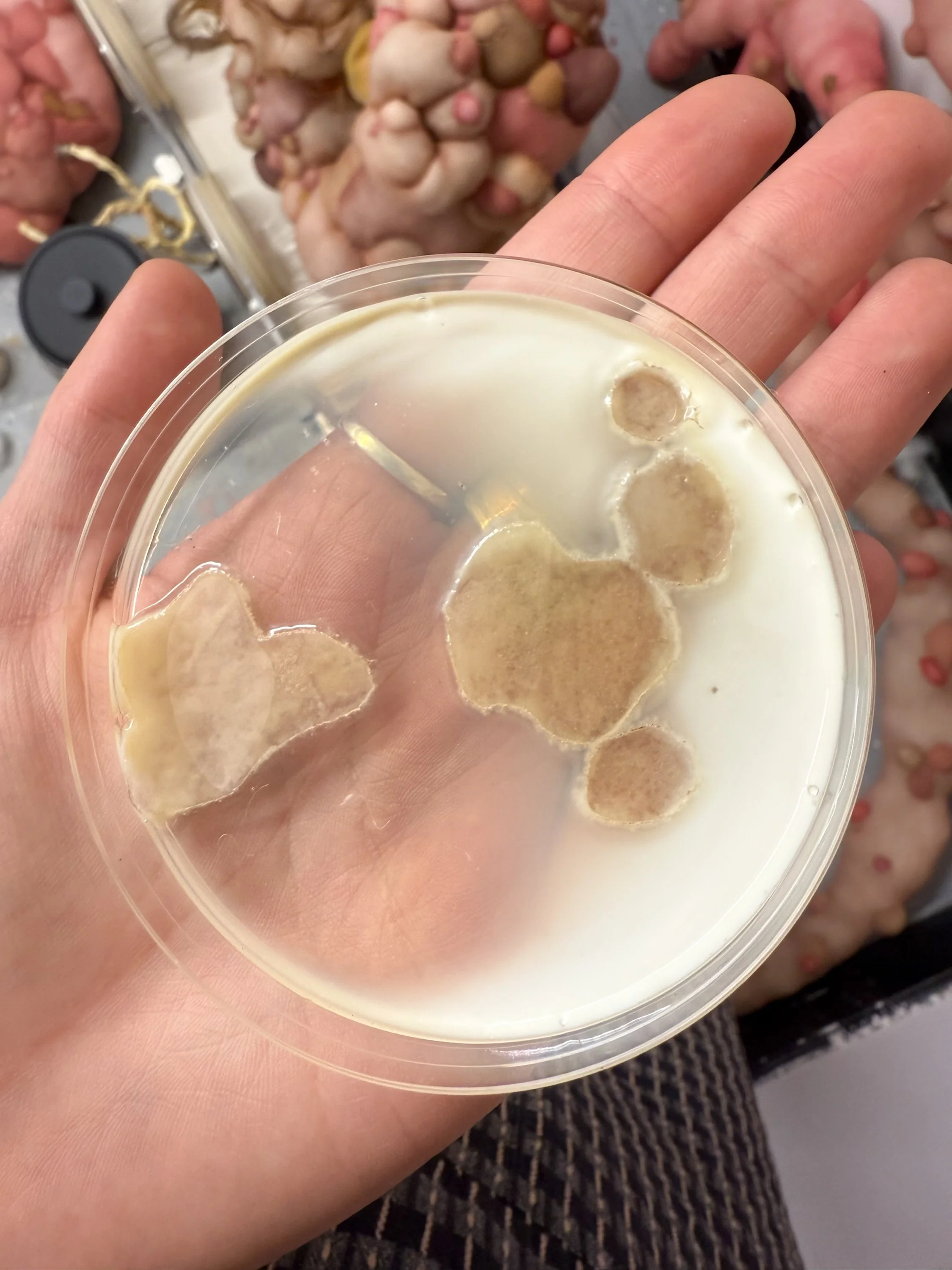
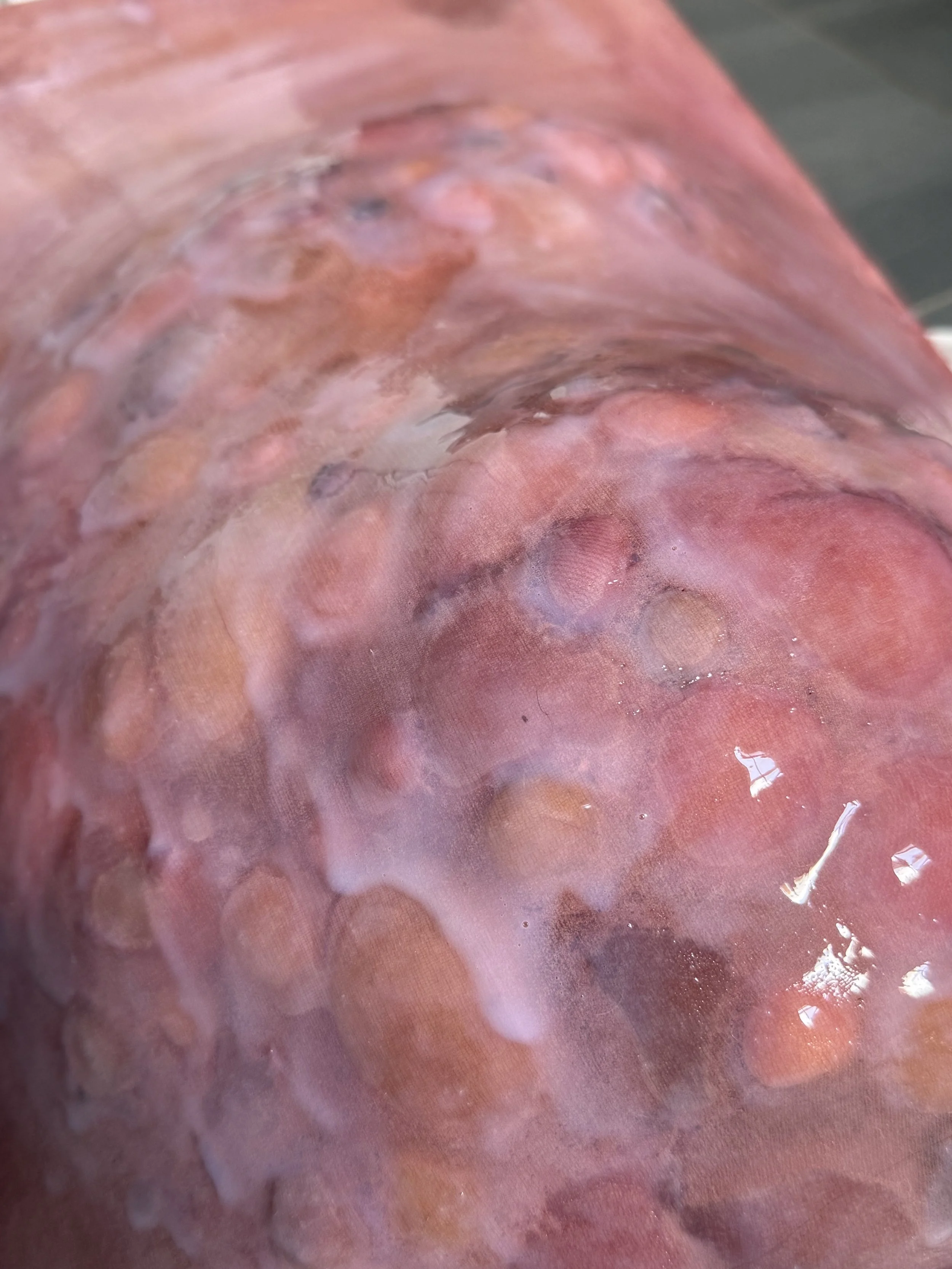
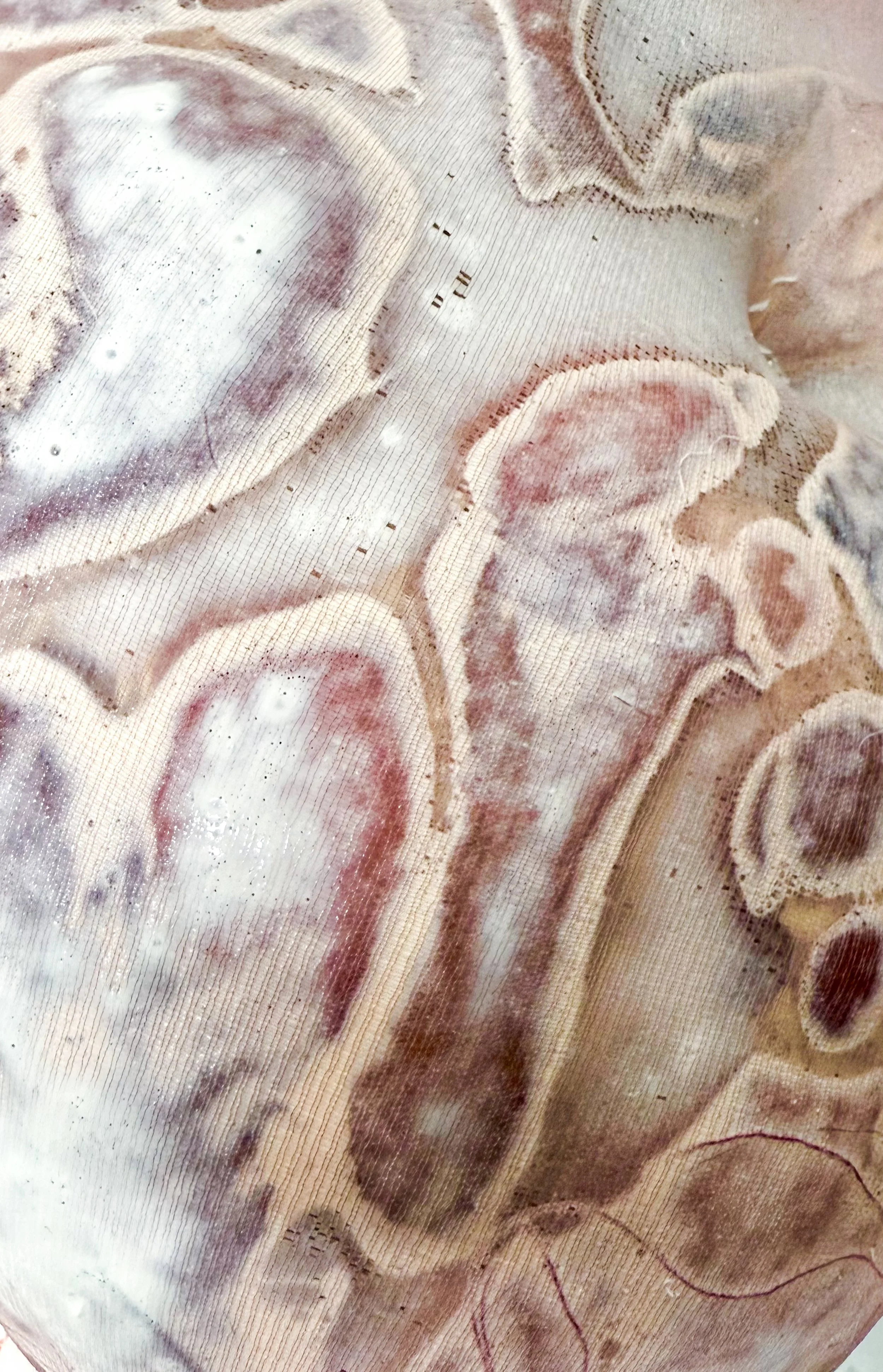
I approach my work as a result of my body’s movements, and a form of shed skin. They are emancipated through their monstrosity. Their anatomies are constantly erupting as the byproduct of my bodily movements. I writhe on the floor with them, cauterizing experiments that I have conducted into kinetically moving bodies. There is a marinating process of research and absorbing information that is then fed into the work, a Frankensteining of theory and contradiction. In assuming the role of the surrogate, these are bodies that grow and mature until I can leave, like a mother. Due to the nature of their materials, they degenerate over time. Their gangrene contracts infection, and their scabs loosen and detach as new skin cells multiply. Their materiality shifts from exteriorly imposed to autonomously initiated. This imitation of the body’s reactions to damage reflects a body growing beyond full potential. Transitioning from infectious gangrene to proliferating overgrowth, the ecosystems in this work overtly welcome bodily changes and overflowing. They are mutating within a continuously modifying framework that shifts toward facilitating potential, one that contains structural support of physical vulnerabilities. My process includes keeping as many remnants of their making as possible. I collect experiments, failed attempts, and old organisms that I have made, taken apart, and discarded. I store these offsprings, leakages, and scabs to form a new life later on. Some are preserved in specimen containers, brines, Petri dishes, or IV bags as a suspension and documentation of their making. I save anything from what falls on my floor to what I peel off of my hands and the gunk from under my fingernails. I work from an obsessive and impulsive state, maintaining a reactionary approach to material.
Influences
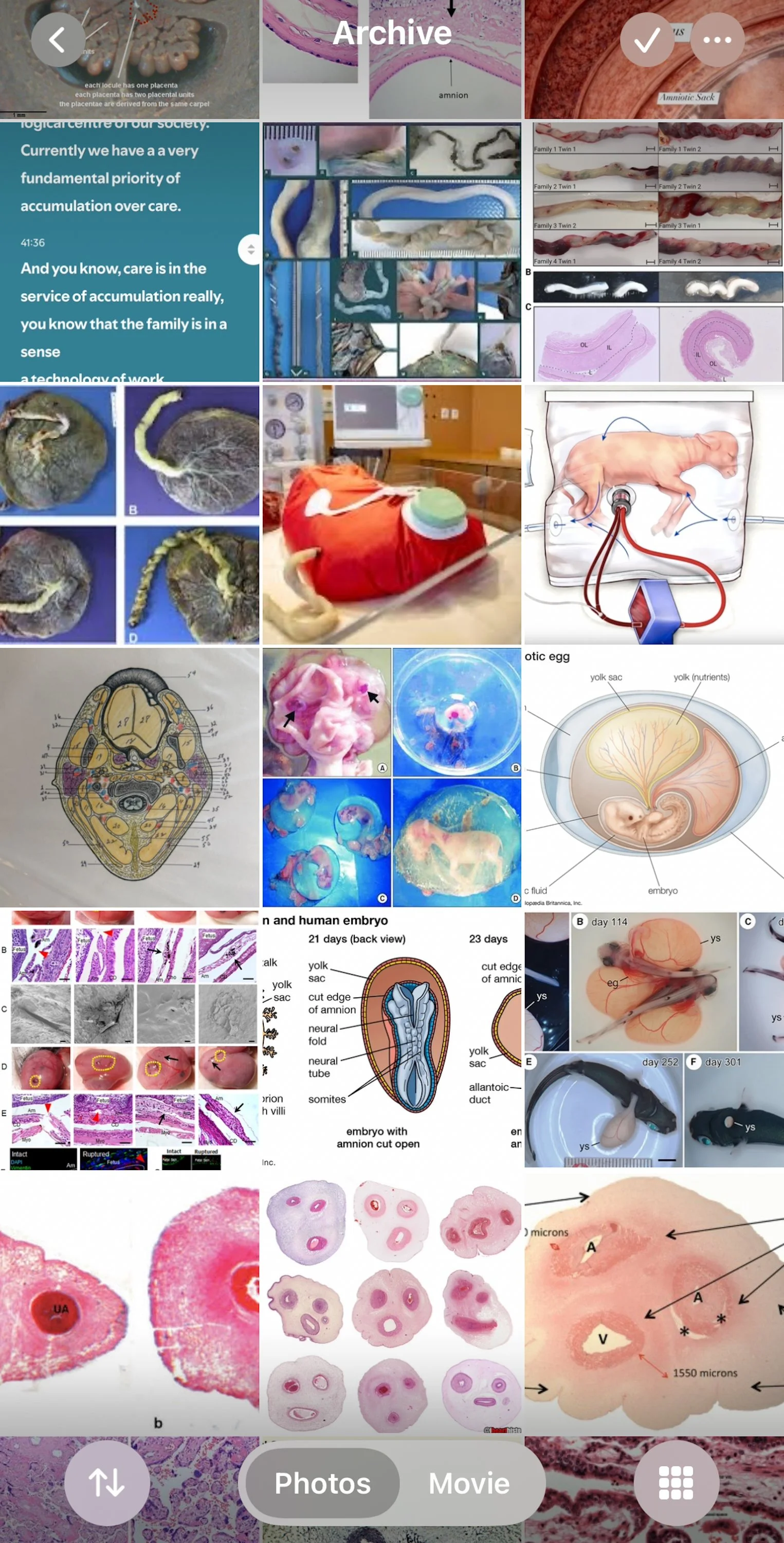
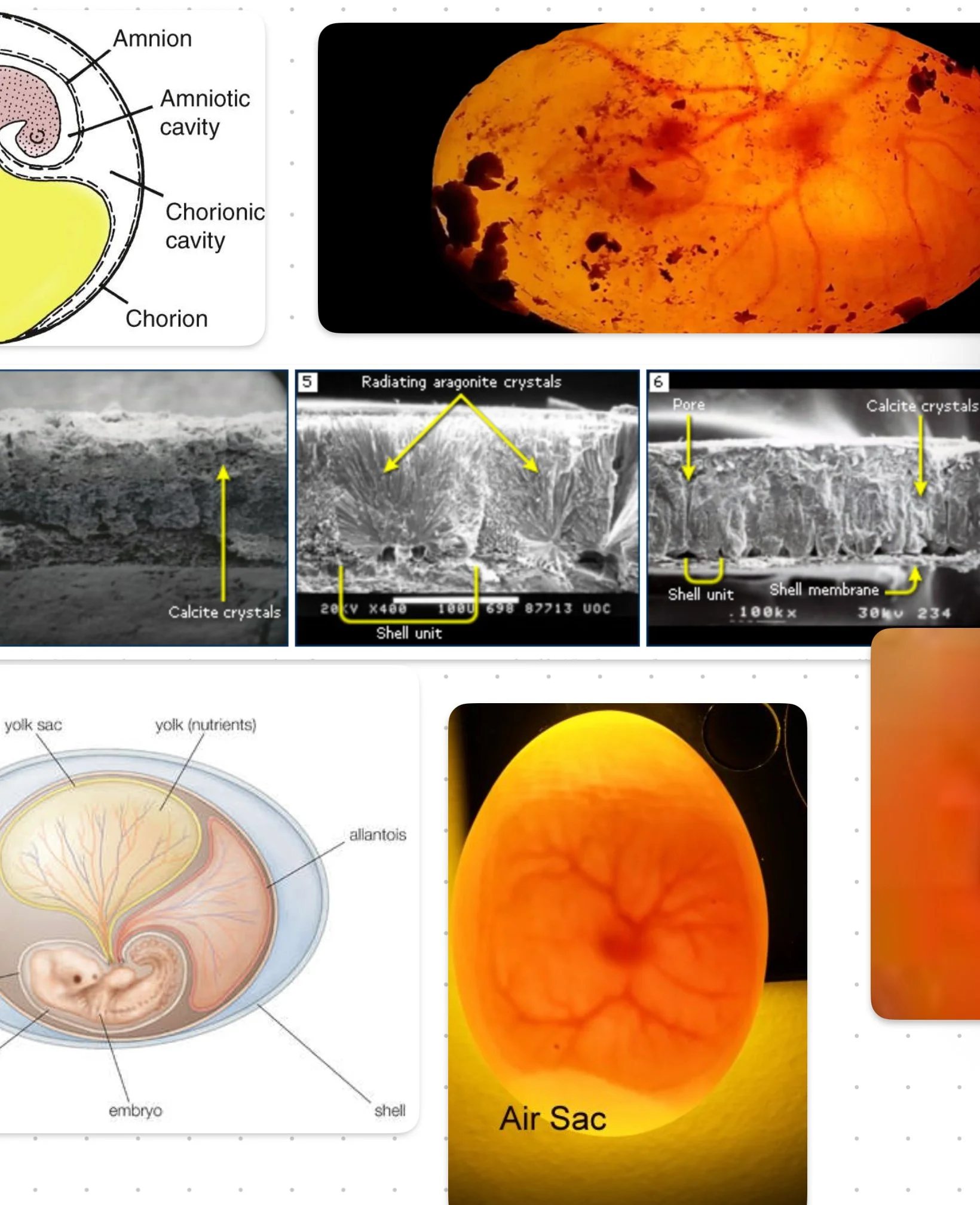
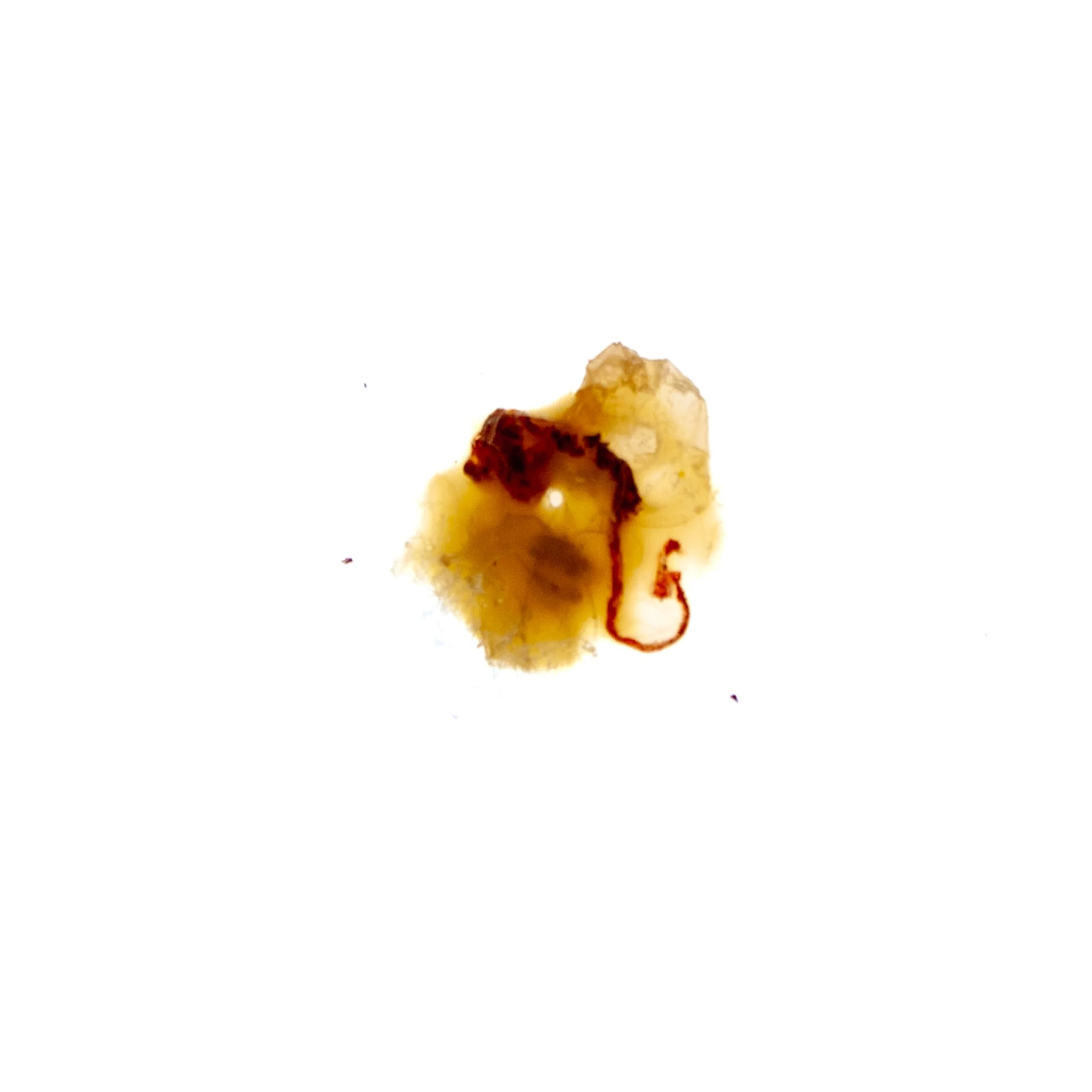
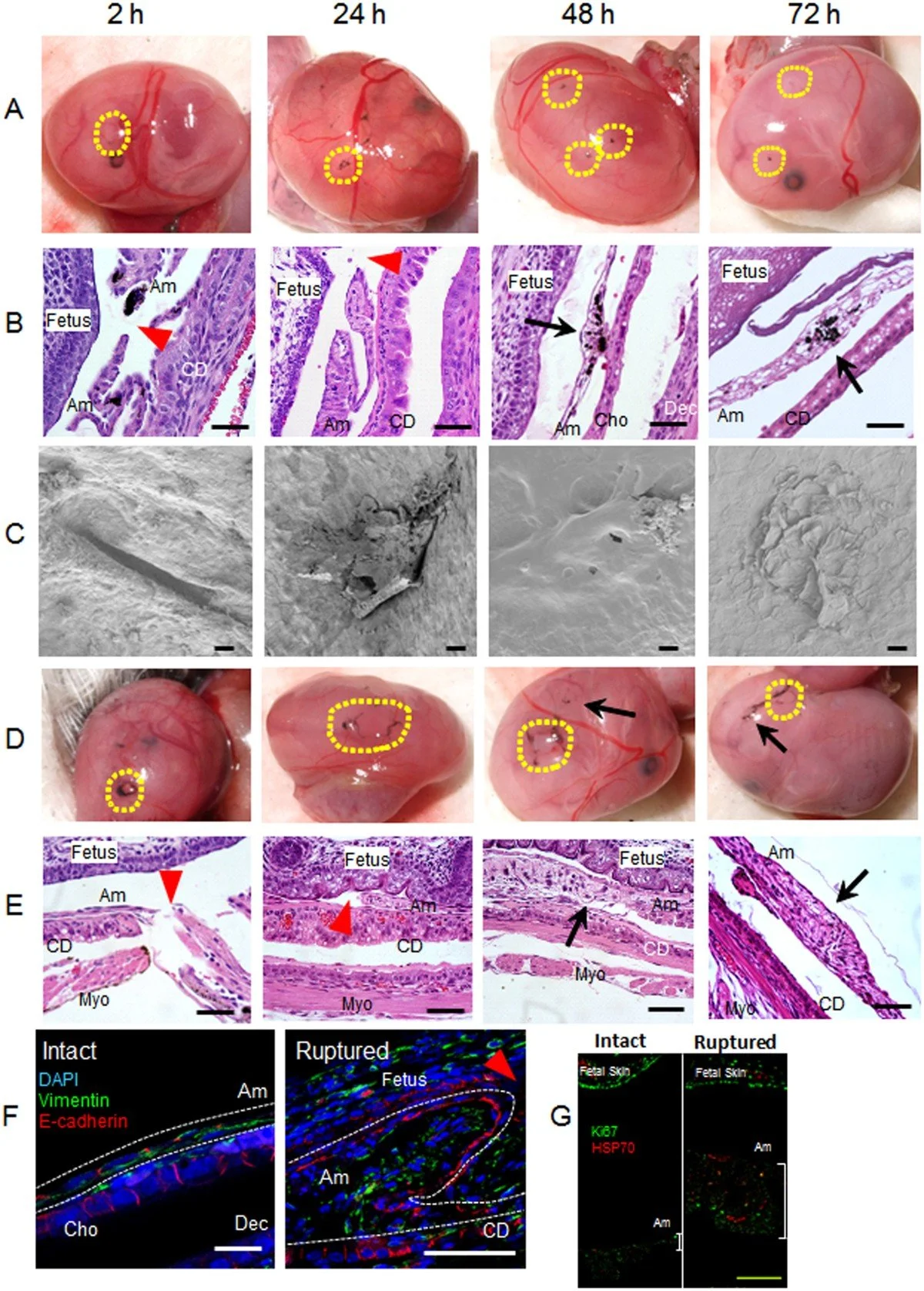
Similar to how I approach the act of making, my process of research is a constant state of collecting. Everything that I consume is somehow chewed and fed back into the work. I loosely reference medical documentations, cross-sections, samplings, and microscope slides that I collect. Combining this imagery with nonsensical, whimsical grotesqueness imagines an ecosystem beyond the body as a material object. Our understanding of the flesh turns cyborg in the poshuman landscape. Within the stitching of my work is theory that disassembles and reassembles the body, reproduction, gender, gestational labor, and family structures.
Challenges
Within my work, there is a constant balance of giving in to the material, and extending it to the point of breakage. It’s a constant state back and forth of playing with the level that I interfere with the material. I overall try to act as a surrogate for materials and information, but it isn’t an indifferent modality. It is a complicated relationship of delicacy and durability. It is a symbiotic relationship, but there are moments of tension that I welcome, even if the outcome is something that I discard and ends up absorbed into a future piece. I embrace the relationship to the work between nurture and detachment. It reflects congenital relationships to me, a building, tearing into, scabbing over, the open gash, the callus that forms, and then rubbing it raw. It’s a nonlinear relation, a fracturing and breaking. I feel like the work breaks off of me when it’s done, sometimes in a way that allows it to live on its own, and sometimes an abrupt detachment.
Reflection
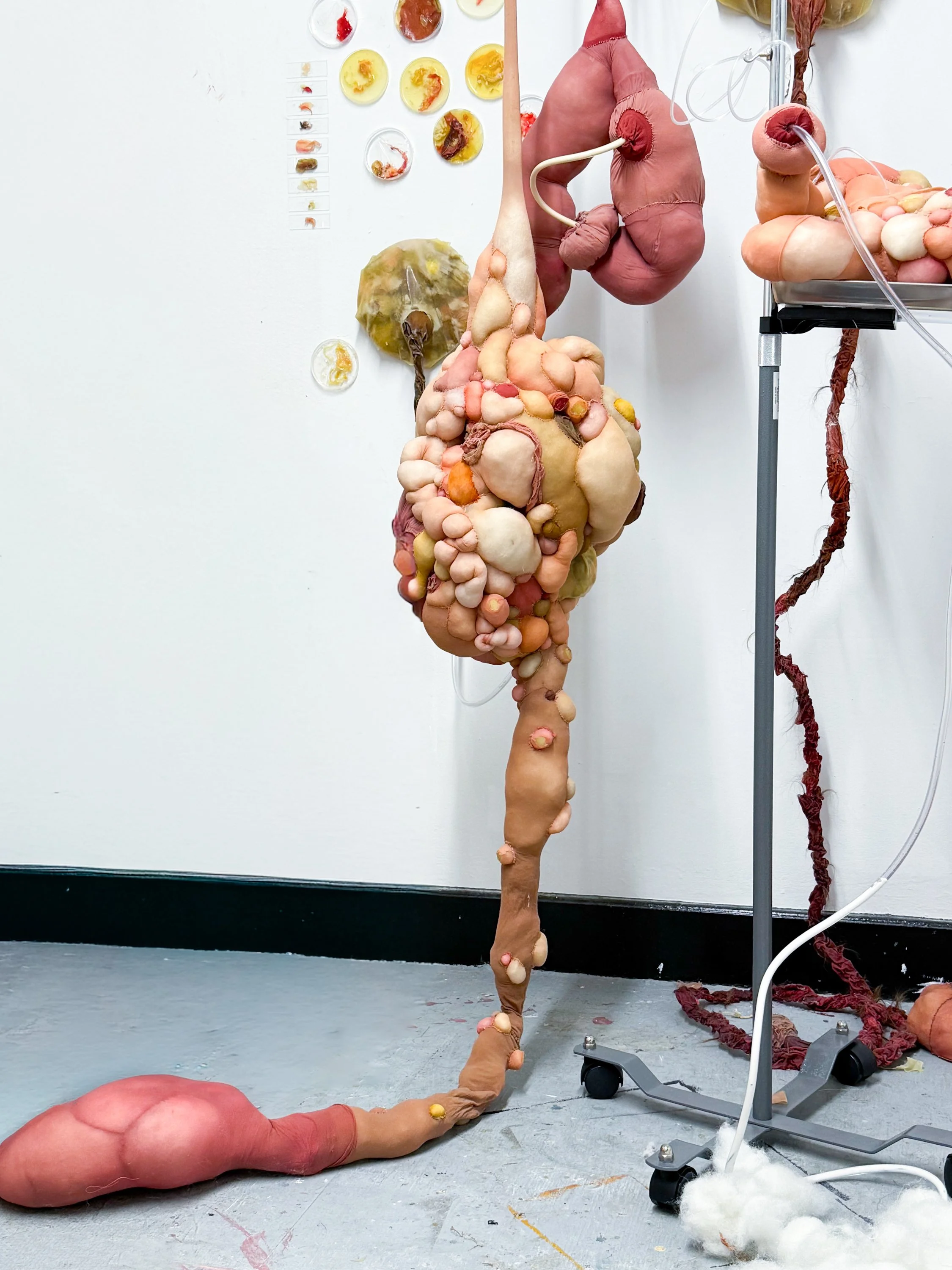
Recently, I have been working with kinetic elements in my work, imagining them as an ecosystemic continuum of excess. Moving forward, I see my work as a system of sorts connecting, self-fulfilling, and feeding into each other. A system of mothering and care that is unrestrained and unnamed. I think a lot about how the body could evolve alongside technology and biological developments created with abundance as the mindset. If instead of bodily containment and correction, we shifted perspectives of bodily potential, excess, and reproduction toward a care mindset. Where innovations currently exist within problematic infrastructure, these sites could serve as sites of possibility under rebuilding. Leveraging speculative futures allows me to absorb information, spit it out messily and incoherently in my work, and poke at a cyborgian future that adapts to bodily potential, breaks down traditional notions of family, understands gestation as labor, and imagines a more wild and abundant system of care.