Kyle Cottier
Kyle Cottier (b. Louisville, KY 1993) is a visual artist based in Knoxville, Tennessee. Their interdisciplinary practice merges traditional basketry and woodworking techniques with sculpture, installation, and photography. Through immersive installations, Cottier explores intersections of the natural, constructed, and digital worlds, with a focus on transformation, repair, and survival in contemporary culture. Cottier holds an MFA in Sculpture from the University of Tennessee, Knoxville, and a BFA from the Art Academy of Cincinnati. They attended the New York Studio Residency Program in Brooklyn and have been an Artist-in-Residence at Arrowmont School of Arts & Crafts in the Smoky Mountains and Stove Works in Chattanooga, Tennessee.Their work has been exhibited nationally, including Vessel: Embodiment, Autonomy, and Ornament in Wood at The Museum for Art in Wood, Modular at Manifest Gallery, and Transformation: Contemporary Works in Wood at Contemporary Craft. Cottier has received recognition from the International Sculpture Center, including the Outstanding Student Achievement in Contemporary Sculpture Award, and their work has been featured in Sculpture Magazine. They are a recent recipient of a CERF+ Get Ready Grant and have previously completed a body of work supported by Tri-Star Arts’ Current Art Fund Project Grant.
I am an interdisciplinary artist working primarily with wood and photography to create sculptural forms through the accumulation of thousands of small parts—modular units woven into larger structures. My process is rooted in repetition, weaving, and mending, guided by a logic of interdependence and preservation. These porous forms—often latticed and suspended in tension—serve as traces in the hotbed of memory, where what remains is shaped as much by absence as by presence. I approach memory as physical and provisional, a space continually unmade and rebuilt over time. Traditional craft practices like basketry and vessel-making are central to my process, not only for their histories of containment, care, and survival, but for how they embody the relationship between form and thought. The vessel recurs in my work as a symbol of autonomy through craft—where skill becomes self-reliance—emphasizing that the value of the form lies not only in its emptiness, but in its potential to contain something meaningful. My sculptures often revolve around a central emptiness, echoing the movement of my own body in their making and referencing the liminal space between ruin and repair. I am drawn to systems of connection—between the organic and synthetic, body and landscape, online and offline. I map these blurred boundaries through tactile, handmade forms that honor the labor of making while questioning how we engage with materiality in a digitized world. My work prioritizes non-binary solutions—structures that hold rigidity and fluidity at once, remaining open, responsive, and unresolved, held together piece by piece.
Process
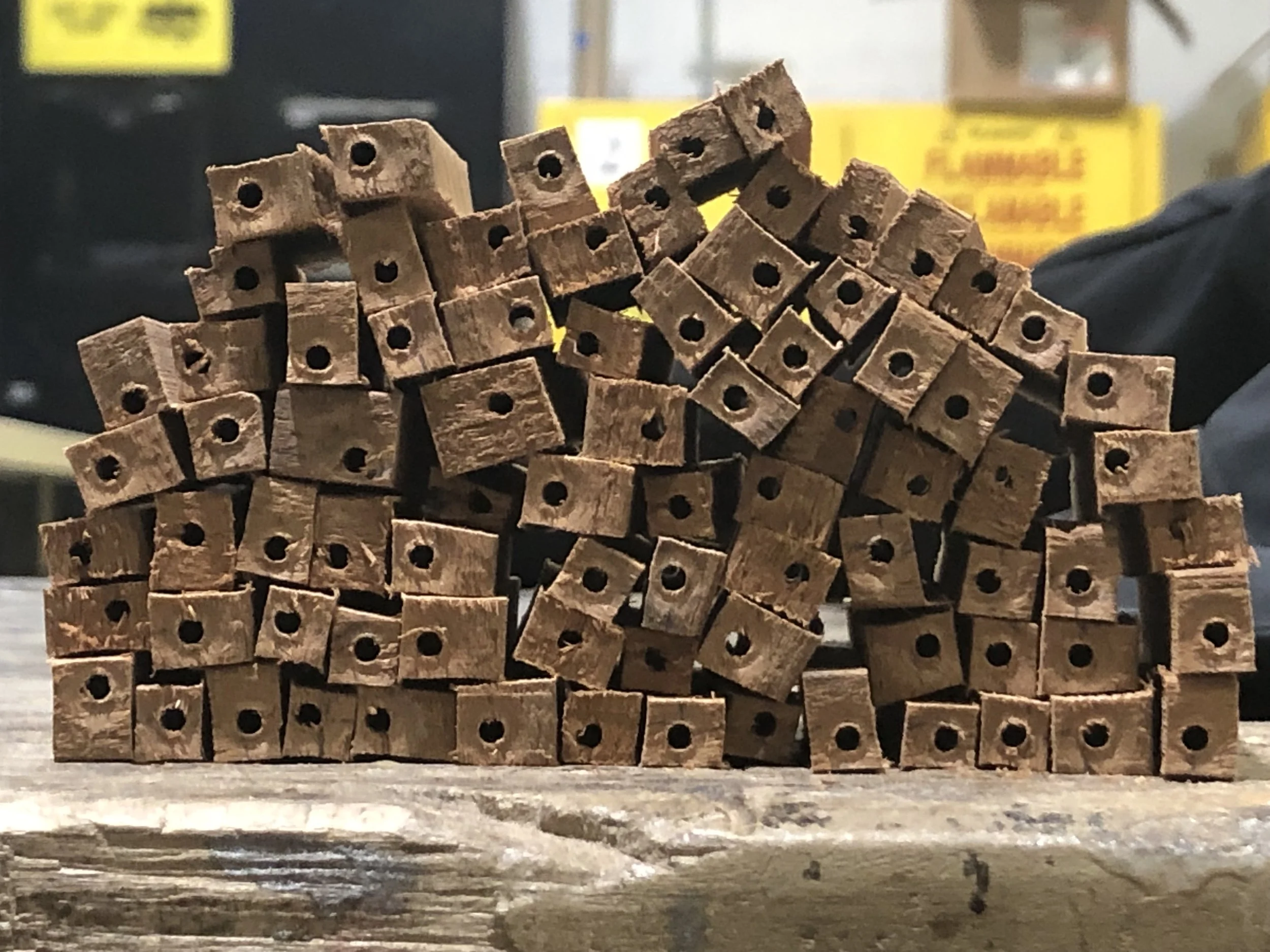
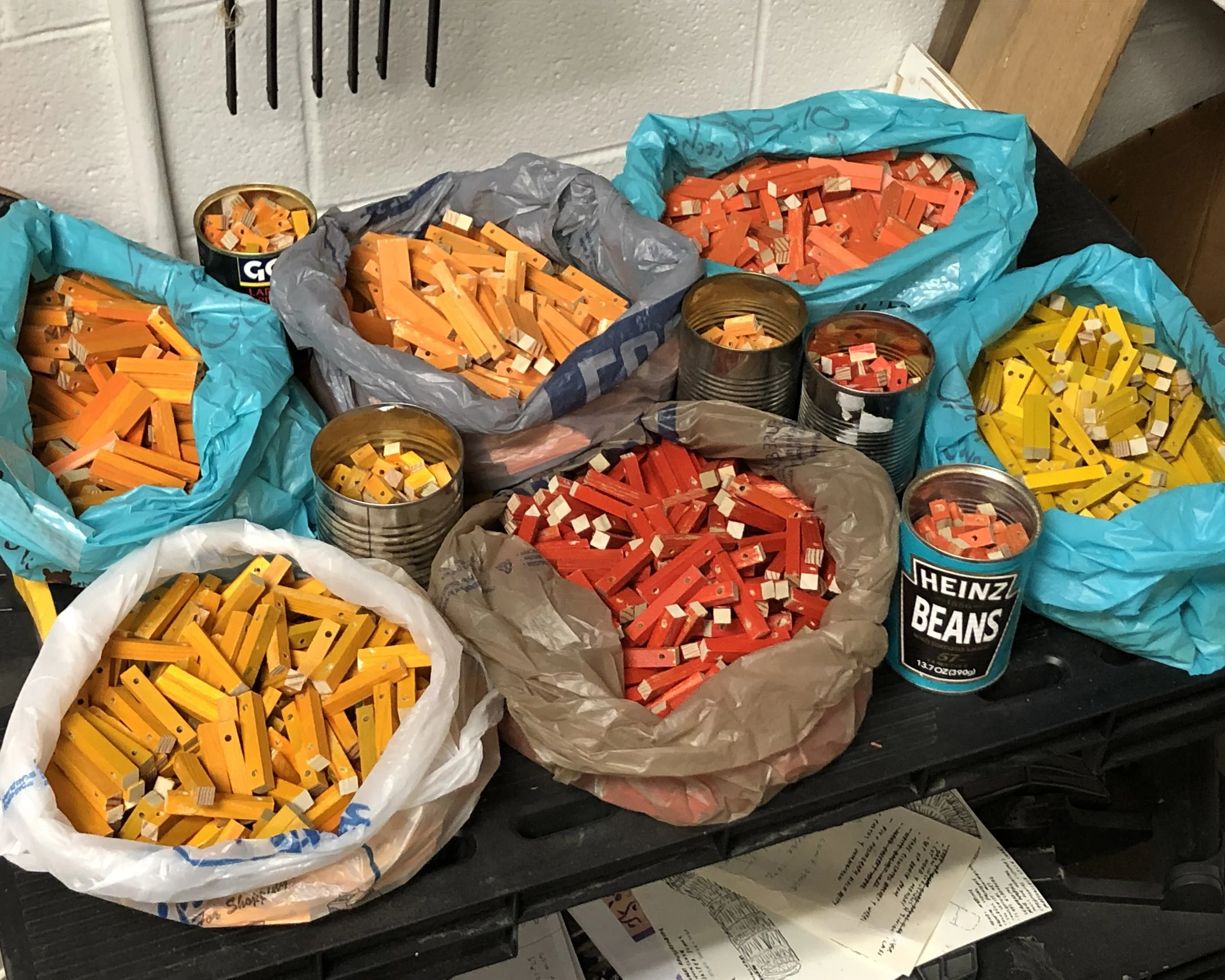
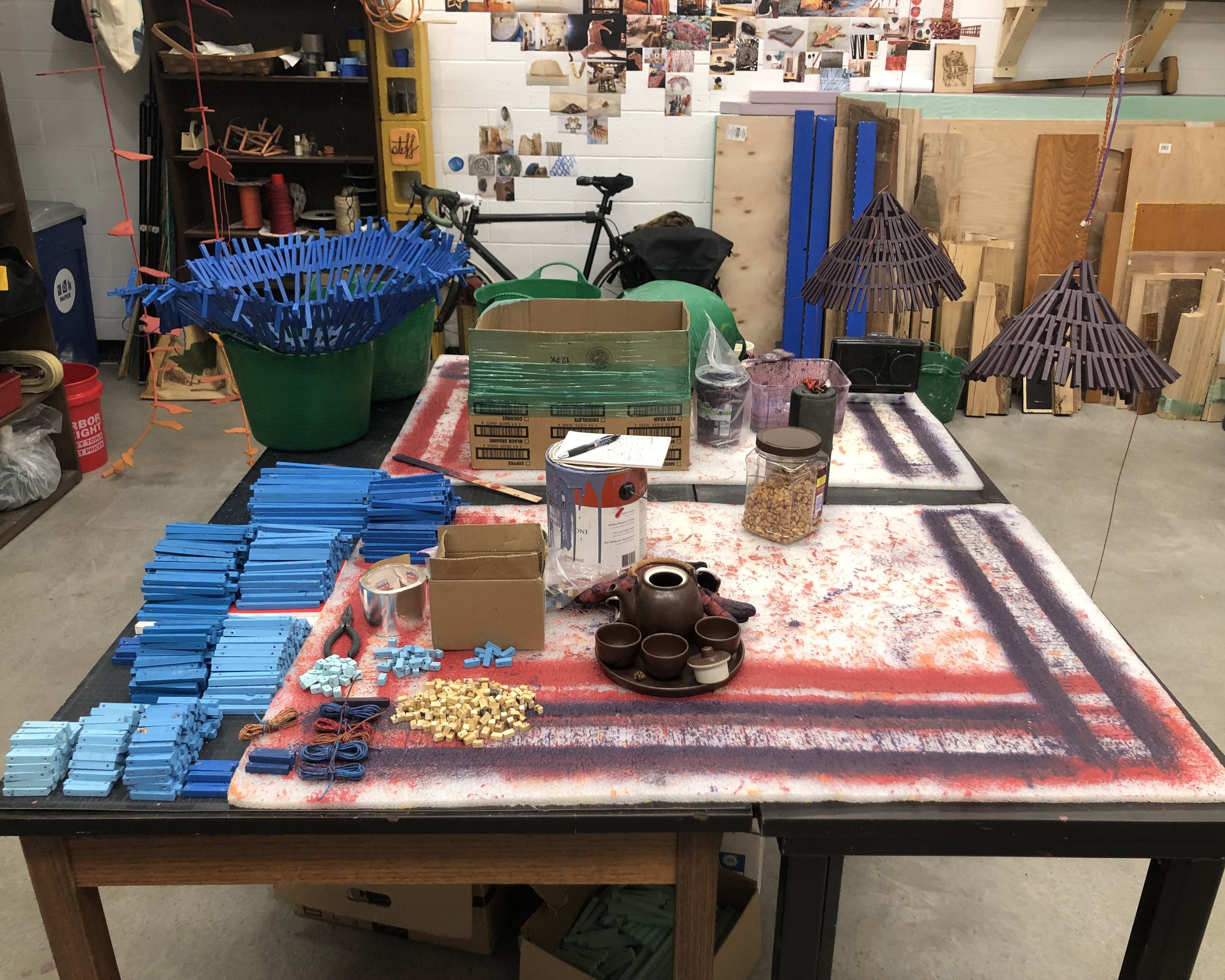
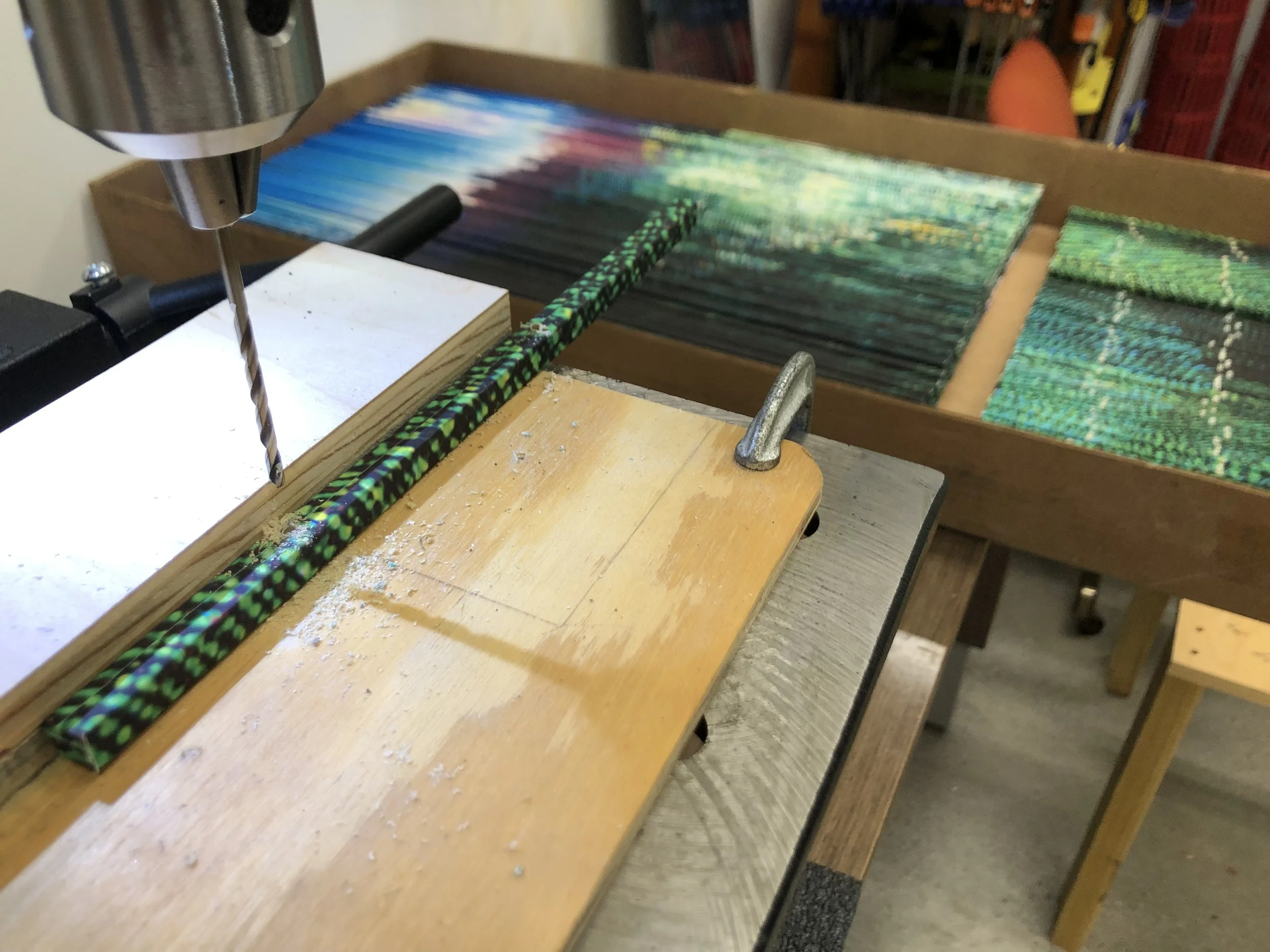
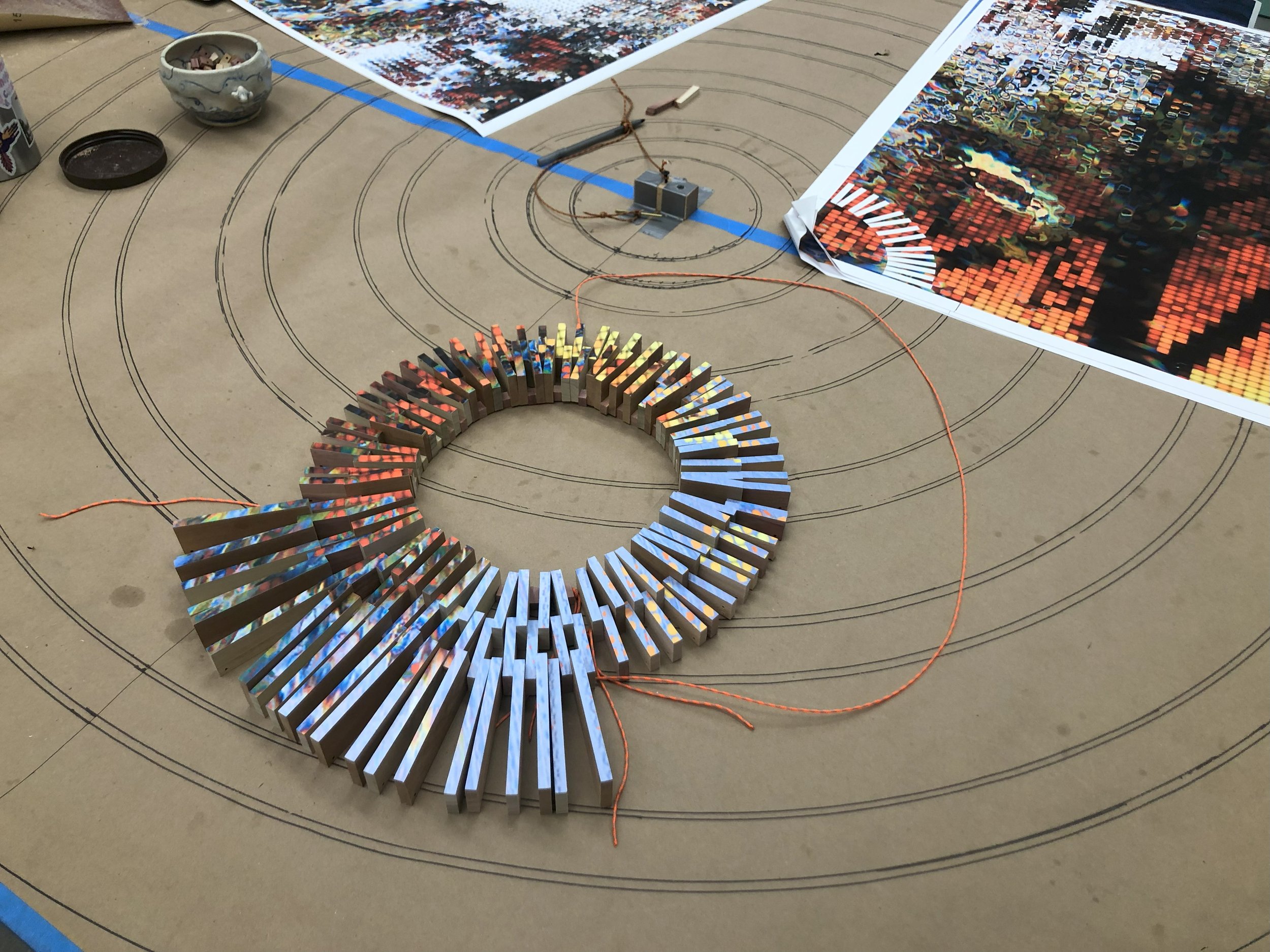
In the studio there are boxes of small parts, drilling jigs, sketches and notes scattered across tables, and usually evidence of copious amounts of tea. Reclaimed wood moves slowly through different stages—cutting, drilling, painting, and weaving—often stored in aluminum cans or small containers while it waits for the next step. The sculptures are built piece by piece through this steady, repetitive process, where fragments sit in holding patterns before finding their place in a larger structure. These images show those in-between moments: shadows across piles of components, the quiet assembly-line rhythm behind the finished work. Recently I’ve begun experimenting with adding photography directly onto the modular units, applying printed vinyl imagery to the wooden pegs before they are woven together so that small traces of image echo throughout the final forms. The studio carries the marks of this slow, labor-intensive process—an environment shaped by patience, attention, and care for how materials transform over time.
Influences
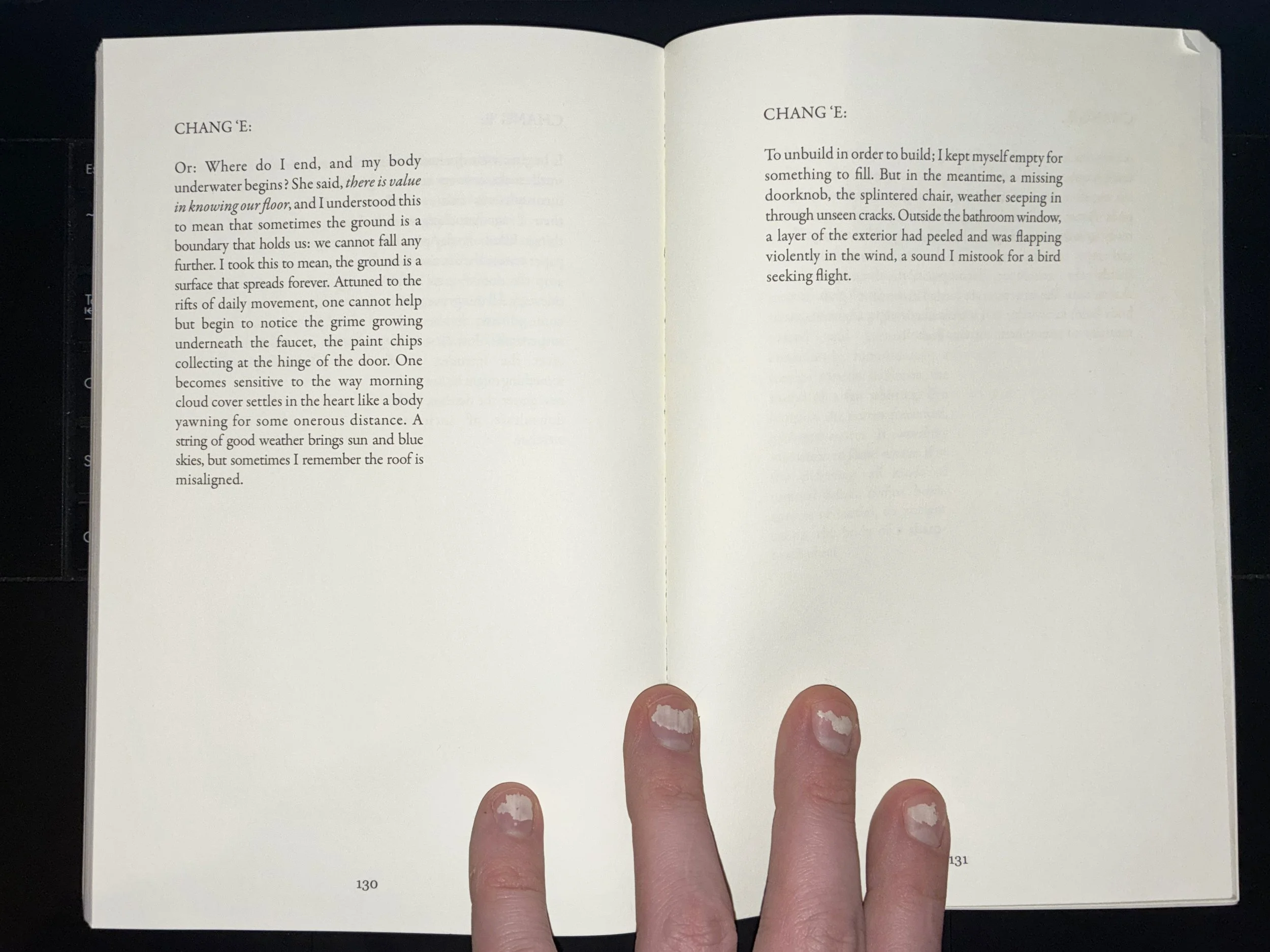
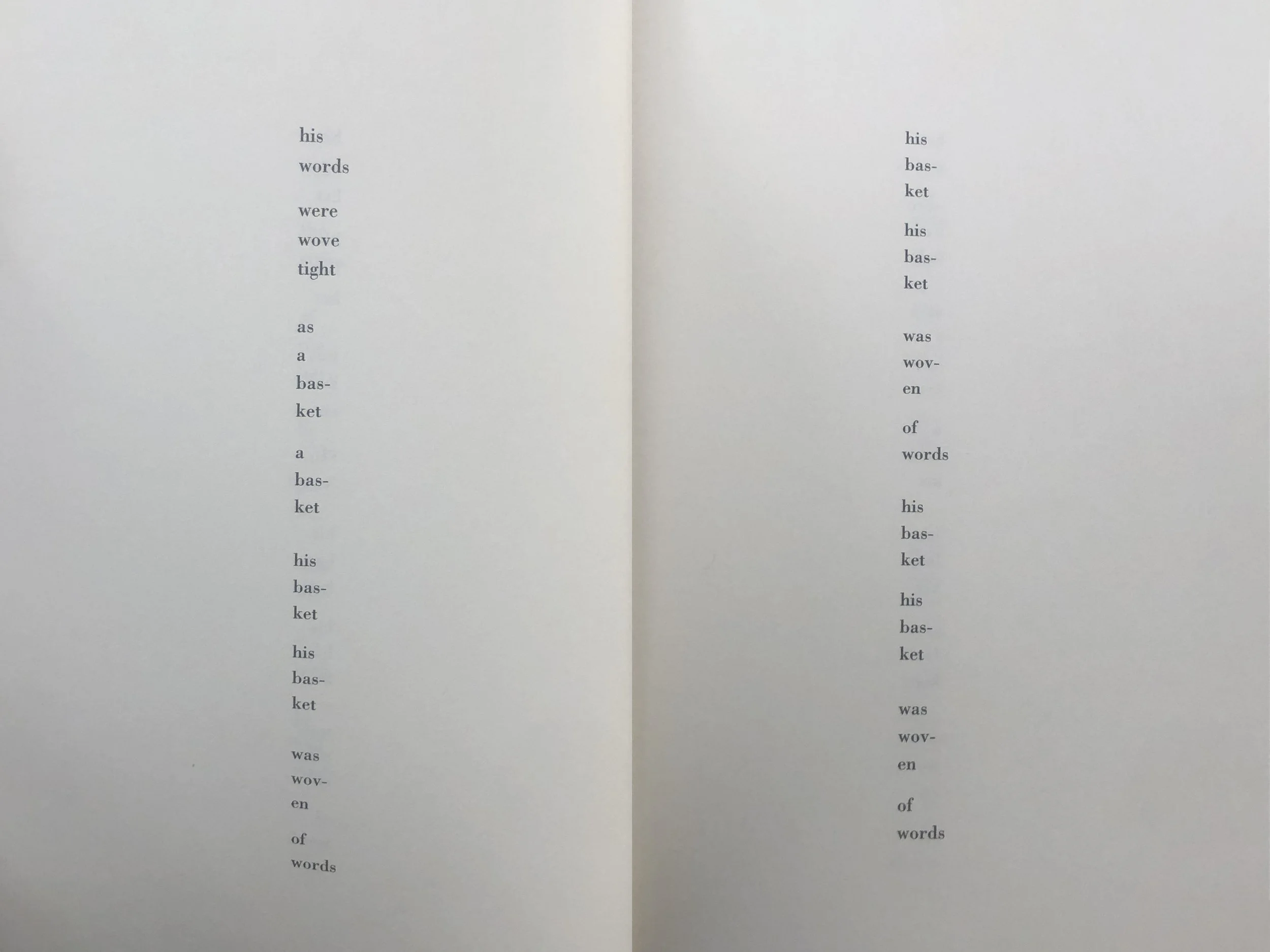
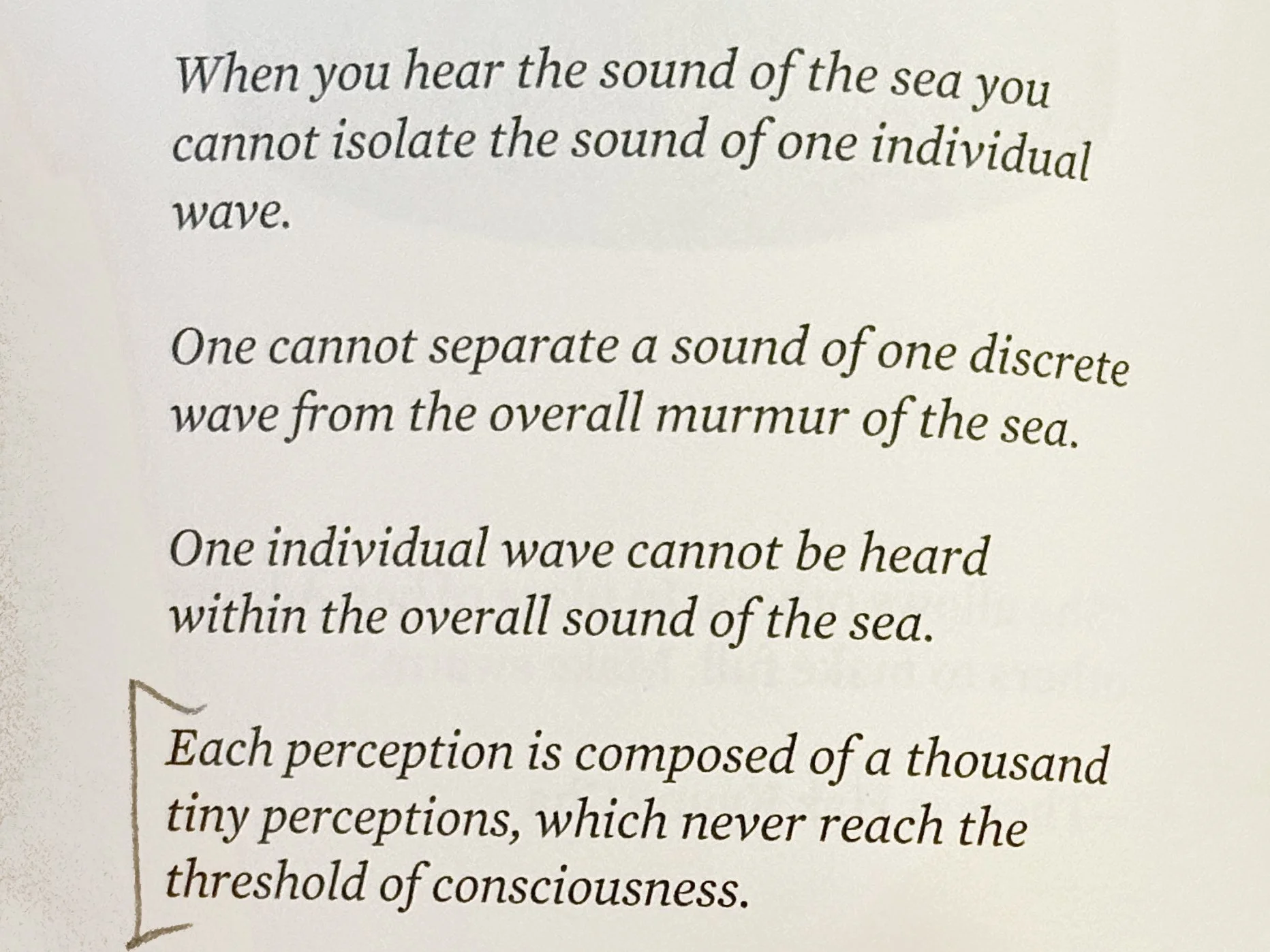
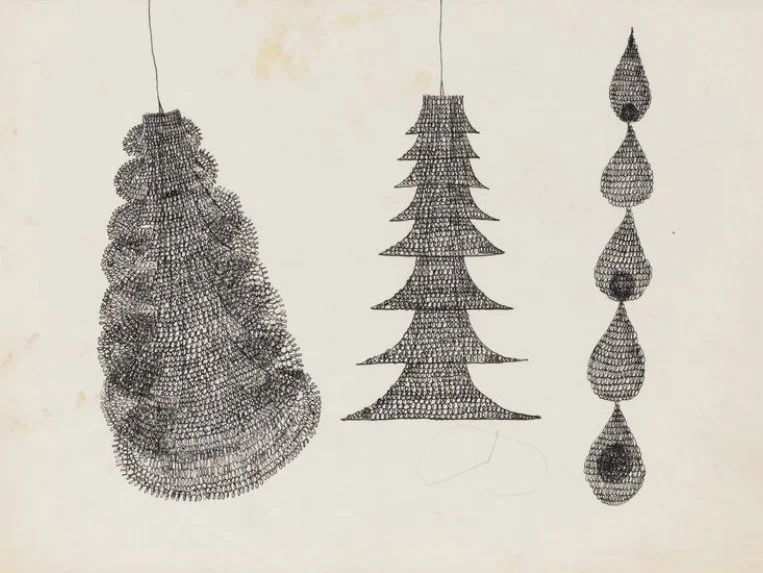
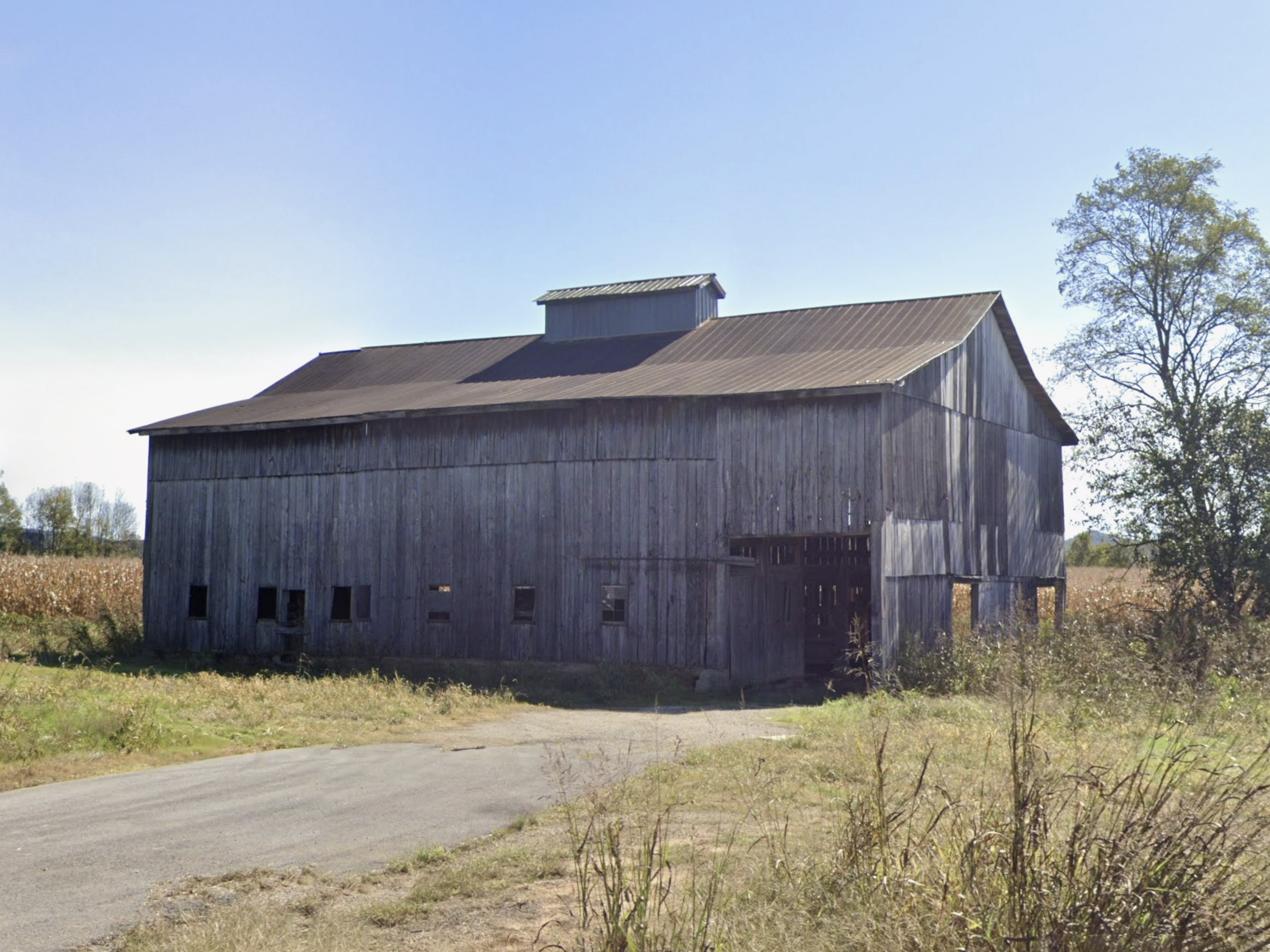
I started gathering images for this section by thinking about what has quietly shaped my work over time. It became a mix of poets, artists, and memories of landscape. I included pages from Jennifer S. Cheng’s Moon: Letters, Maps, Poems, Robert Lax’s basket poem, and Ada Smailbegović’s The Cloud Notebook—all writers who think through space, fragments, and the ways language can hold absence. (A special thanks to Kelsie Conley for sending the last two my way.) There’s a drawing by Ruth Asawa of some of her sculptures. Her work endlessly steadies me. I recently saw her retrospective at the MoMa and had a good cry seeing the sculptures in person. I had been wanting to take a break from making for months, but standing there I just kept thinking: there’s still so much work left to do. I also included a photograph of an abandoned barn in Kentucky near where I grew up, a place I passed every day on the way to school. That image—and the landscape around it—has been coming back into the work lately. From the backseat of the car I would watch the rolling hills flicker through the slats of weathered wood, light breaking into thin lines as the boards expanded and shifted with time. That feeling of the background shining through in fleeting fragments still finds its way into my sculptures.
Challenges
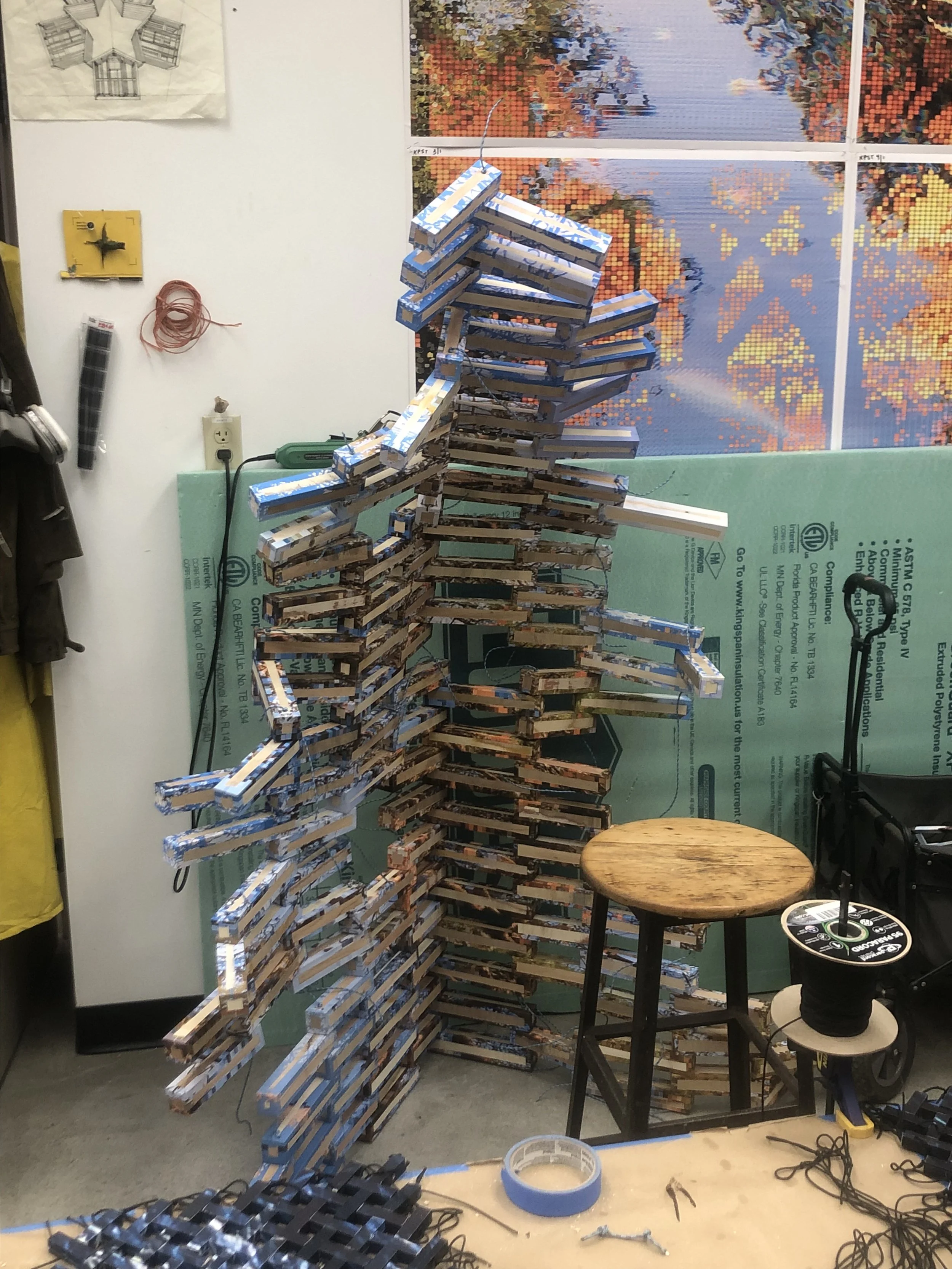
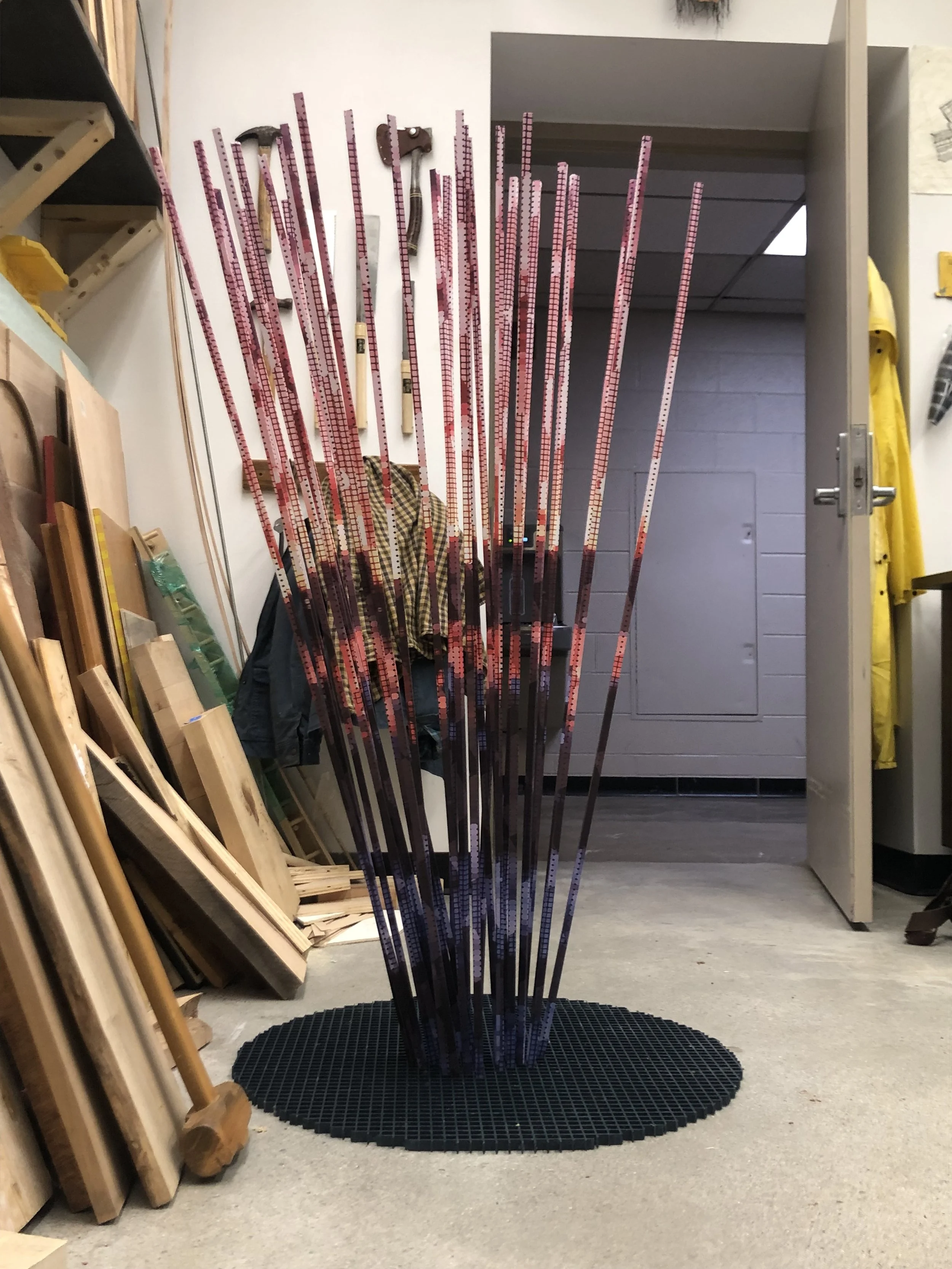
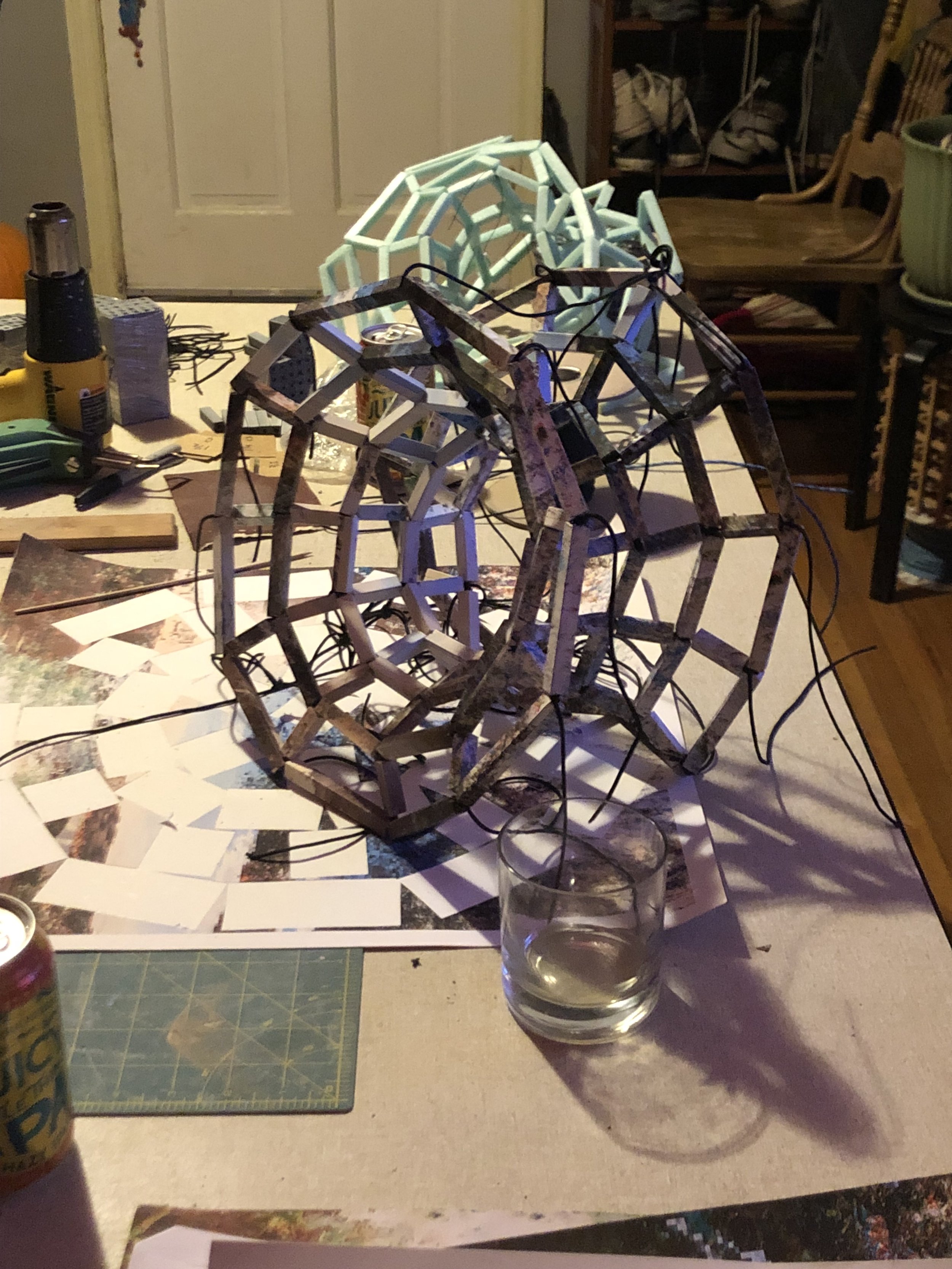
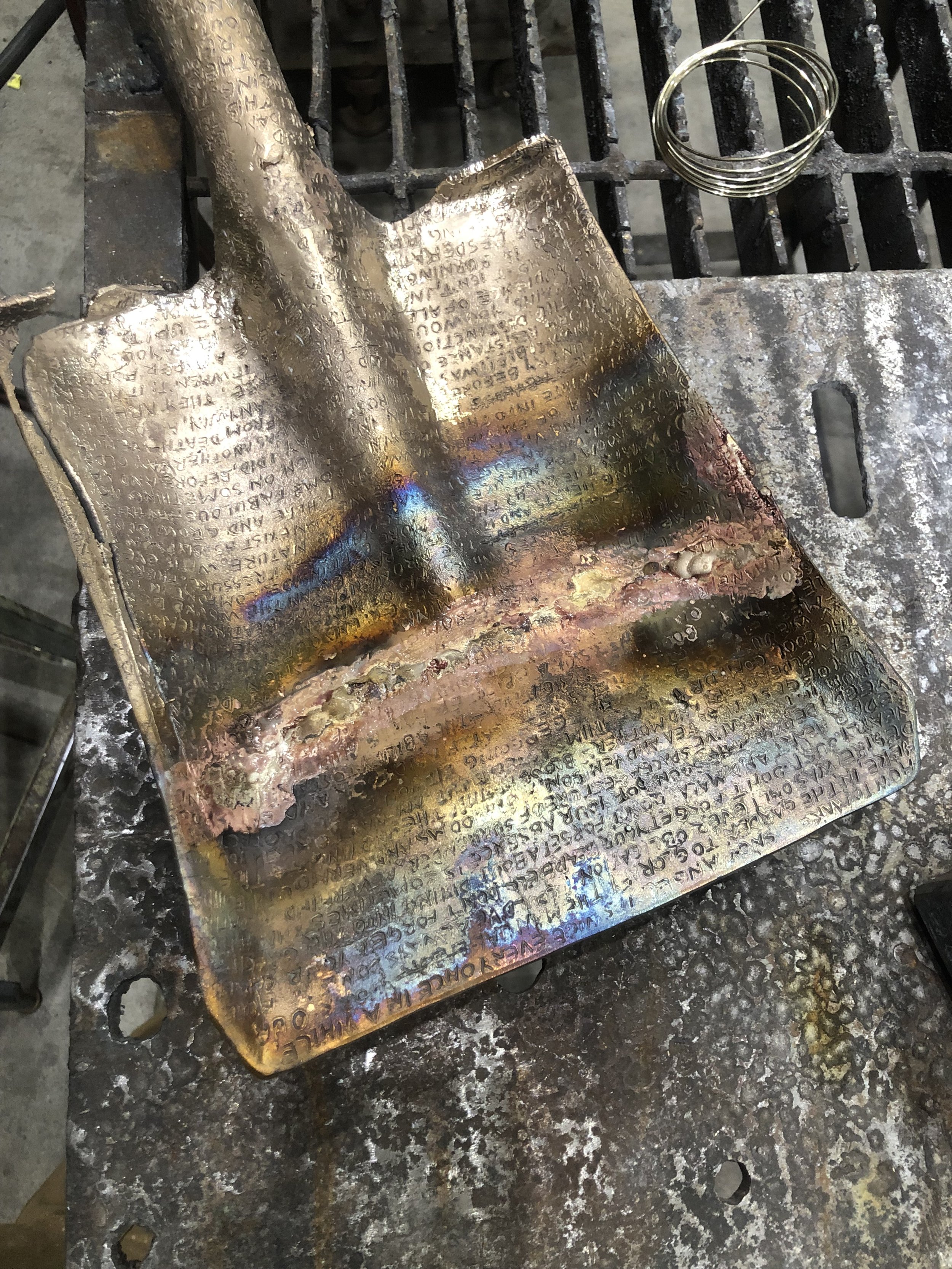
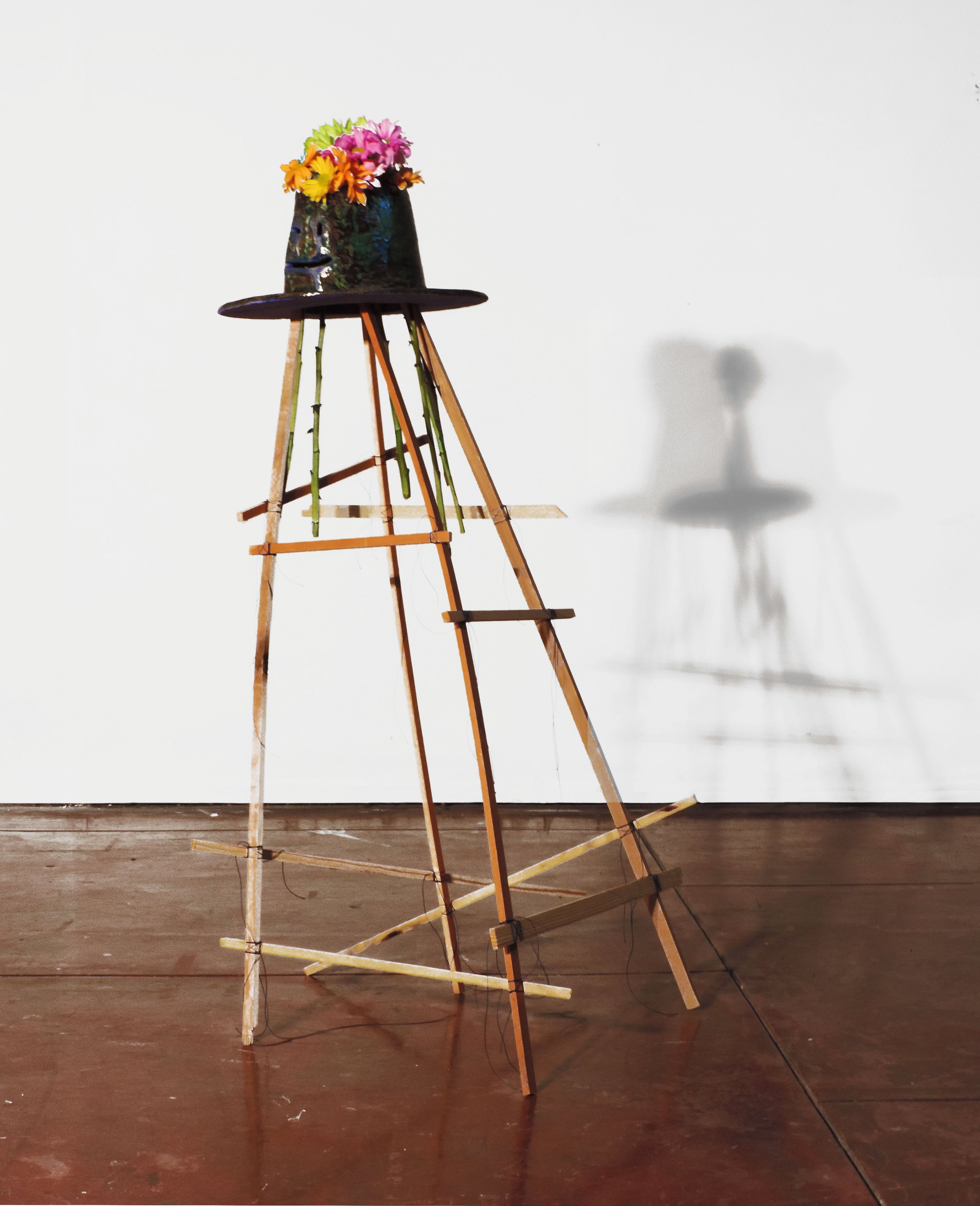
This writing comes at a time where I feel pretty burnt out, though I think I’m near the end of it—like I’ve been slowly recharging. Otherwise it all sounds a little dismal. If I sound dramatic I’m also a Pisces, so yeah. Here is a selection of some work that didn’t turn out the way I hoped and or was never really finished. There’s never a guarantee of satisfaction with the work. The way I build things—through repetition and thousands of small decisions—means I rely a lot on momentum. When a project stalls, it takes a hard nosedive. The risk of pushing through frustration isn't always worth it. More often than not it feels like spinning my wheels. Every once in a while though, something excellent comes out of being stubborn. It's like falling down an elevator shaft into a pool of mermaids. My process is modular, so nothing is really permanent. I’m used to untying hundreds of knots, pulling a single line and watching the whole structure clatter on the floor like dominoes. I started working this way so the work could always shift, come undone, and be remade, but it also means there’s a lot of room to get the pattern wrong and have to start over. There are pieces I’ve finished after months of labor that just don’t turn out the way I imagined and the whole thing gets disassembled. It can feel pretty hopeless, I'd even say miserable. Usually the doubt comes after intense stretches where everything is moving quickly and then suddenly it’s over—there’s exhaustion, and these deep internal questions about the purpose of the work and where it’s headed. What I’ve learned over time is that faith in the work isn’t constant. Instead, my faith is sometimes that my faith will return.
Reflection
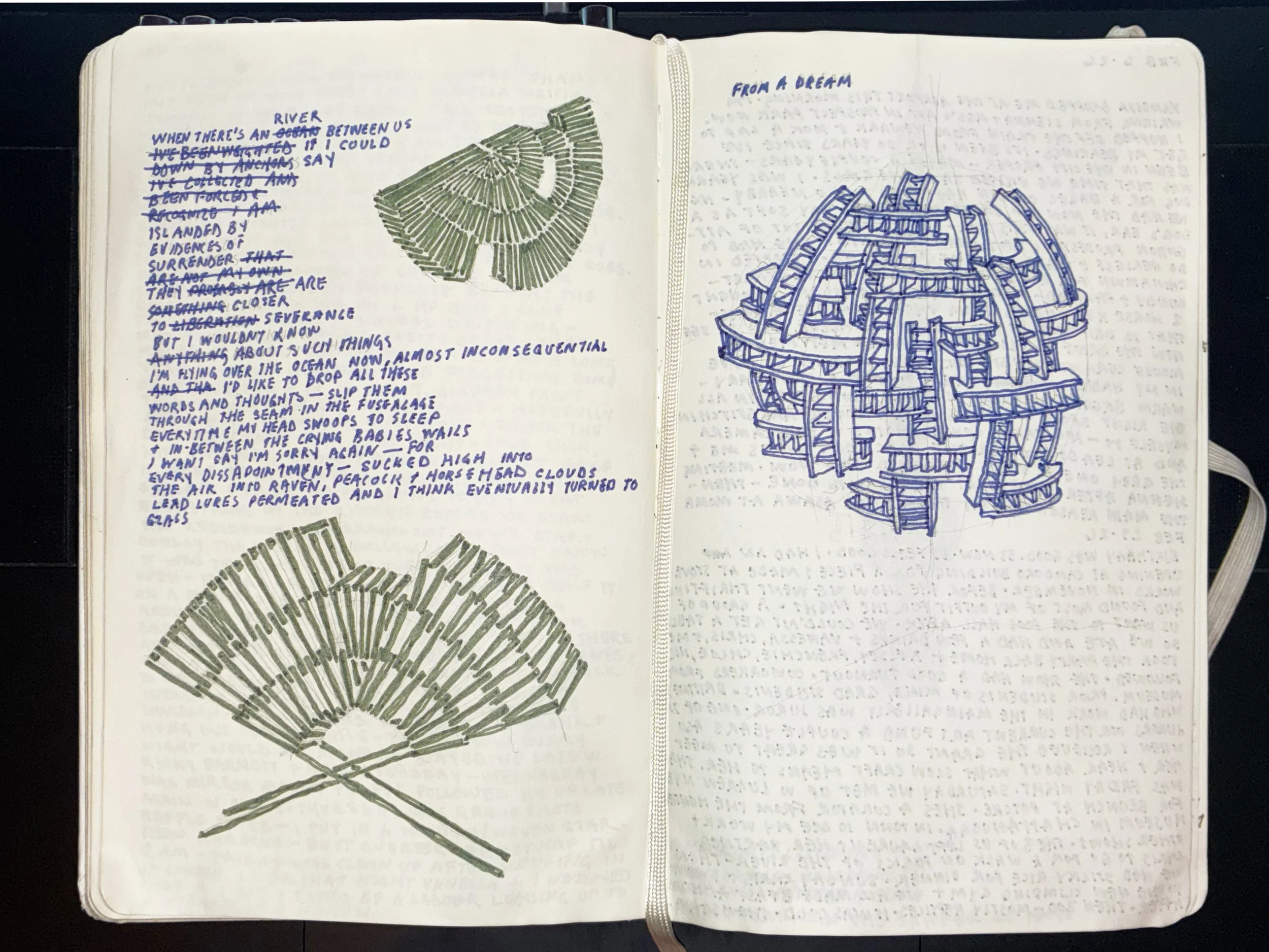
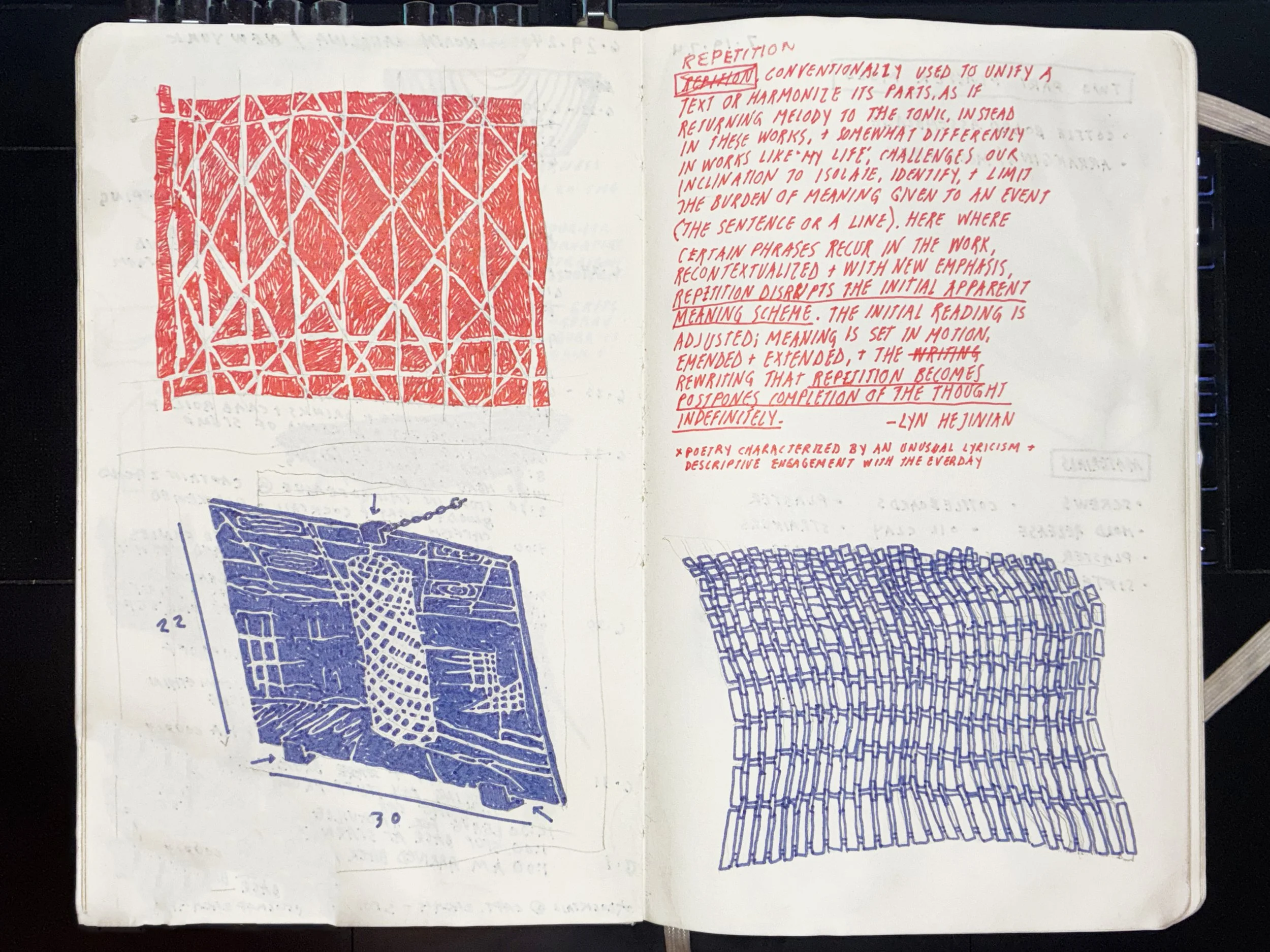
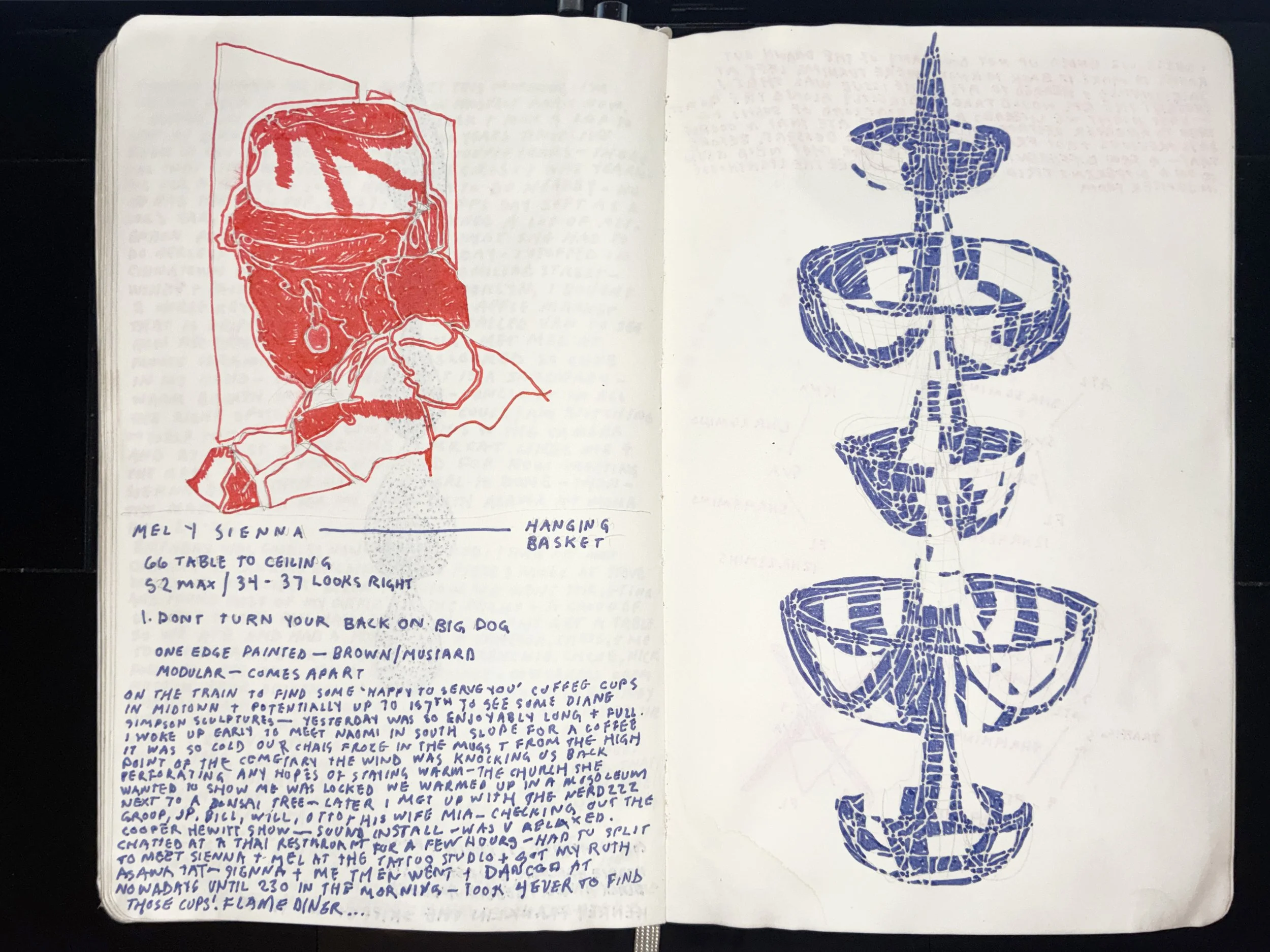
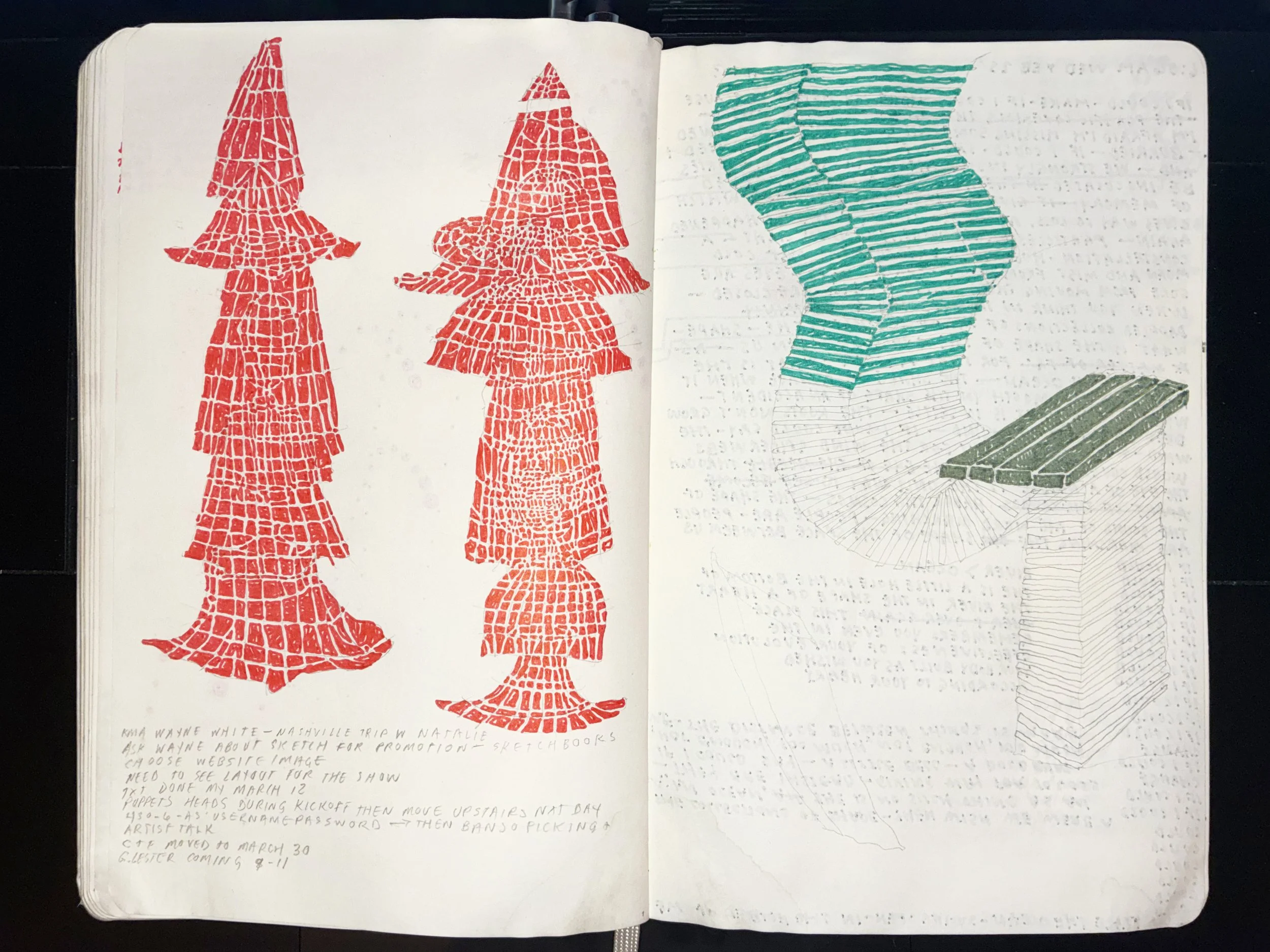
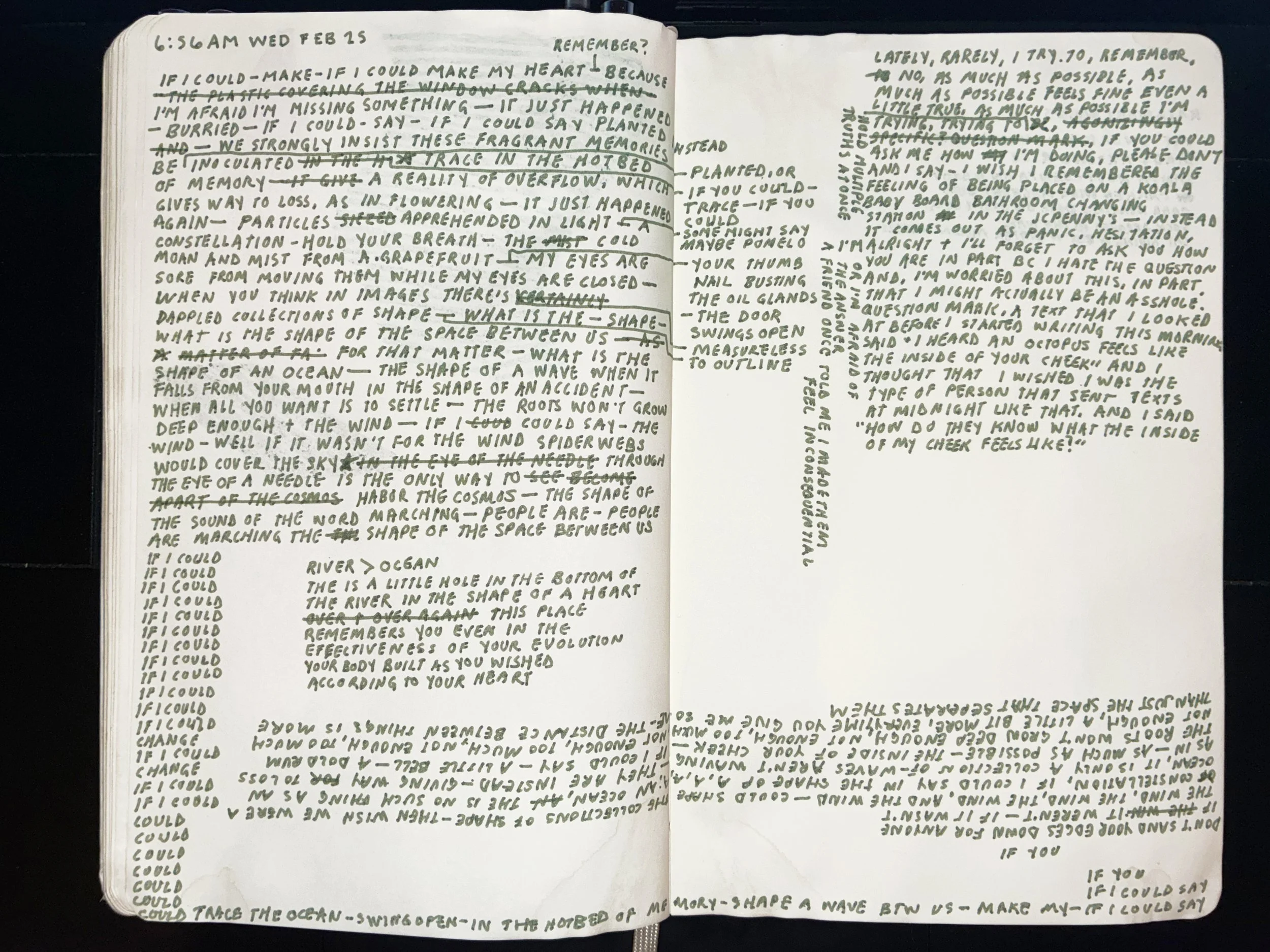
What do you do when you’re stuck, burnt out, exhausted, and just plain over it? I think there’s at least one thing that makes you feel good, like in your fucking soul. It’s somewhere nearby, just off to the side of all that noise. Find that thing and do it as much as possible everyday. Sometimes it’s drawing in a sketchbook, sometimes it’s walking through the trees to recharge your batteries, or if you’re desperate, building a fire and burning your old shitty art helps. For a long time I thought success meant constant momentum—sustainability, productivity, making the number go up! UP! UP! UP! I can't stand getting caught in the hustle. Now success feels more like staying in conversation with the work over time, even when it’s quiet or difficult. Sustaining a practice isn’t about always feeling inspired; it’s about returning to it after doubt. I originally thought about including a bunch of photos I’ve collected of things that make me happy in the world, but those might just be for me. Instead, I’m sharing recent sketchbook pages—plans for pieces, stream-of-consciousness notes, and small doodles—little glimpses of where the work begins and where it might go next, reminders that the practice keeps moving forward piece by piece.