Rain Howard
Rain is a visual artist and researcher who lives and works between London and Newcastle. They graduated with a degree in Sculpture from Camberwell University of the Arts in London in 2013. They also hold an MA in Fine Art (2018) and an MA in Queer History (2021) from Goldsmiths, University of London. They are a final-year PhD candidate funded by the Arts and Humanities Research Council (AHRC) within the Performance Cultures and Contemporary Art Research clusters at Northumbria University. Rain has exhibited their work extensively across the UK and Europe. In 2013, they exhibited their undergraduate degree show exhibition as part of Saatchi's New Sensations Award. They received the 2018/2019 Goldsmiths and Acme Studio award, supported by Jane Hamlyn. Their work has been featured in various creative outlets, including "Fleisch," a book celebrating queer artists (Germany, 2019). As a researcher, Rain contributed to "Queer Pandemic," a video-based oral history project that captured stories of LGBTQI+ people in the UK during the pandemic, which was later exhibited at Queer Britain 2022. In addition to their creative work, Rain is a passionate advocate for LGBTQI+ rights and regularly works as an advisor and independent writer championing inclusivity. They are also an associate lecturer on the BA (Fine Art) Sculpture Degree at Camberwell University of the Arts in London.
Rain’s creative practice is a multifaceted exploration of identity, challenging the physical and conceptual boundaries that define us. Through sculpture, performance, and critical research, they seek to illuminate the complexities of non-binarised existence, offering new insights into the interplay of gender, body, and performance. At the core of Rain's work is a critical examination of societal gender roles and inequalities, manifested through a critique of hegemonic attitudes towards pleasure and sexuality. Their piece, 'Apparatus' (2018), exemplifies this approach, employing traditional sculptural techniques to craft a narrative that both challenges and subverts the monolithic tendencies of masculine modernist sculpture. By juxtaposing blobular cast-resin forms with statuesque figures reminiscent of abstracted 'sex toys', the work injects a playful yet poignant commentary on sculptural tradition, infusing it with a narrative of failure and sardonic humour. Their current artistic inquiry is rooted in the physicality and performative nature of exercise practices—weightlifting not merely as a site defined by routines and discipline, but as a critical space for challenging contemporary gender discourse and exploring more fluid and unrestricted expressions. Inspired by the work of Marquis Bey and the performative resistance of artists like Cassils, Rain's exploration seeks to unveil the socio-physical potentialities of non-binary bodies in motion, transforming athletic endeavours into a profound method of research and expression.
Process
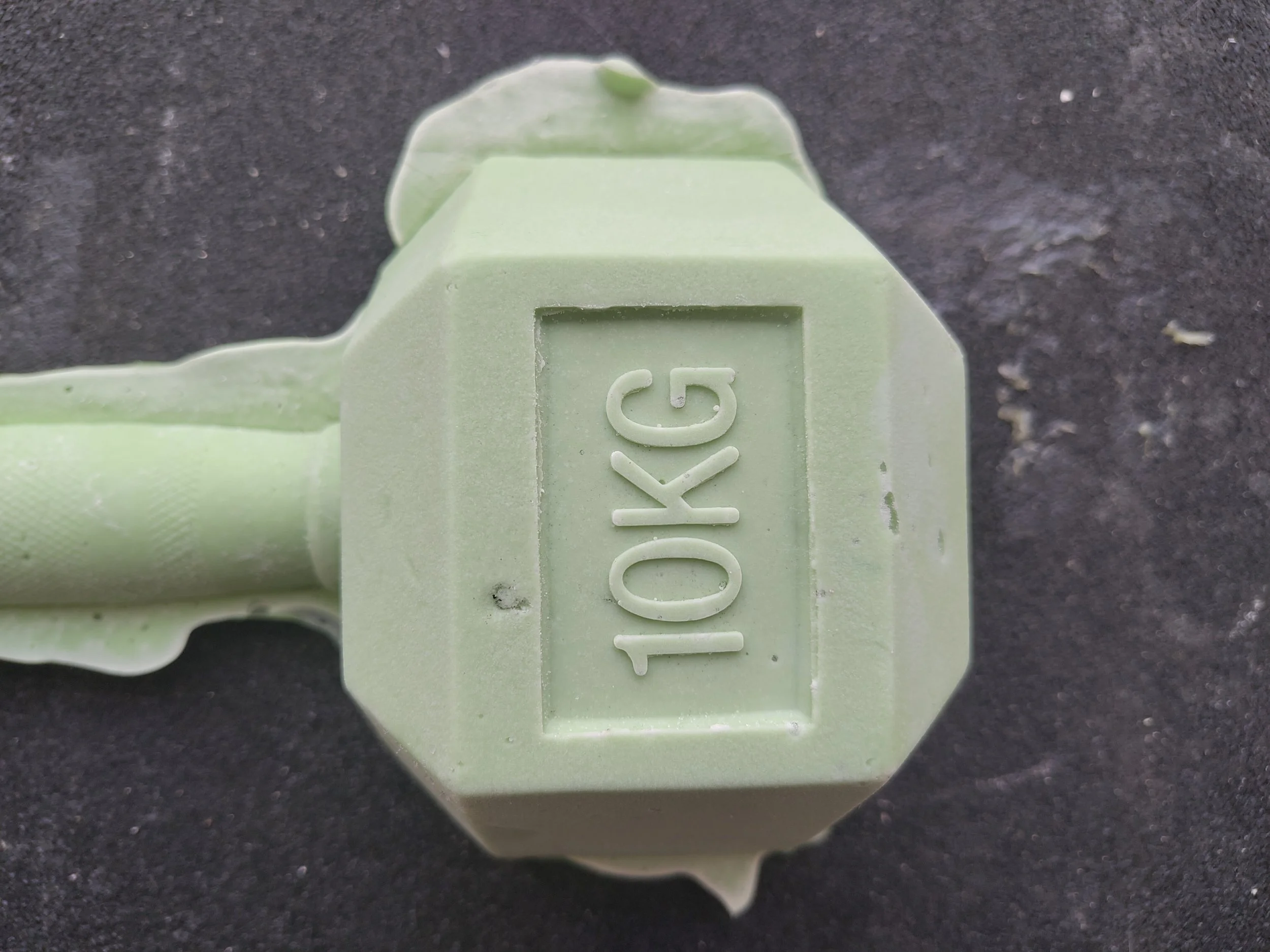
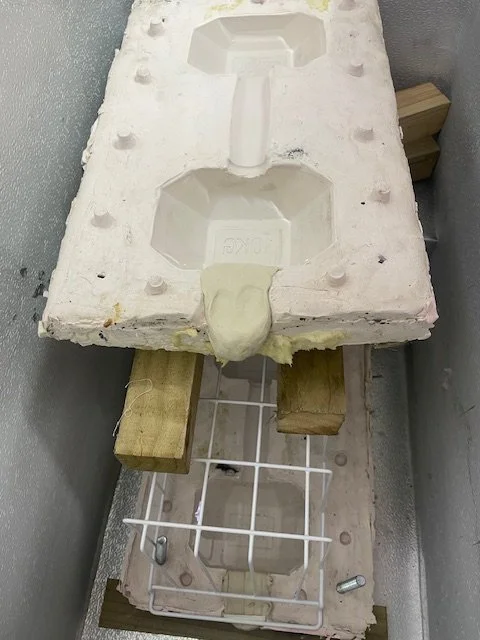
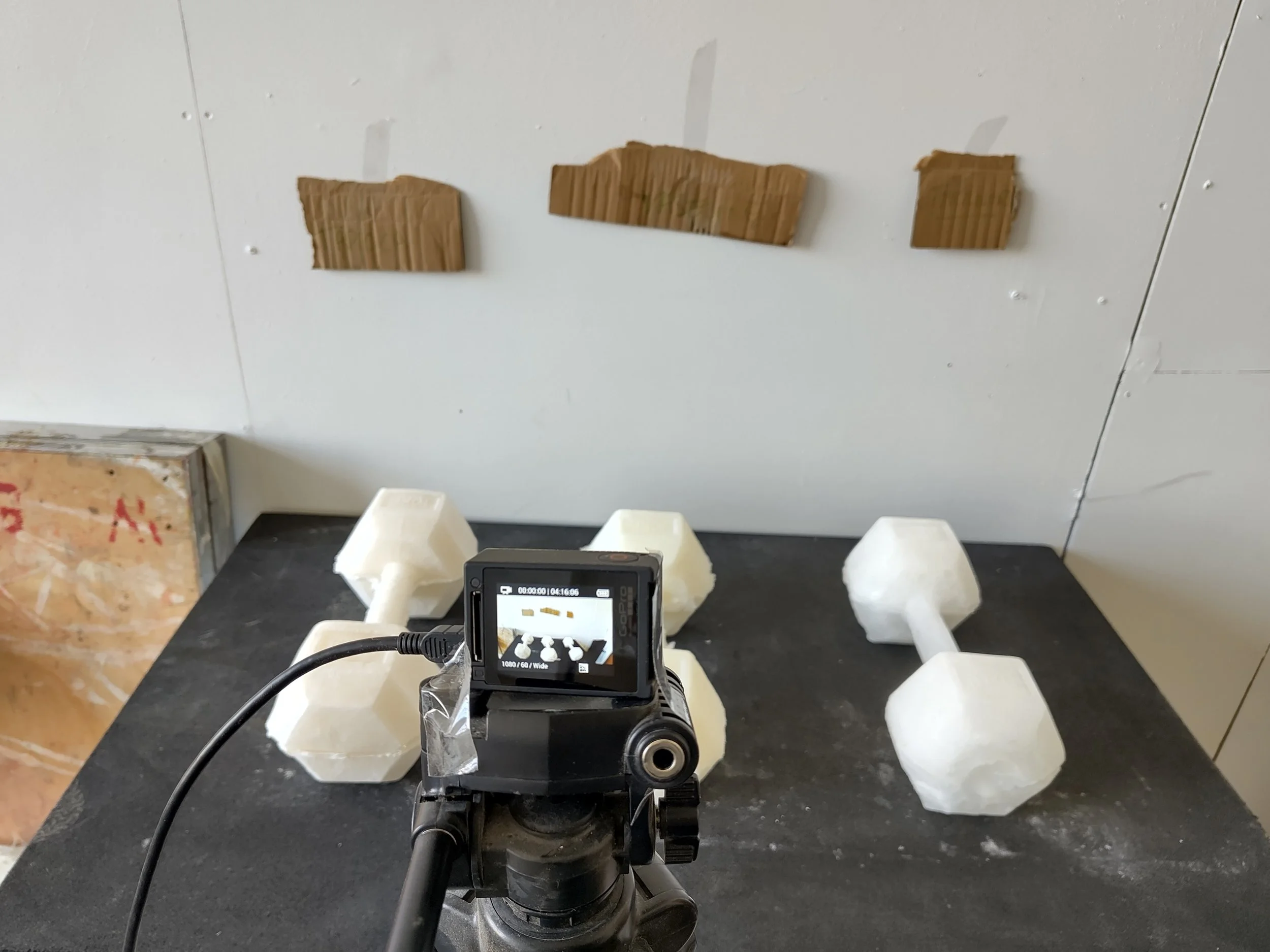
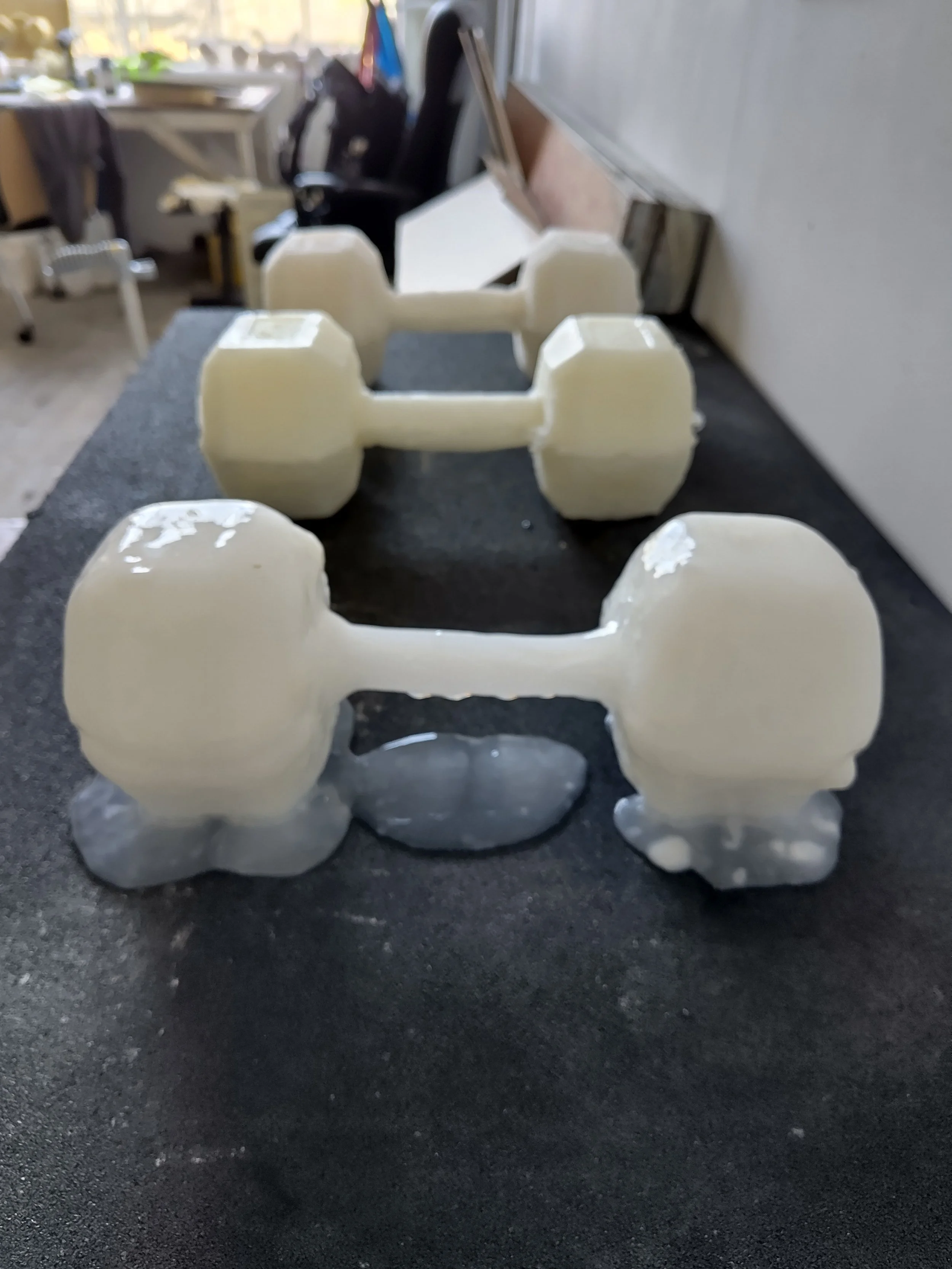
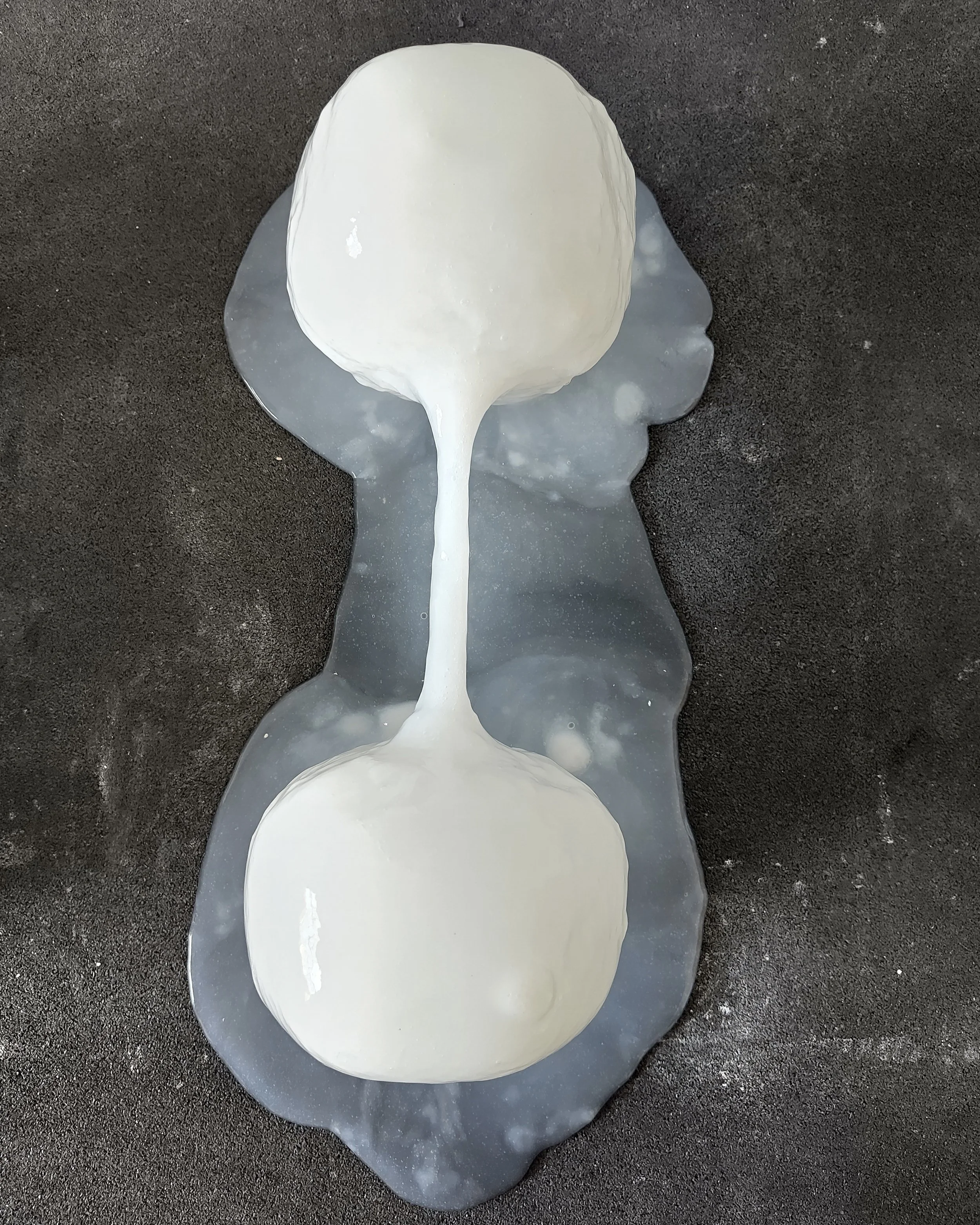
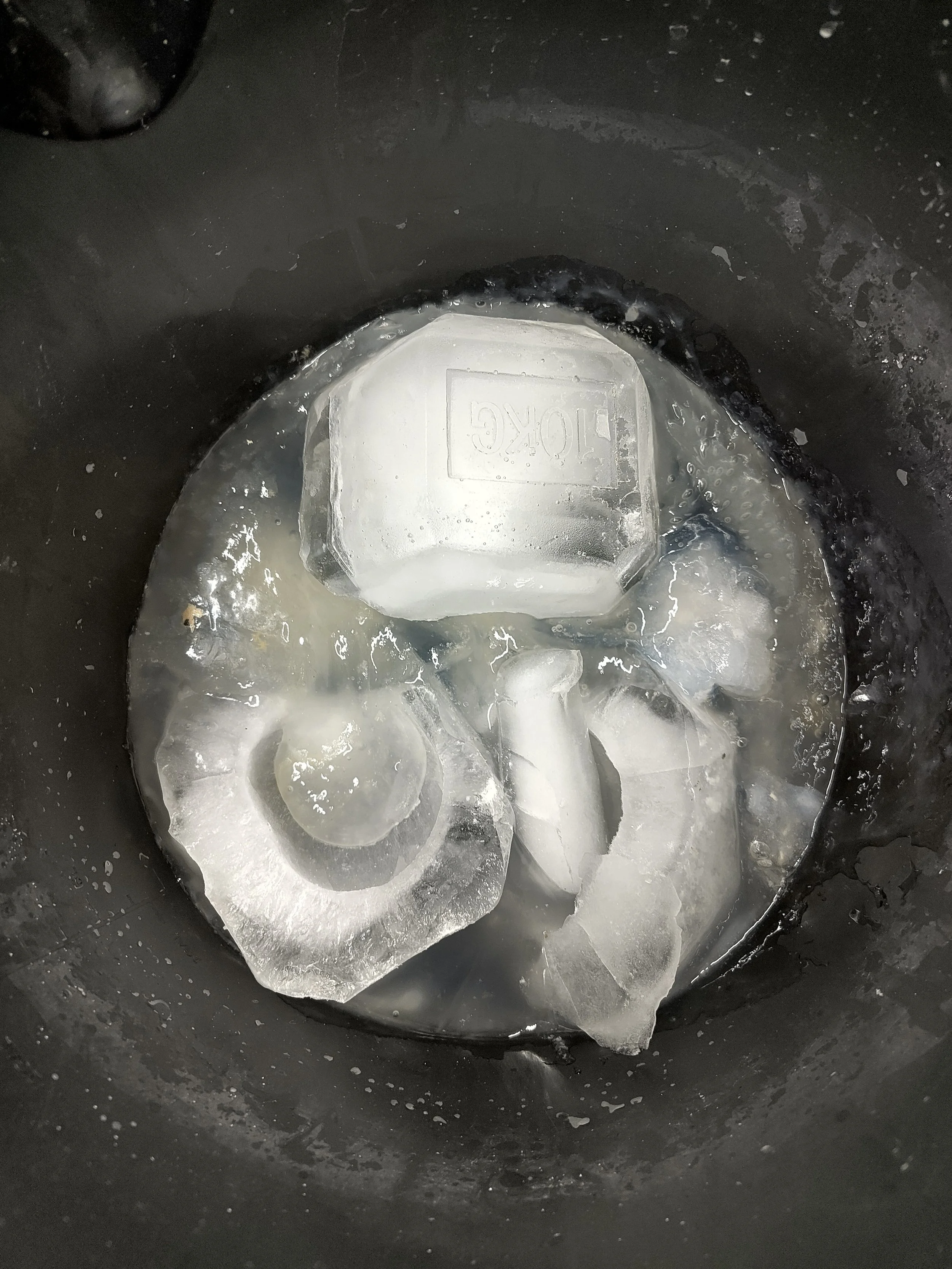
My initial research starts with embodied experience. At the moment, I am concerned with using the gym and weightlifting to think through ideas around gender. I always take my notebook to the gym and reflect upon my time there, experiences, feelings, and observations about the people and space. Like most weightlifters, I record most lifts! These thoughts are then taken to the studio, where I work through them and develop reflections in a physical, more sculptural way. At the moment, I am casting with less traditional materials, like water, and working through the complexities of this approach. I have a freezer in my studio, and I am freezing different substances in my moulds and then documenting how they melt once removed from the mould and freezer. This is allowing me to think through the idea of 'unfixity': what happens when we challenge systems that are concerned with fixed and rigid forms. The images document my material experiments in the studio, figuring out how to work with difficult-to-contain materials. They also show the process once removed from the freezer and observe how the forms evolve as they melt.
Influences
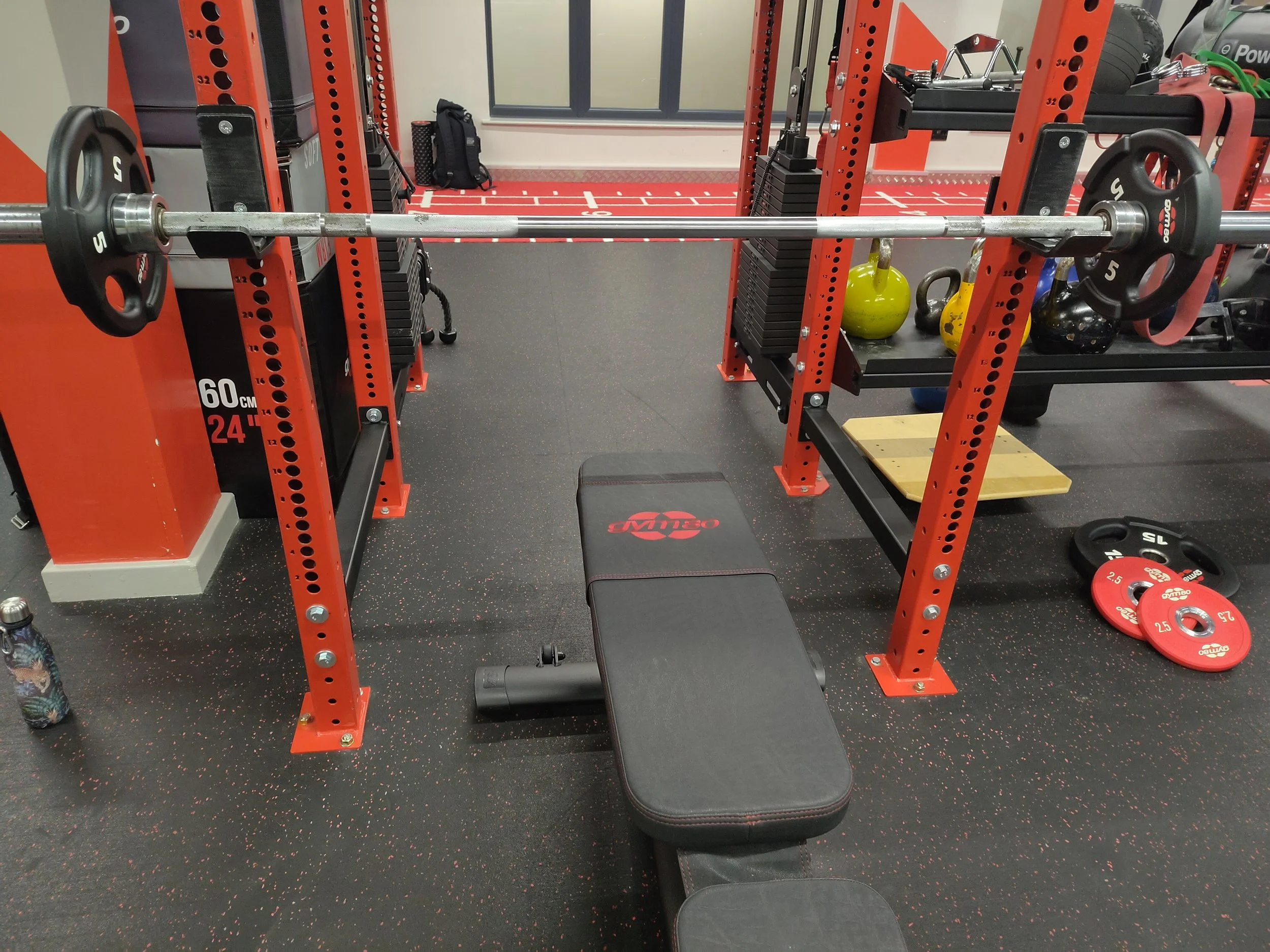
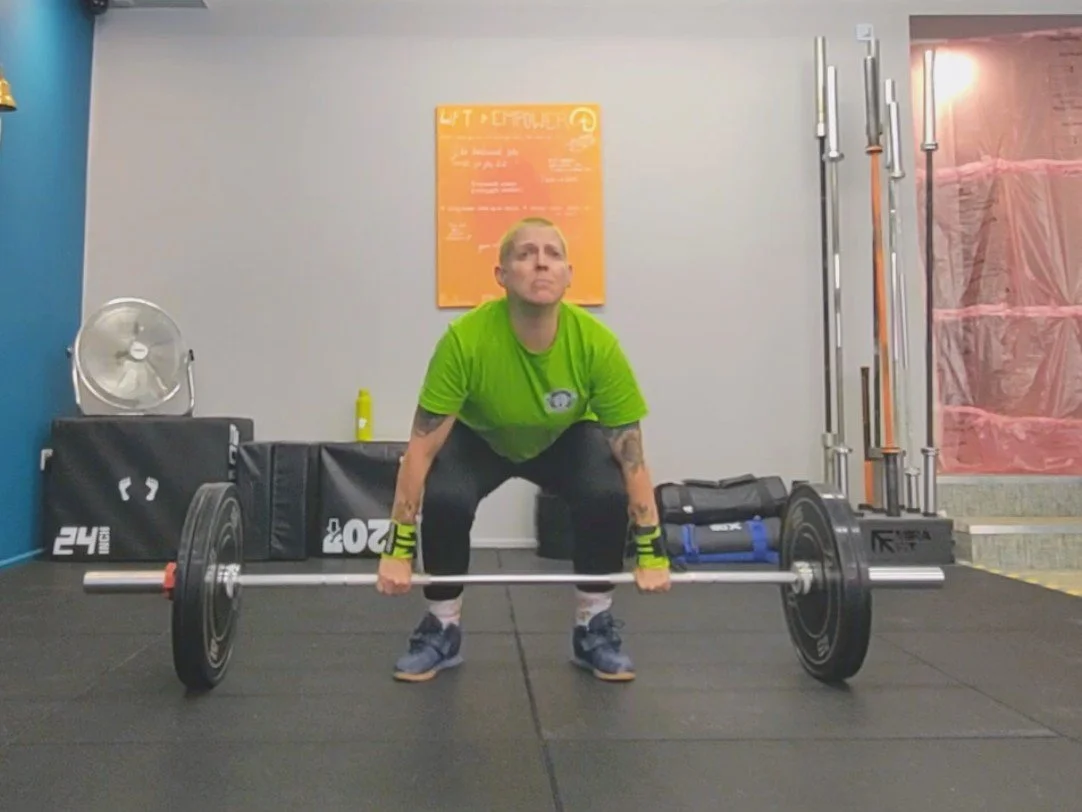
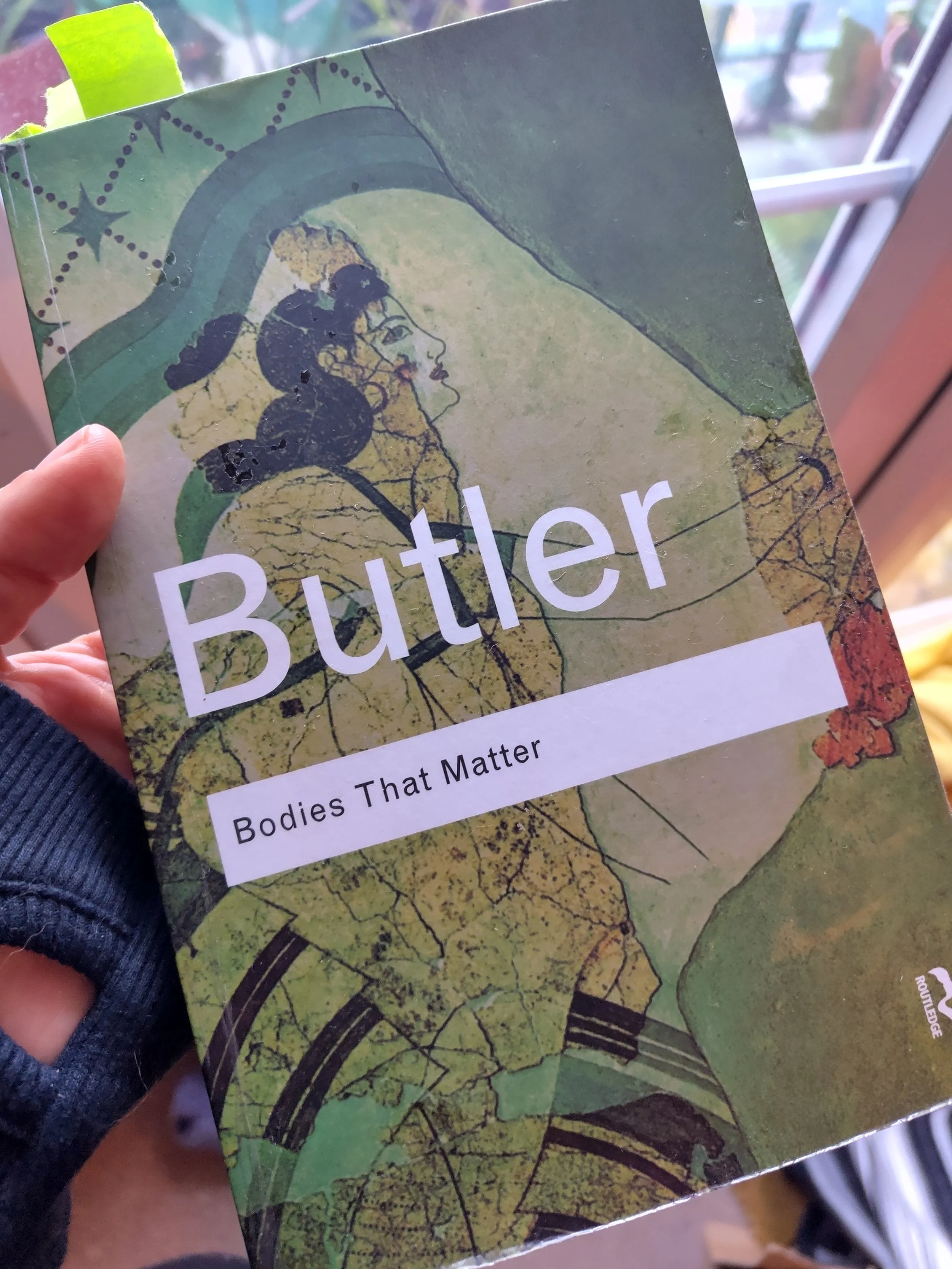
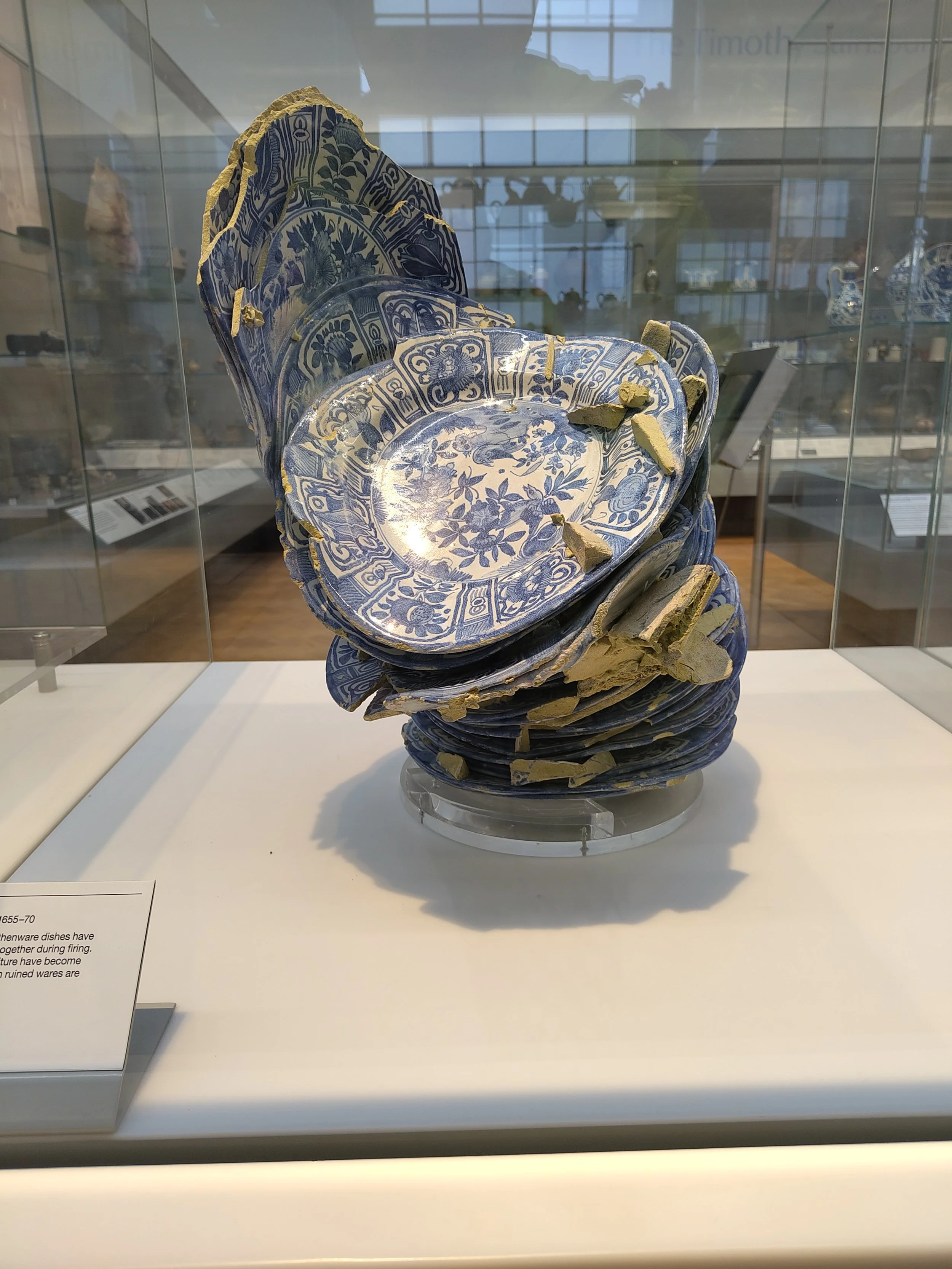
I am particularly interested in the environments where bodies exercise—from budget gyms to muscle gyms to premium sports clubs—and what distinguishes them. Being in these spaces allows me to think through questions of access, social etiquette, and the different behaviours, quirks, and hierarchies that operate within them. I enjoy the architecture, the furniture, and the various mechanisms/technologies at play across the gyms. I have included a couple of pictures of gym environments and myself training. I am really fascinated by all of the technologies at play in these spaces. When I feel stuck or uninspired, I usually turn to reading. I am currently re-reading Bodies That Matter by Judith Butler. Each time I return to this text, I understand it a little more, and it consistently prompts new ways of thinking about how bodies materialise and come to matter. If I am still not feeling creatively engaged, I will visit an exhibition. The subject matter need not relate directly to my own work; I often find the most useful inspiration comes from elsewhere. Recently, I visited the ceramic and glass collection at the Victoria and Albert Museum in London. After spending time in spaces like this, I usually return to the studio full of ideas to work through. I was particularly drawn to a stack of plates that had fused together in the kiln, known as wasters. I think I was attracted to them because I am currently thinking about unfixed forms to disrupt sculptural norms. These objects are labelled as failures and ultimately treated as waste yet preserving them as artworks resists traditional expectations of finish, function, and a fixed product. I was also interested in the way fragments of the kiln had become attached to the plates. This made me think about how bodies and objects are formed by their surroundings—almost through a process of osmosis. The term' wasters' feels especially significant: although they are named as rubbish, here they are given a prominent position within a major London institution. In this context, they are anything but waste.
Challenges
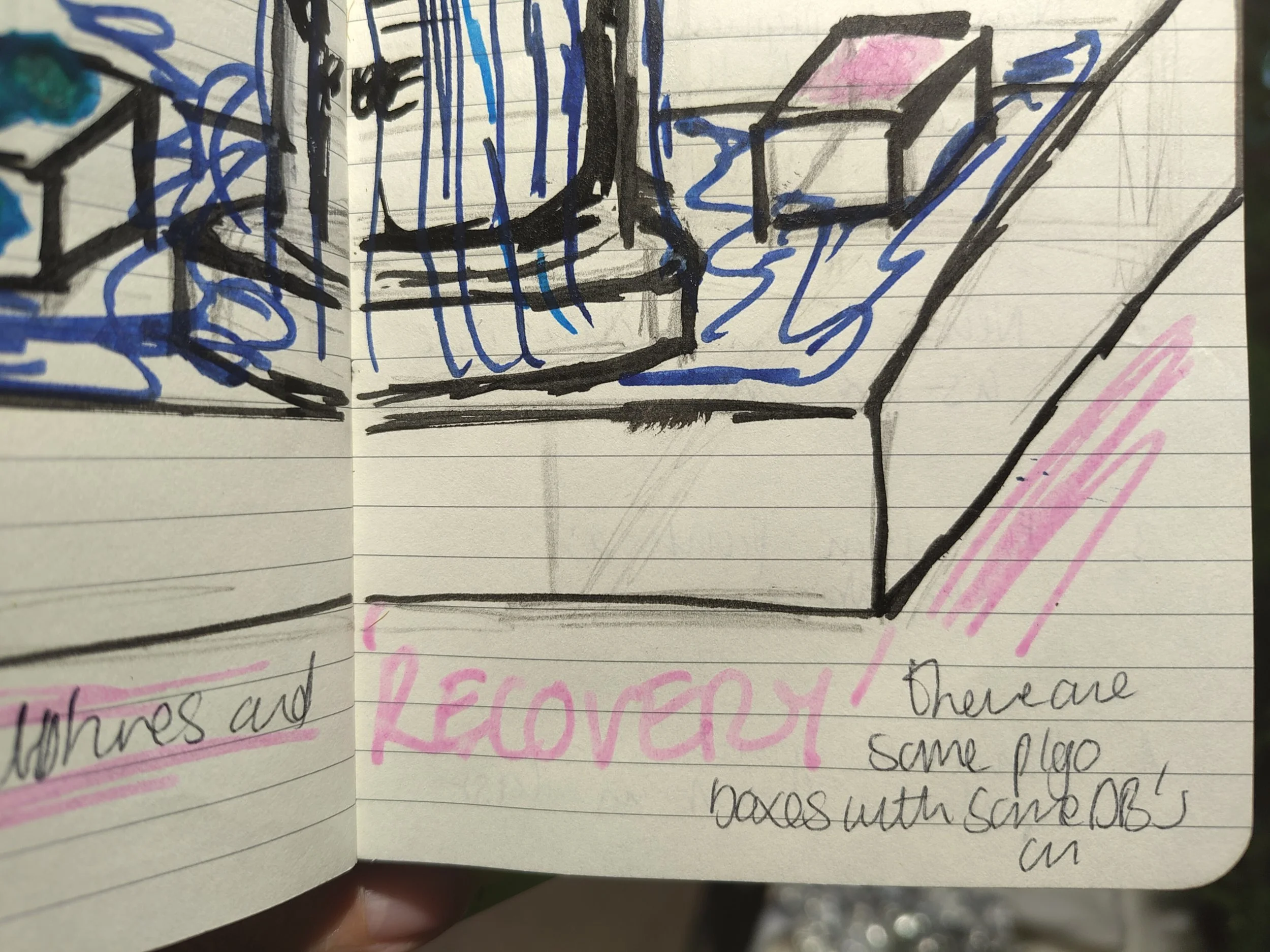
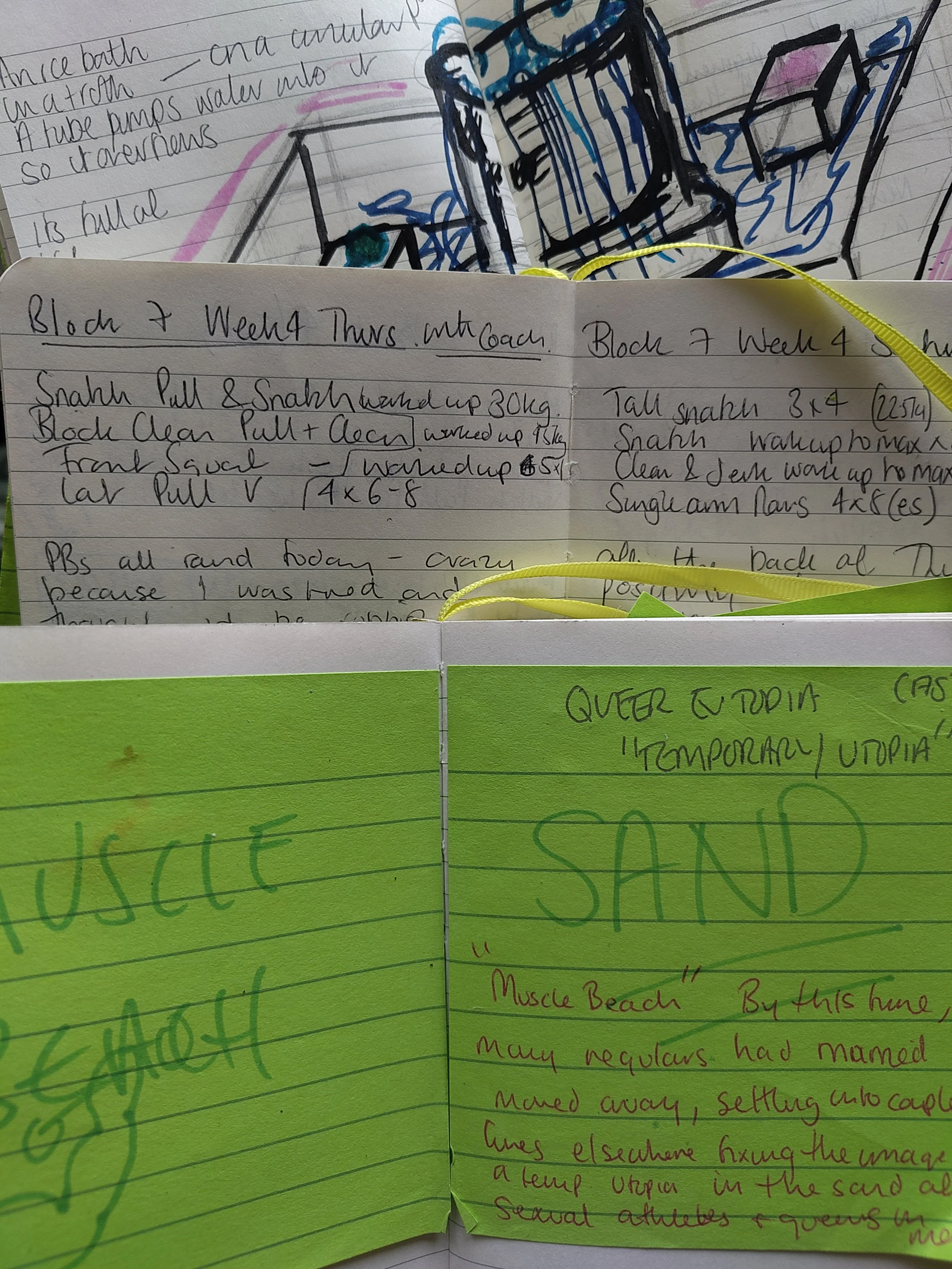
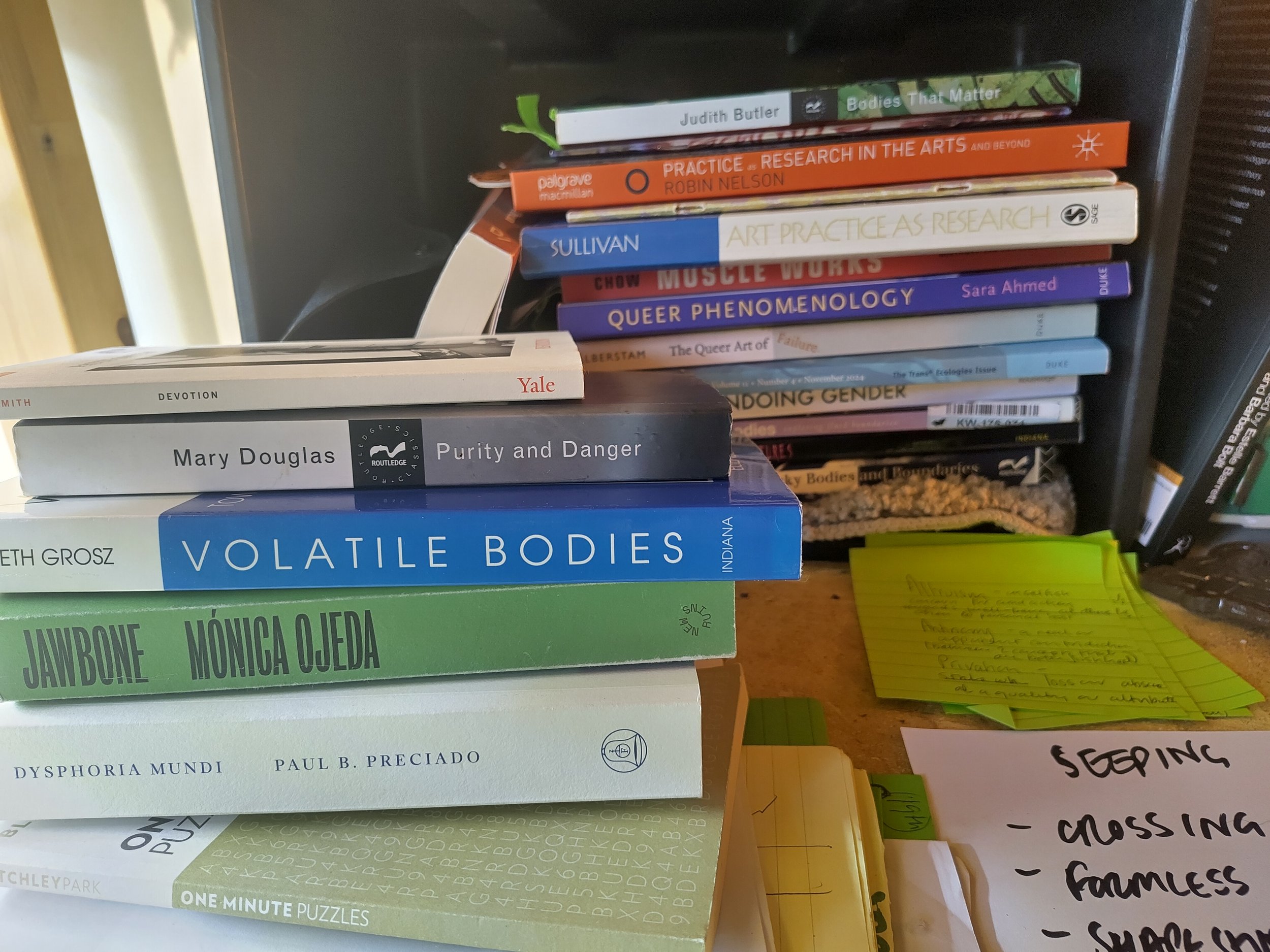
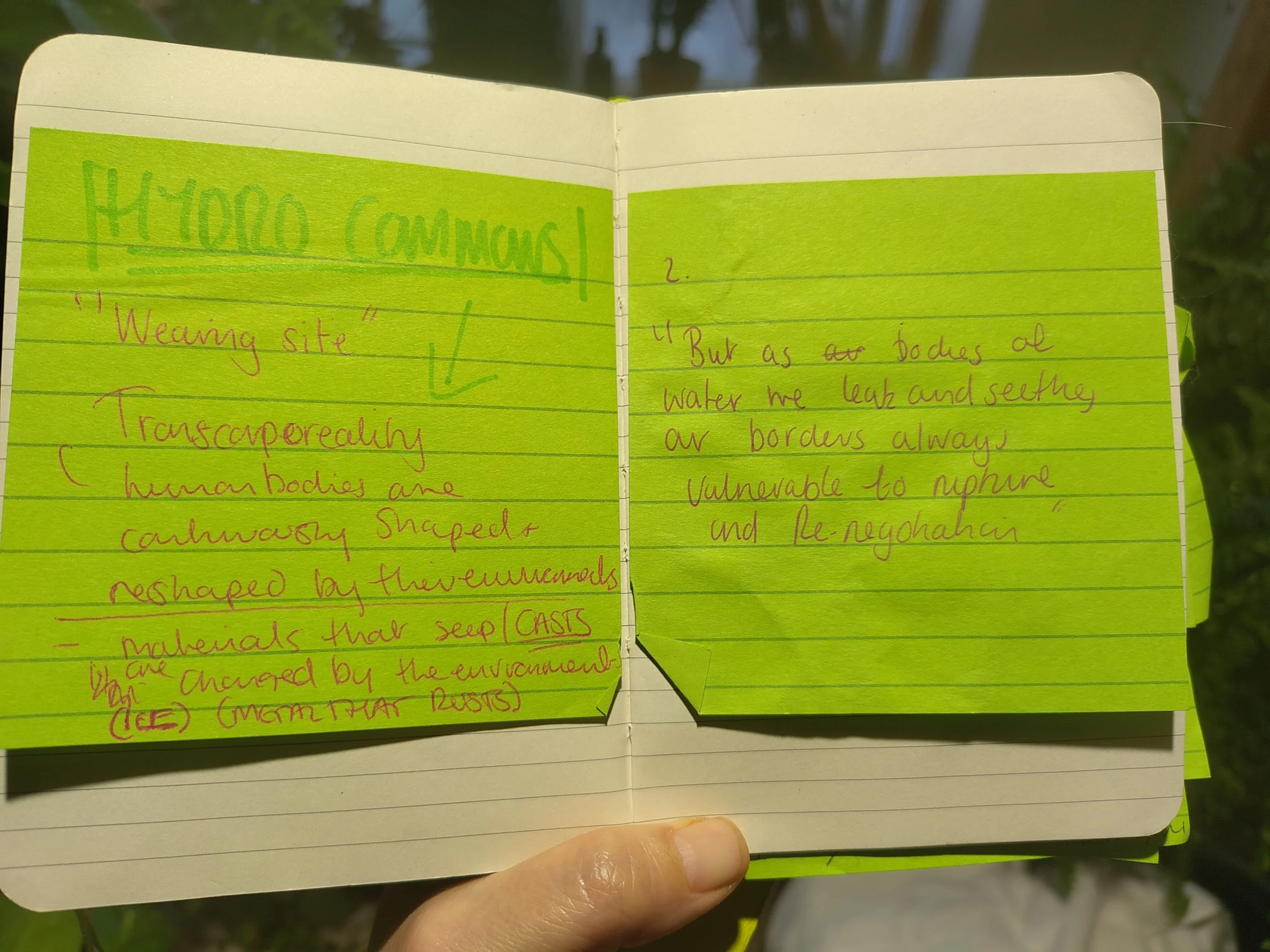
Creative blocks and periods of doubt have been recurring parts of my practice, particularly when making work hasn’t been materially possible. I’ve learned that moving through these moments doesn’t always mean producing finished pieces. Reading, writing, and keeping notes in my sketchbook have been essential ways of staying connected to my practice, even when I’m not actively making. I’ve come to understand that creative work doesn’t disappear during pauses—it simply changes form. Balancing art with the rest of my life has been one of the biggest challenges. When I graduated from my undergraduate degree, I imagined success as constant productivity, regular exhibitions, and gallery representation. However, I graduated a little later than many of my peers and already had responsibilities that required me to work full-time, and more recently, I have become a carer for a family member. As much as I wanted to dedicate every day to artmaking, that wasn’t my reality. Accepting this was a turning point: I stopped comparing myself to other artists and began recognising that my path didn’t need to look like anyone else’s. Rest, in my creative life, often means stepping back without guilt. There have been long stretches where I haven’t made any practical work at all, but I’ve learned that rest can still be active thinking, researching, writing, and reflecting. What has been most essential in keeping my practice alive is the belief that I am still an artist, even when I’m not producing visible outcomes. That mindset has allowed my practice to evolve more slowly, but more honestly. Over time, my practice has shifted from being solely object-focused to one that embraces research, writing, and theory as integral components. Rather than seeing these elements as separate, I now understand them as deeply intertwined. The images show my three sketchbooks: one is where I dump all of my creative ideas, one is where I keep my reflections on the gym, and the last one is where I keep all my post-its. I use post-its to capture thoughts, quotes, or notes from things I have read. I used to have them all on a wall, but I soon ran out of space. I also realised that once I had moved beyond or through a particular thought, I didn’t want to get rid of them, so I kind of archive them. The images also show a bucket full of broken ice experiments, a stack of books that I am currently reading or dipping in and out of, and some of my Post-it note archive.
Reflection
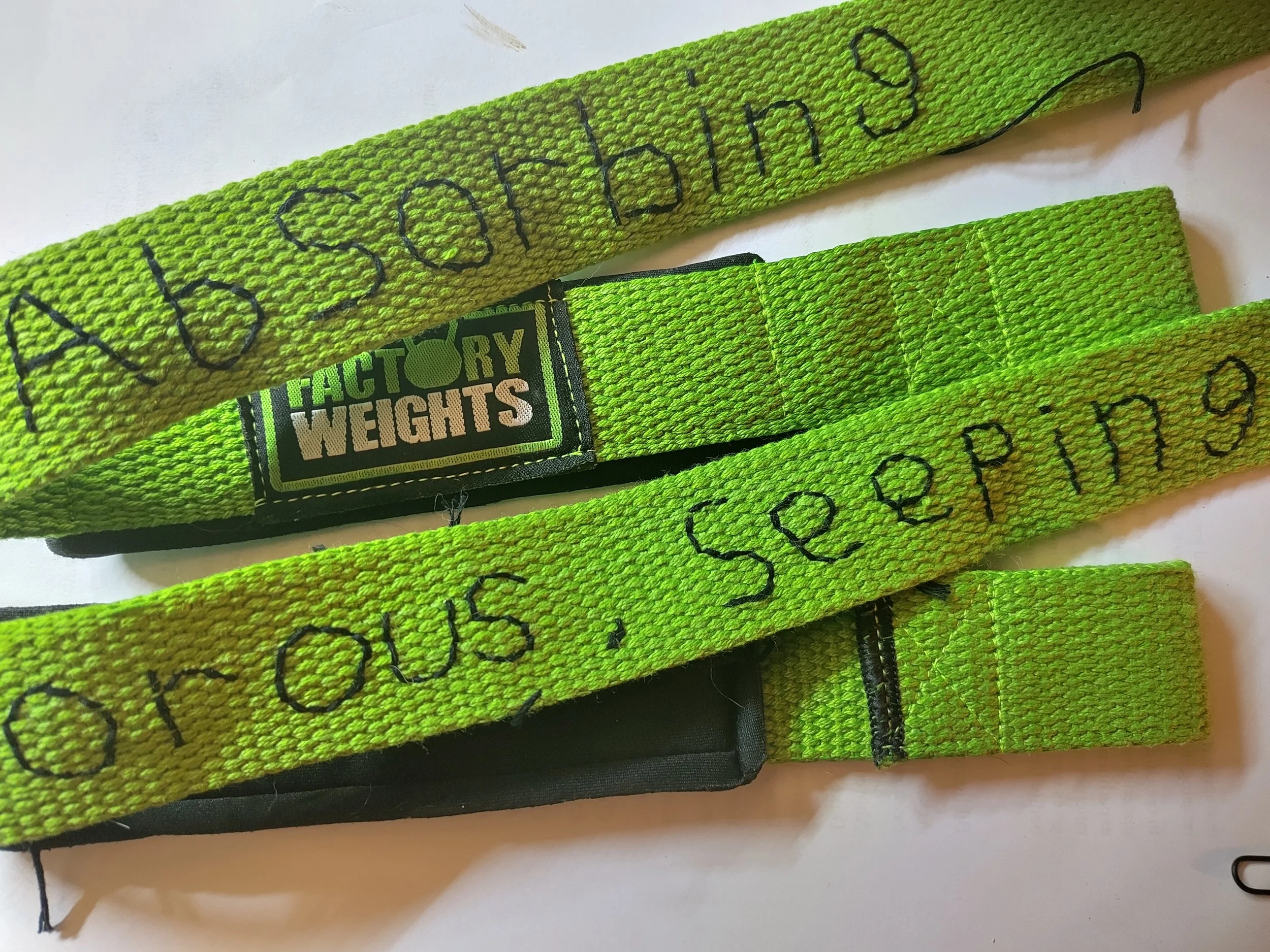
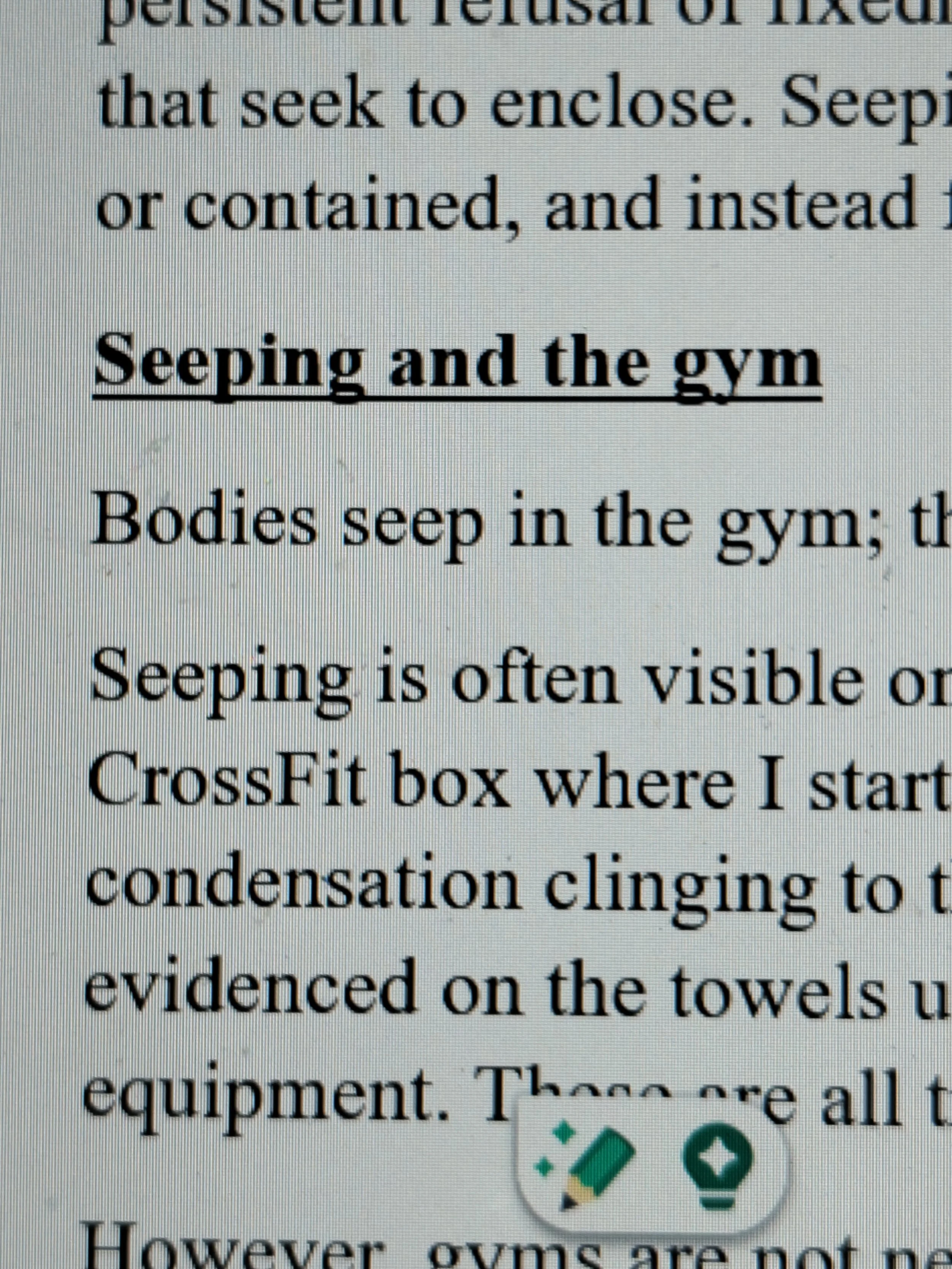
Success, for me, has changed significantly. While I once measured it against external markers—exhibitions, representation, productivity—I now see success simply as being able to make art and sustain an identity as an artist. It has taken a long time to reach a point where I can dedicate substantial time to my practice without relying on multiple unrelated jobs, and that, in itself, feels like an achievement. My advice for sustaining a creative practice is simple: you do you. Everyone’s journey is different, and not everyone’s path is linear. Comparing yourself to others can be deeply unproductive, especially when circumstances, responsibilities, and timelines vary so widely. For anyone feeling stuck or disconnected from their work, I would say that stepping away doesn’t mean failure. Staying curious, reading, writing, and paying attention to what interests you can be just as important as making. For those just beginning to take their practice seriously, I would encourage patience and self-compassion. There is no single definition of success, and no fixed pace you need to move at. Allow your practice to change and grow alongside your life. Looking ahead, I’m really enjoying the balance between written and creative outputs, and I see this continuing. I’d like to contribute to more journals and perhaps even write my own book in the future. With one year left to complete the written element of my PhD, practical outputs may need to take a back seat for a while, but I’m still developing new ideas. Focusing on the research side of my practice has helped anchor the work within wider artistic and contextual fields, and I’m looking forward to bringing new work into the world when the time feels right. The images show some snippets and scraps, some written thoughts, sketchbook pages, and new ideas coming to life.