Mel Rosen
I am a multimedia artist Massachusetts born, NYC bred, now rooted in South Carolina. I traded corporate life for the classroom and the studio and have gone back to my art roots. Process is everything. Teaching for Artistic Behavior (TAB) is my philosophy. With TAB the journey isn’t a means to an end — it is the end. The result just shows up and guides next steps in an ongoing quest to look deeply into my psyche: things I feel, things I love, things I’m curious about, things I despise…
Process
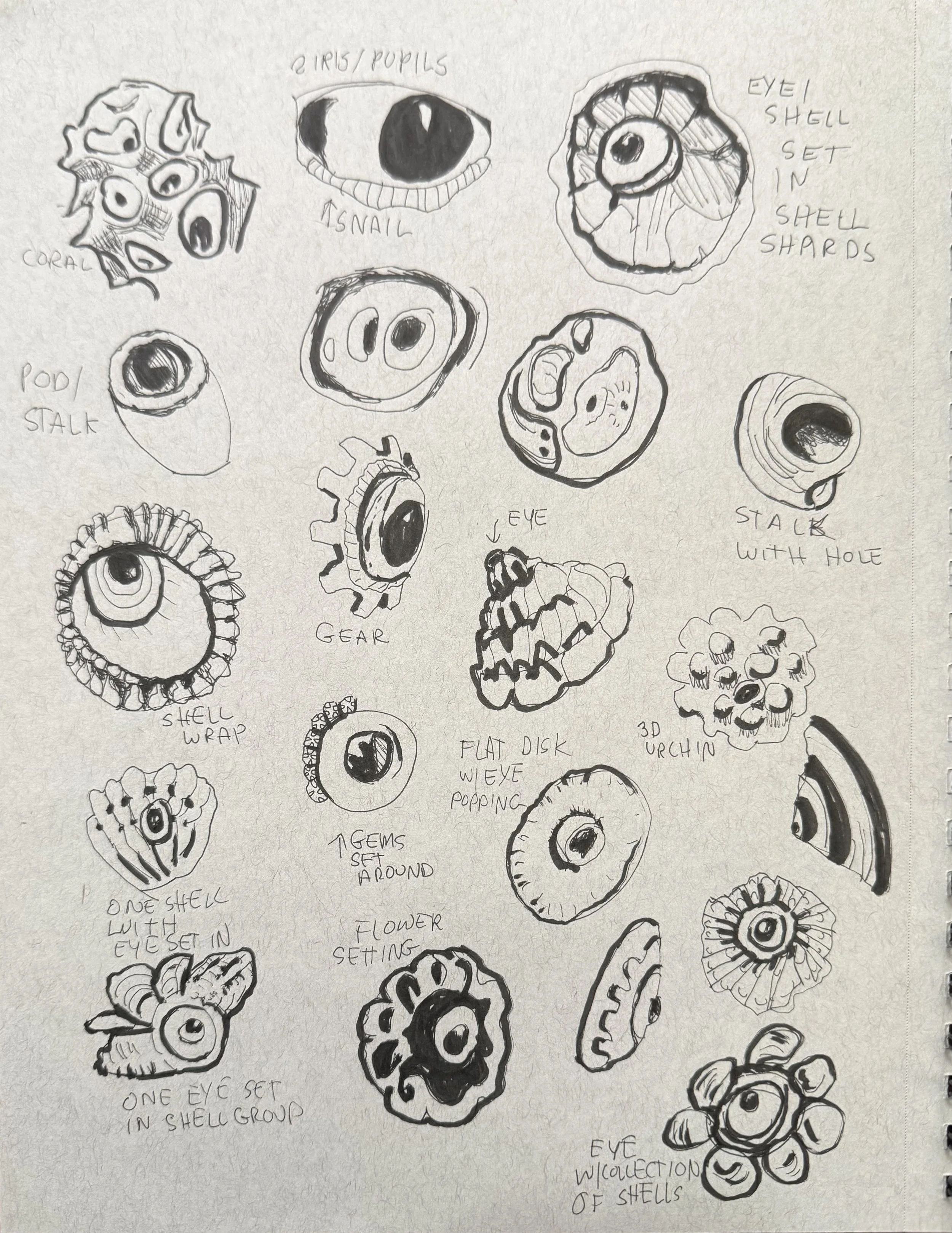
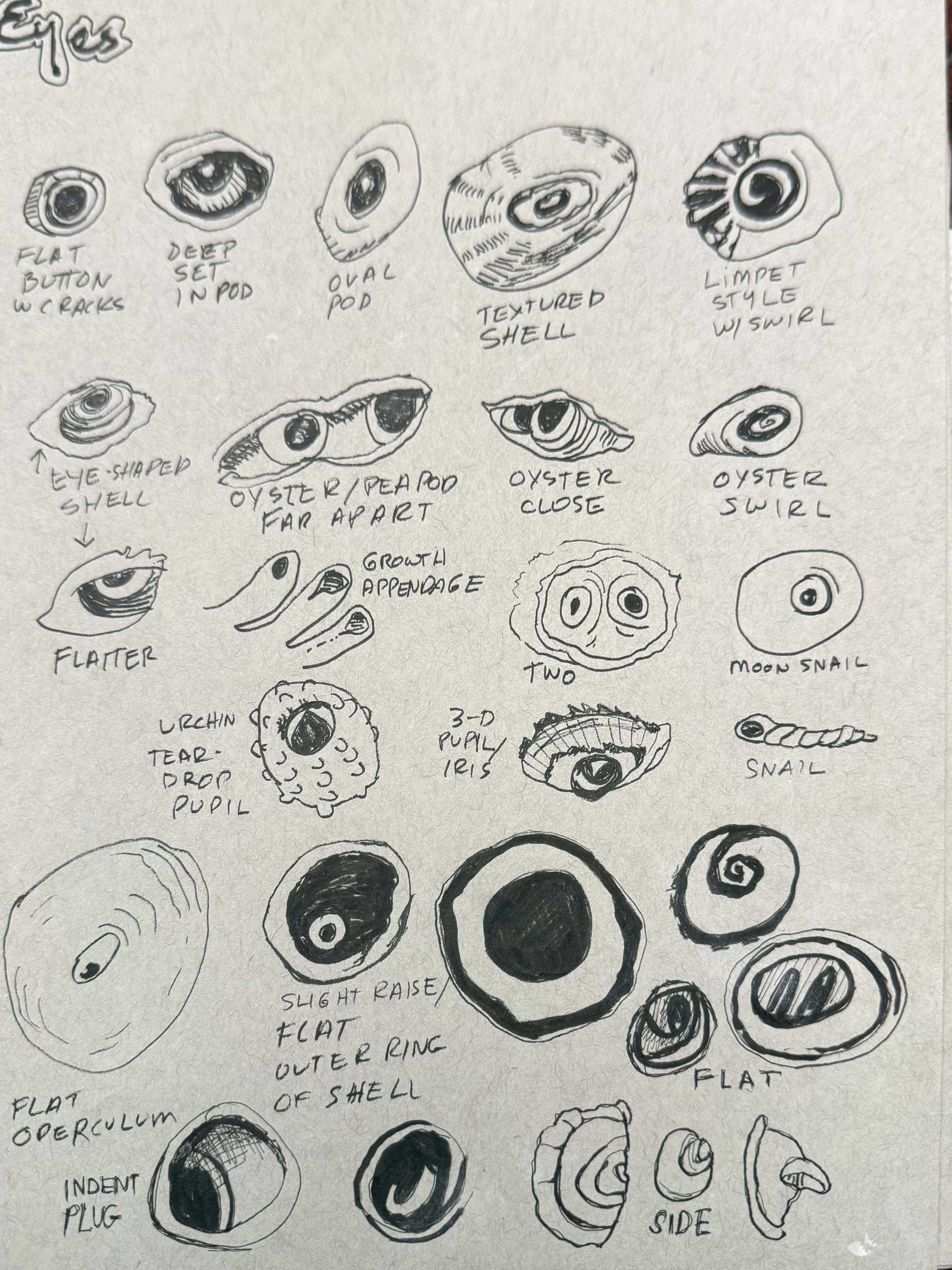
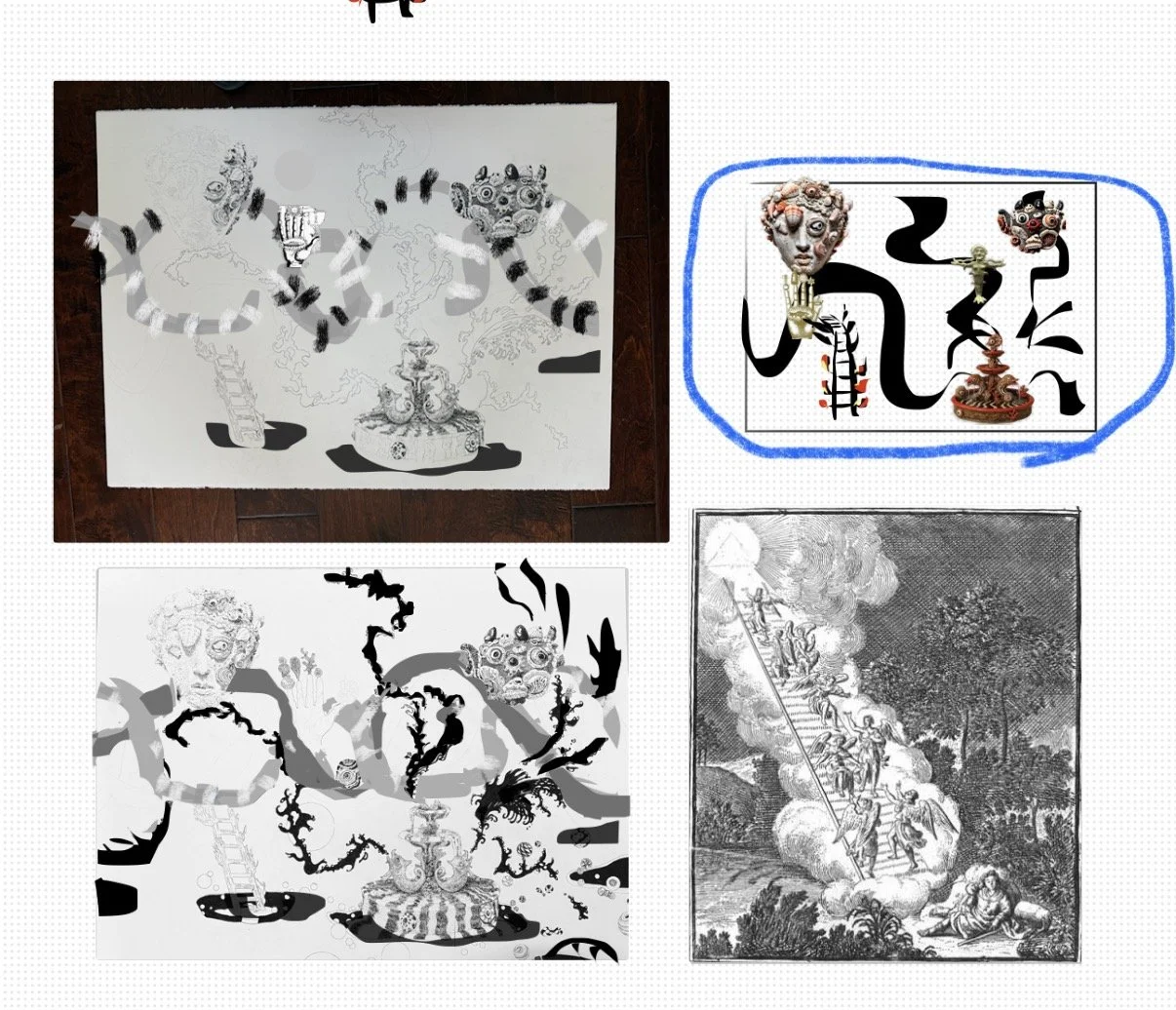
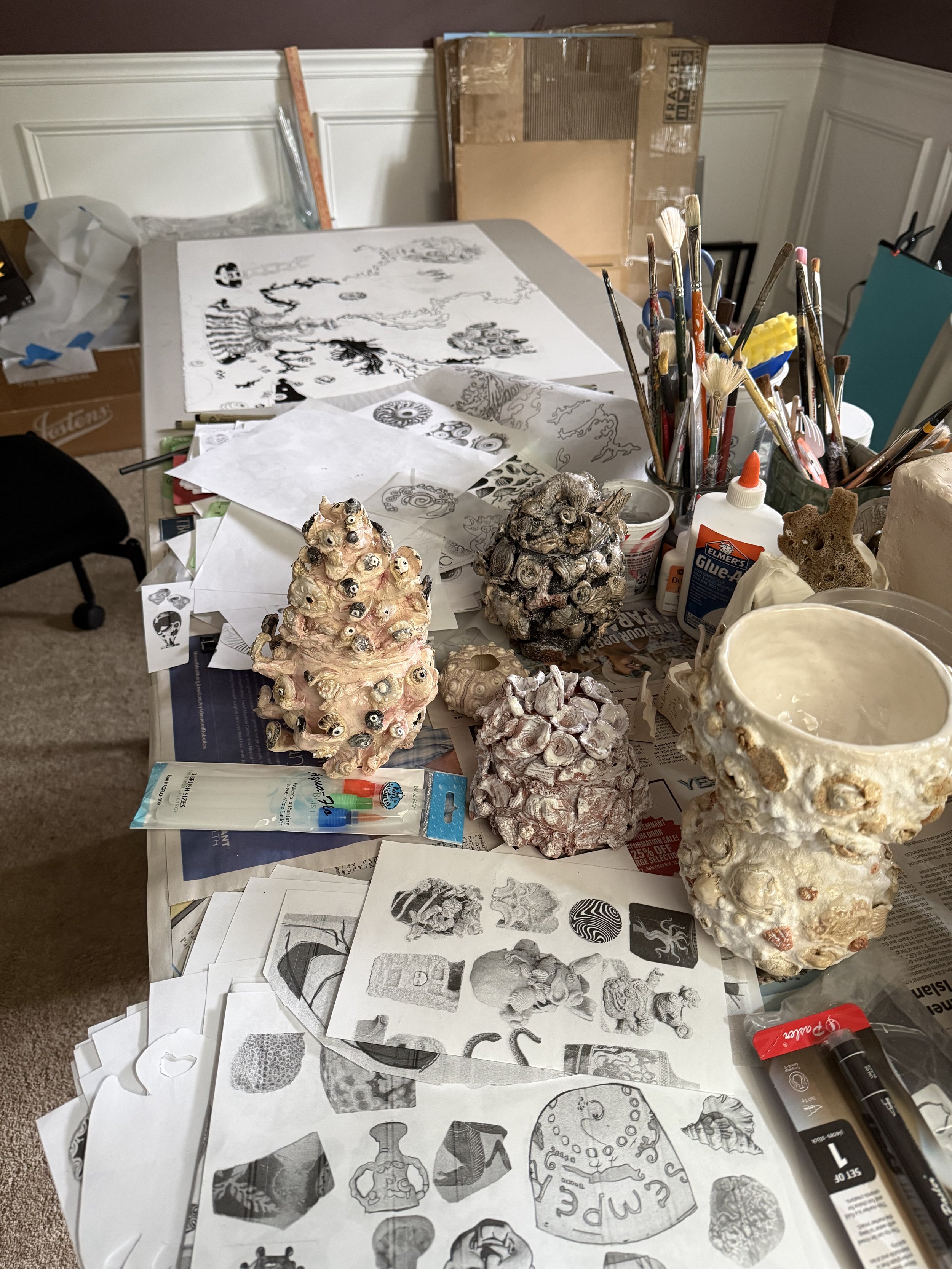
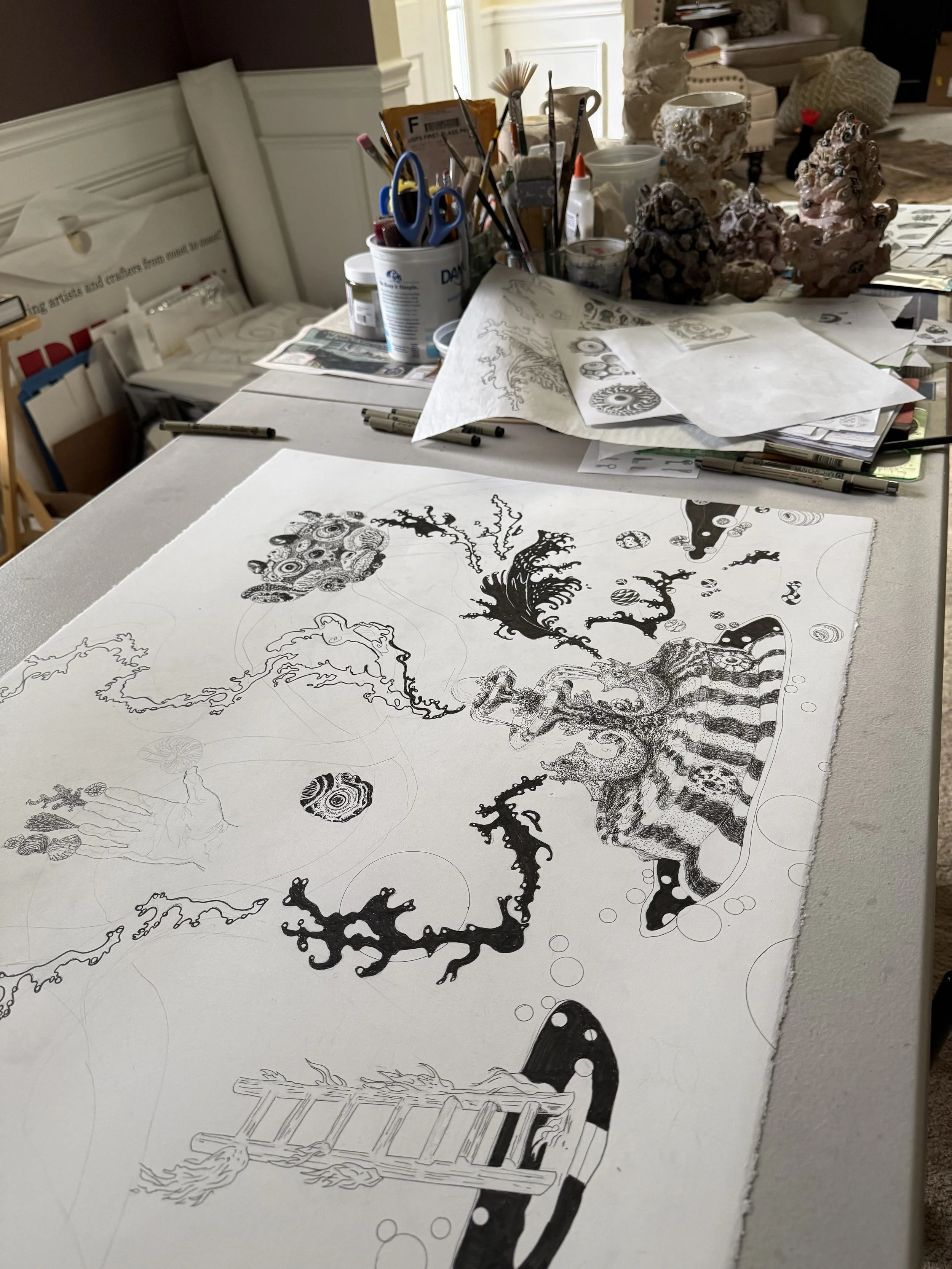
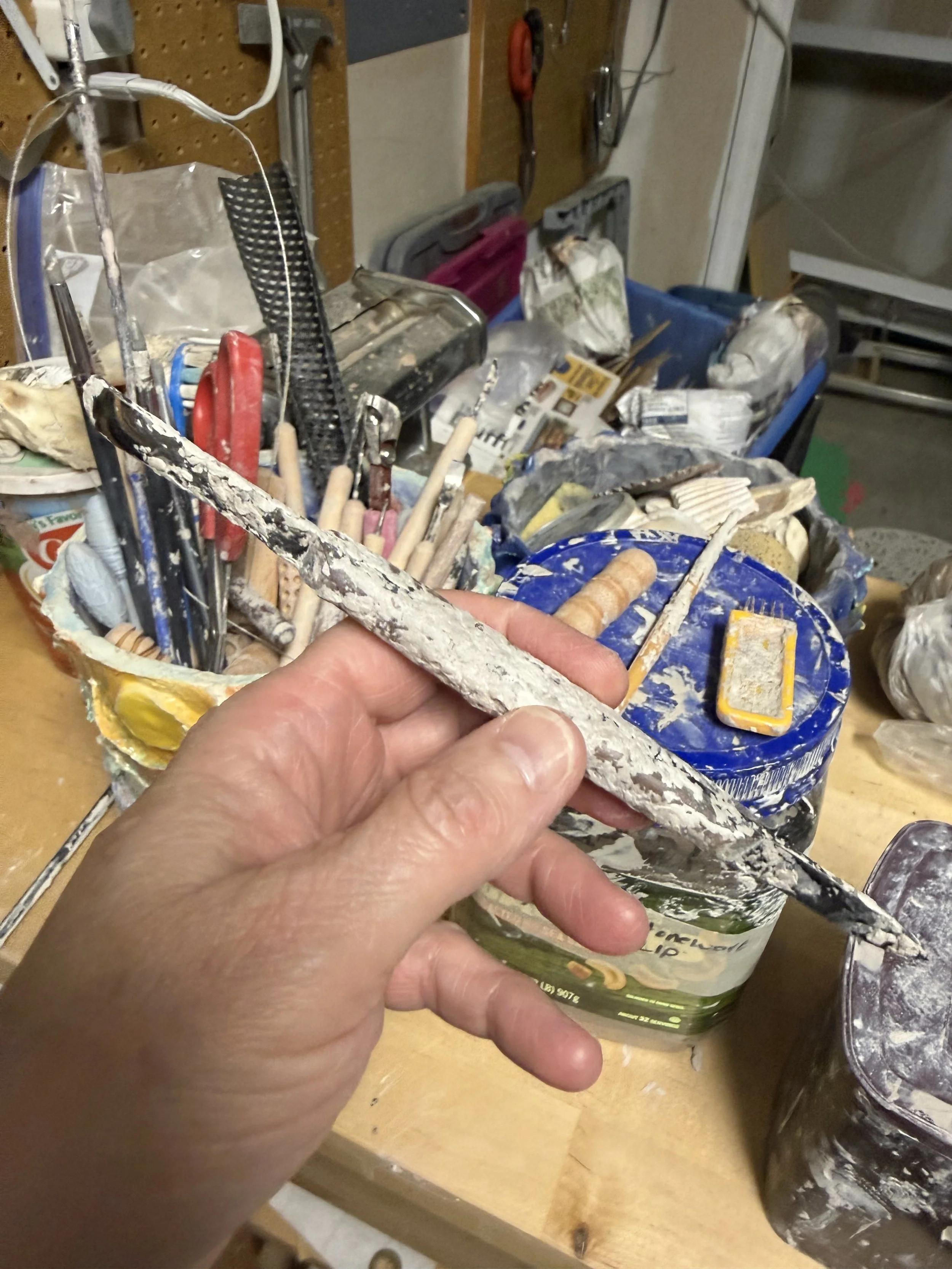
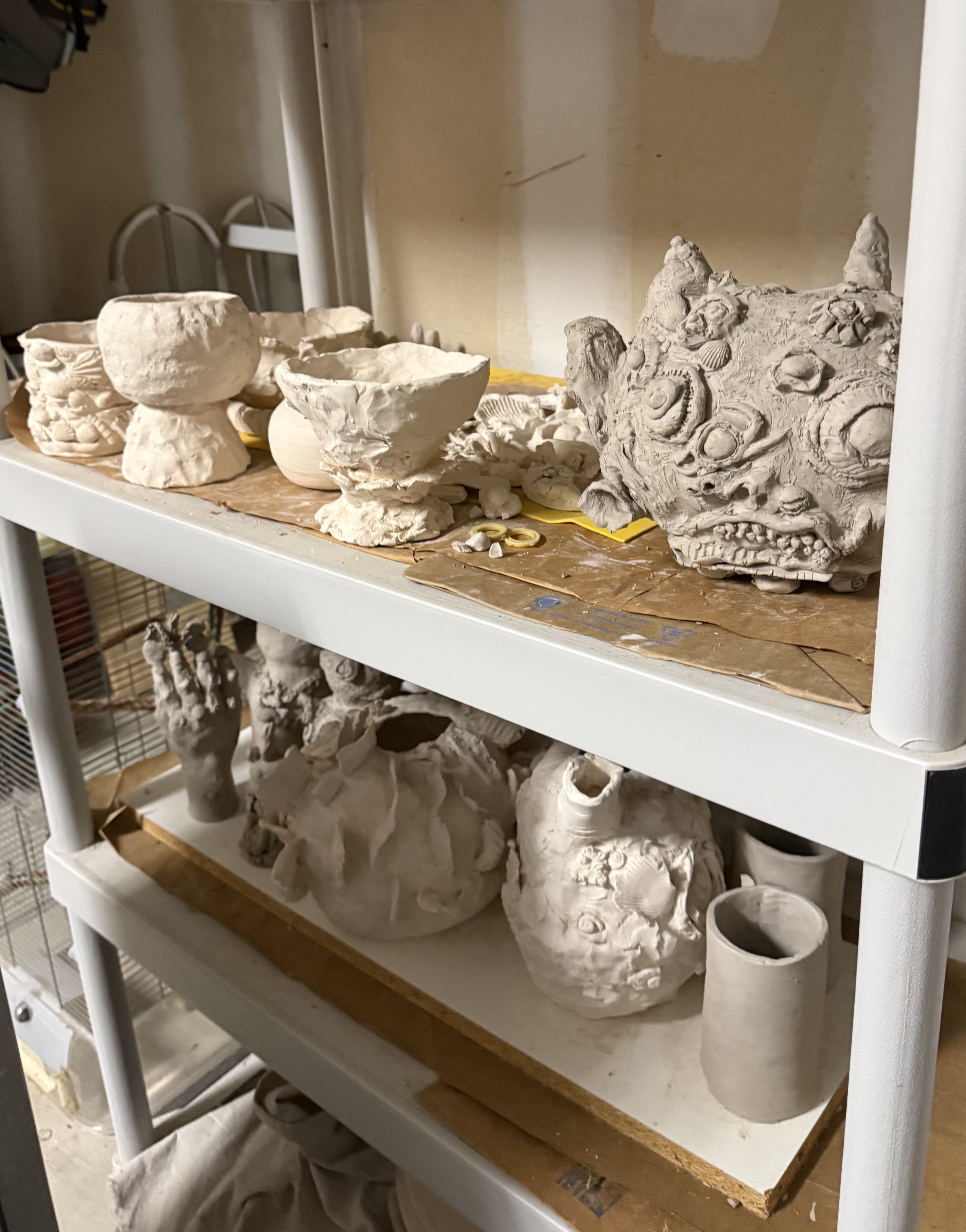
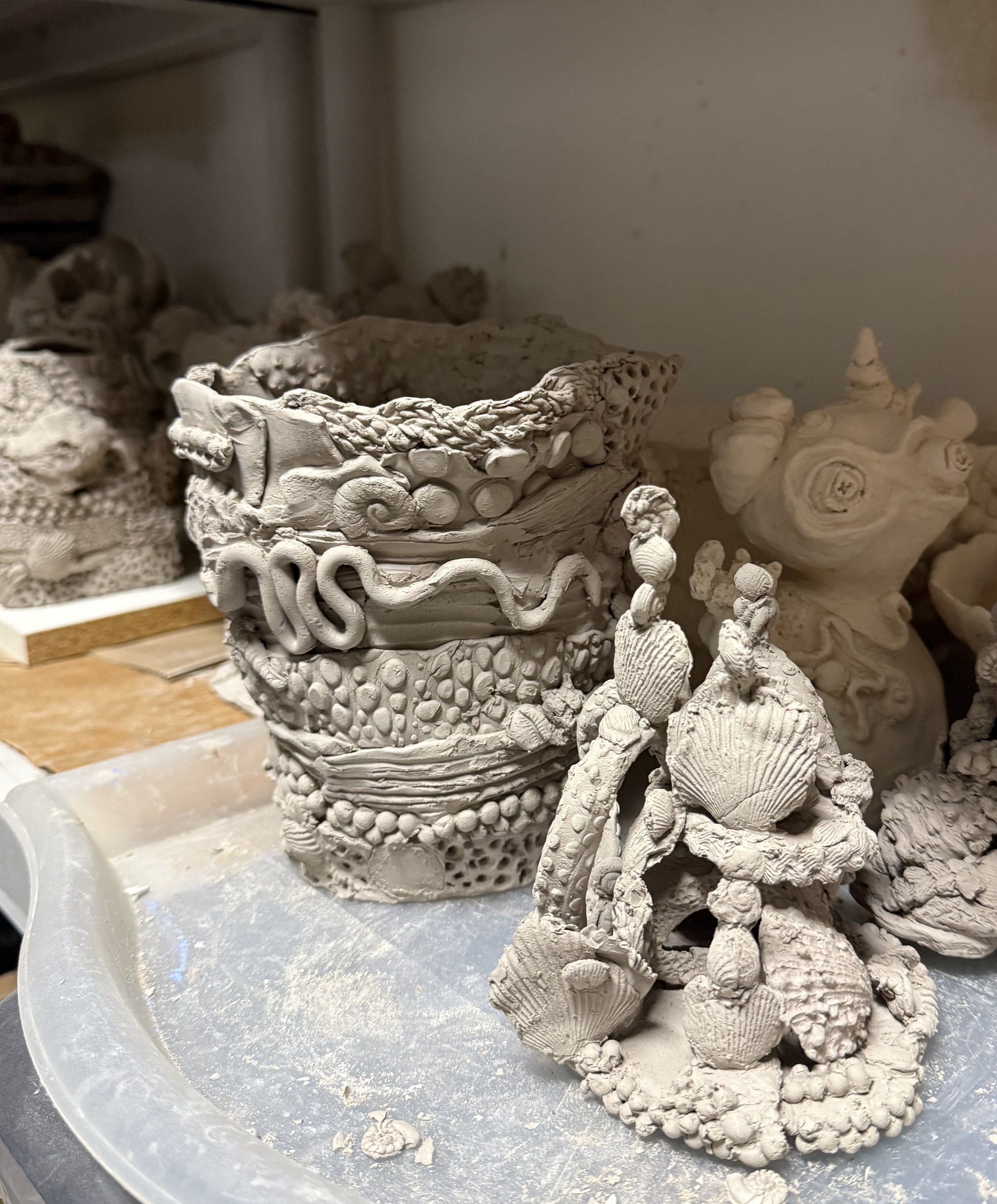
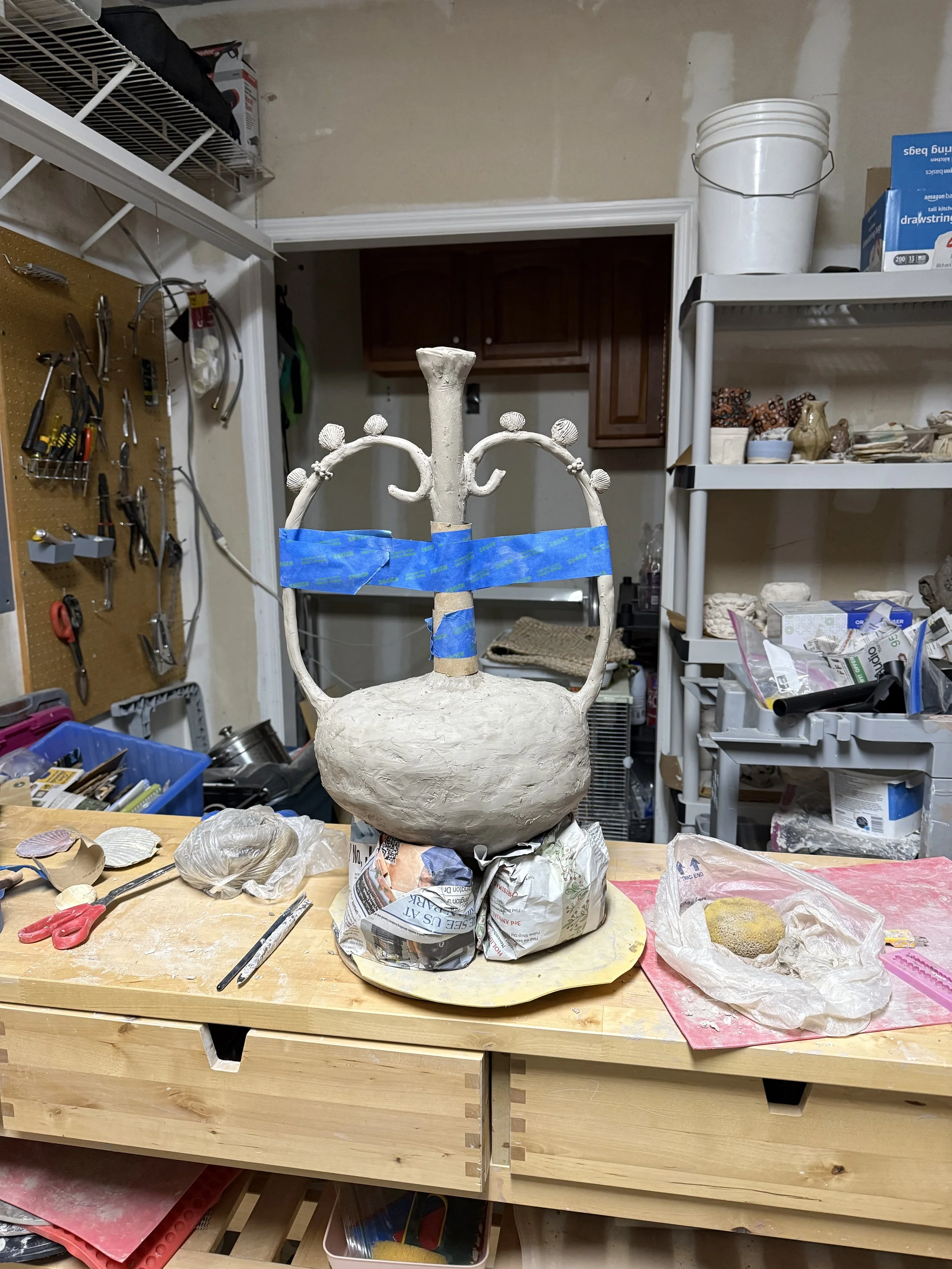
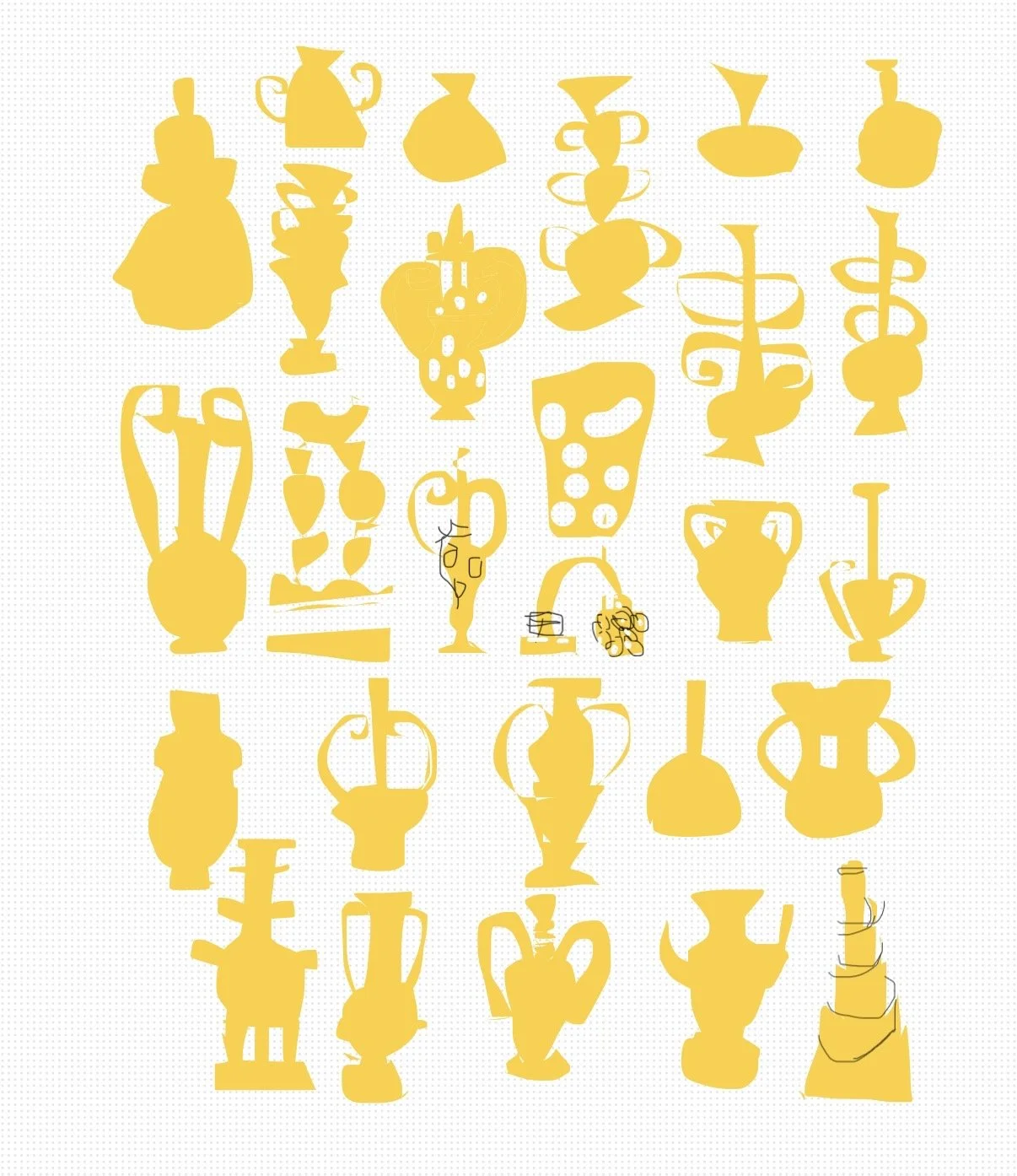
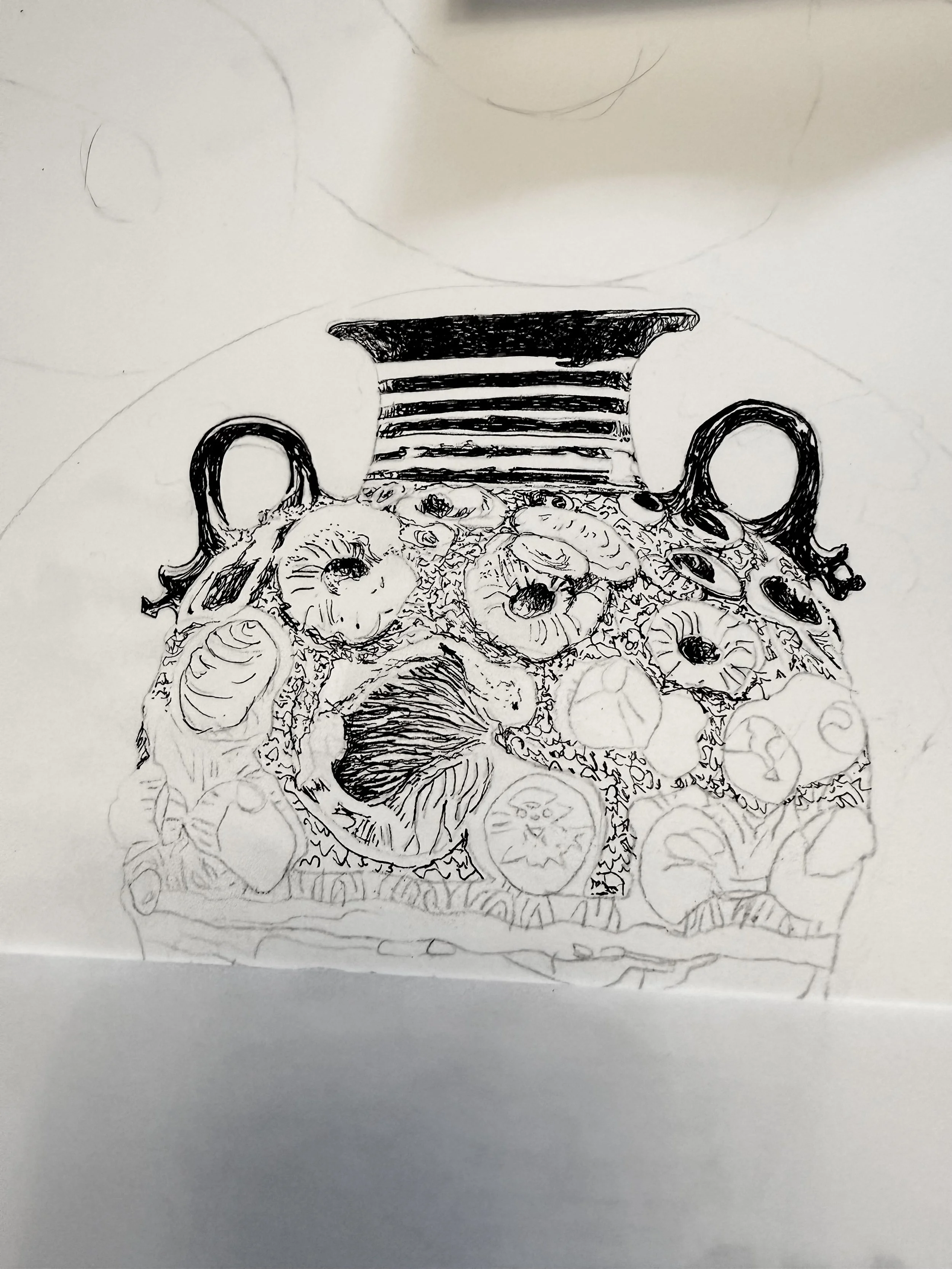
My artmaking time is split between drawing and ceramics. Some days I feel I need the physicality of working with clay or the freedom of following my imagination on paper. I research ideas and test them out in both media. My drawings influence my ceramics and vice versa. My clay studio is in my garage. Some days it’s too hot to work there, but often it’s a joy. I get to feel the breezes and listen to nature while working. One of my favorite ceramic tools is a dual use knife and smoothing tool I bought for my son. When he showed interest in carving I bought him a soapstone carving kit that included that tool. Every time I pick it up, I think of him. I know a work is done when I feel it in my gut. Oftentimes I’ll take a picture of it, sit with it and contemplate overnight or for a few days to be sure.
Influences
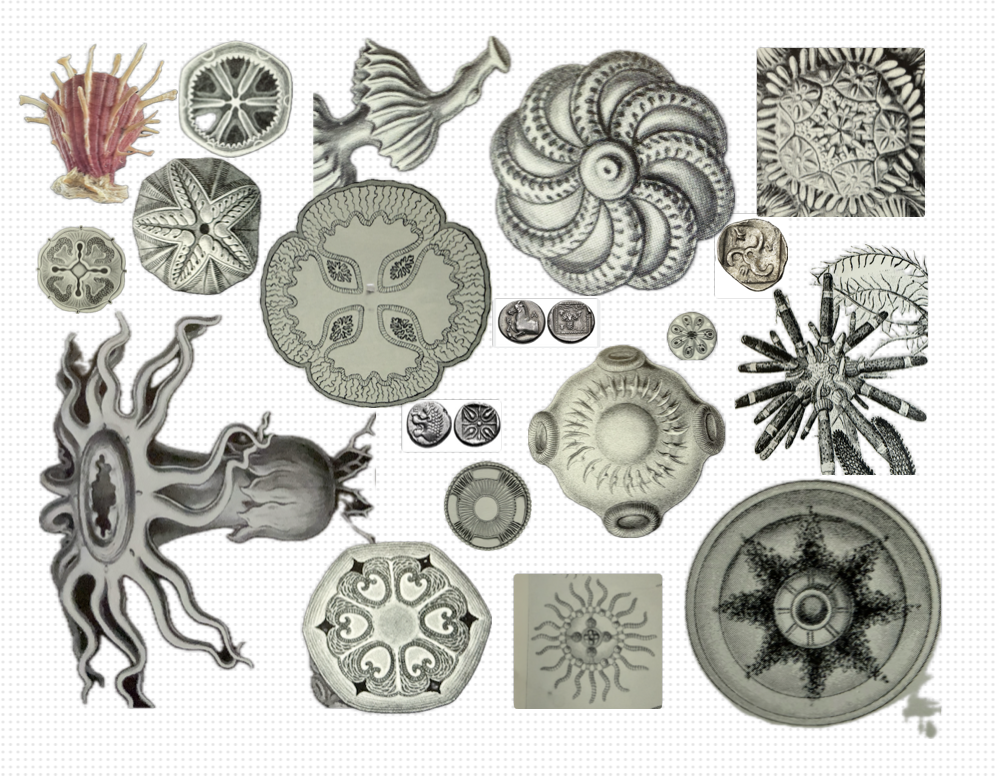
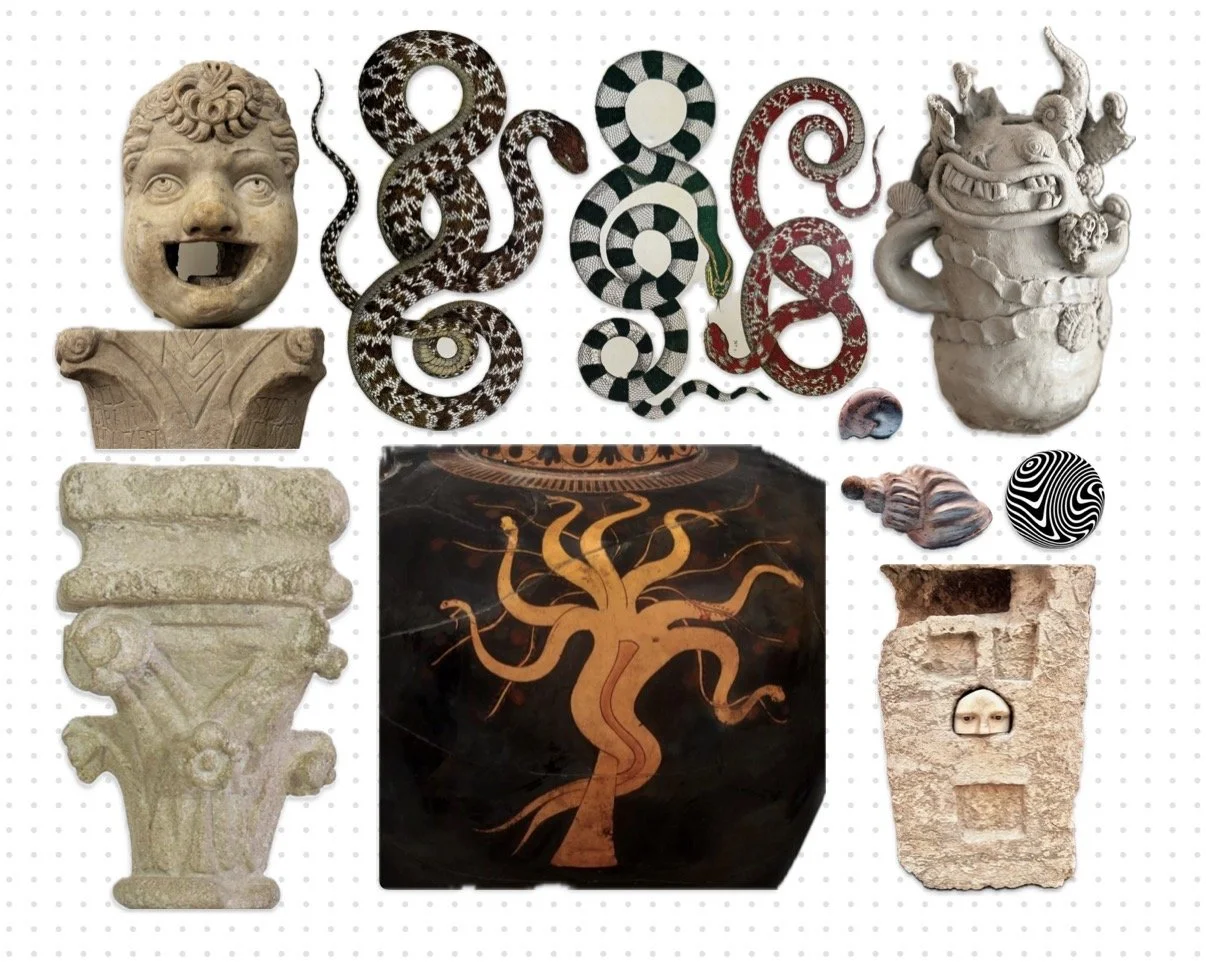
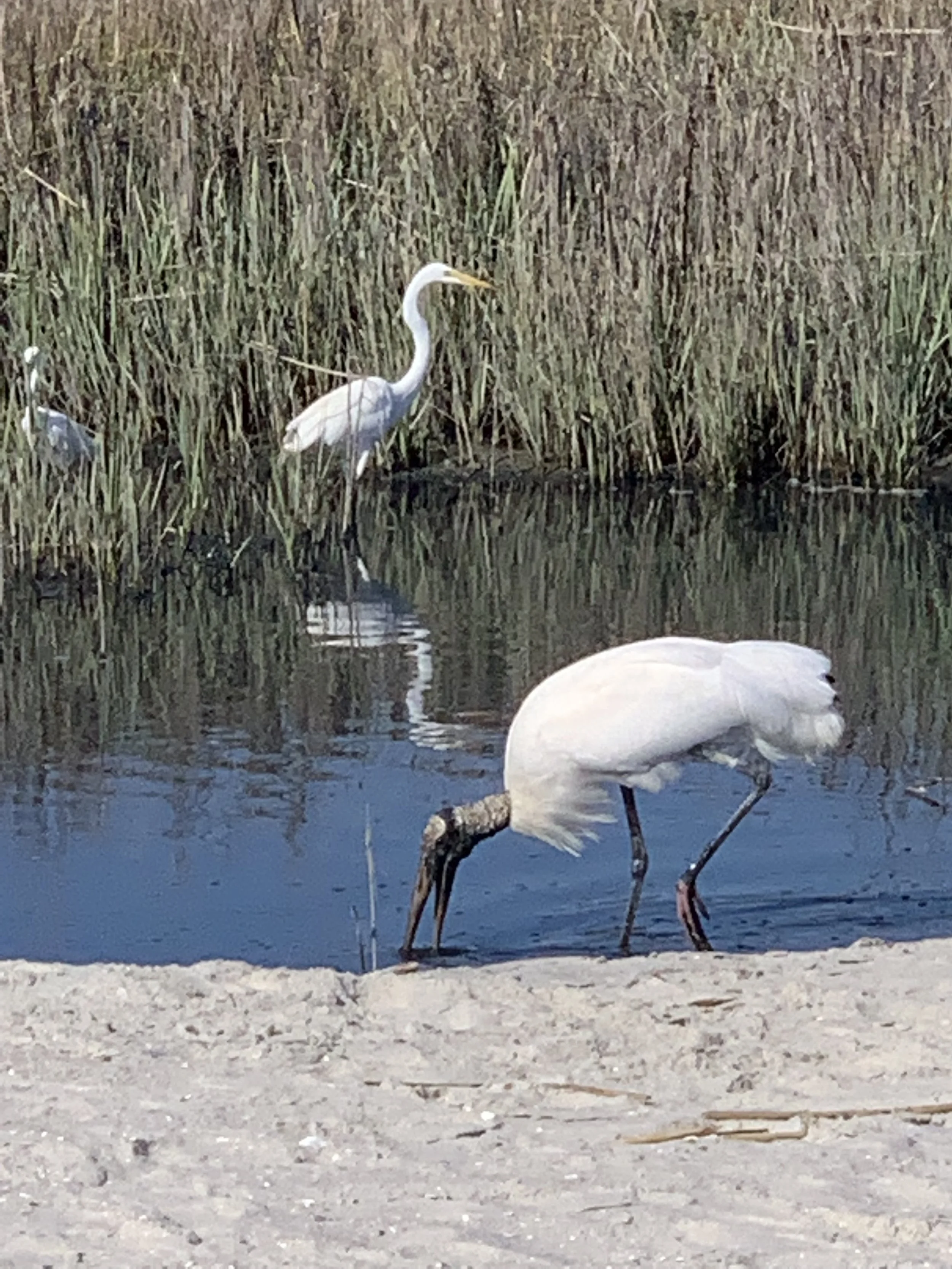
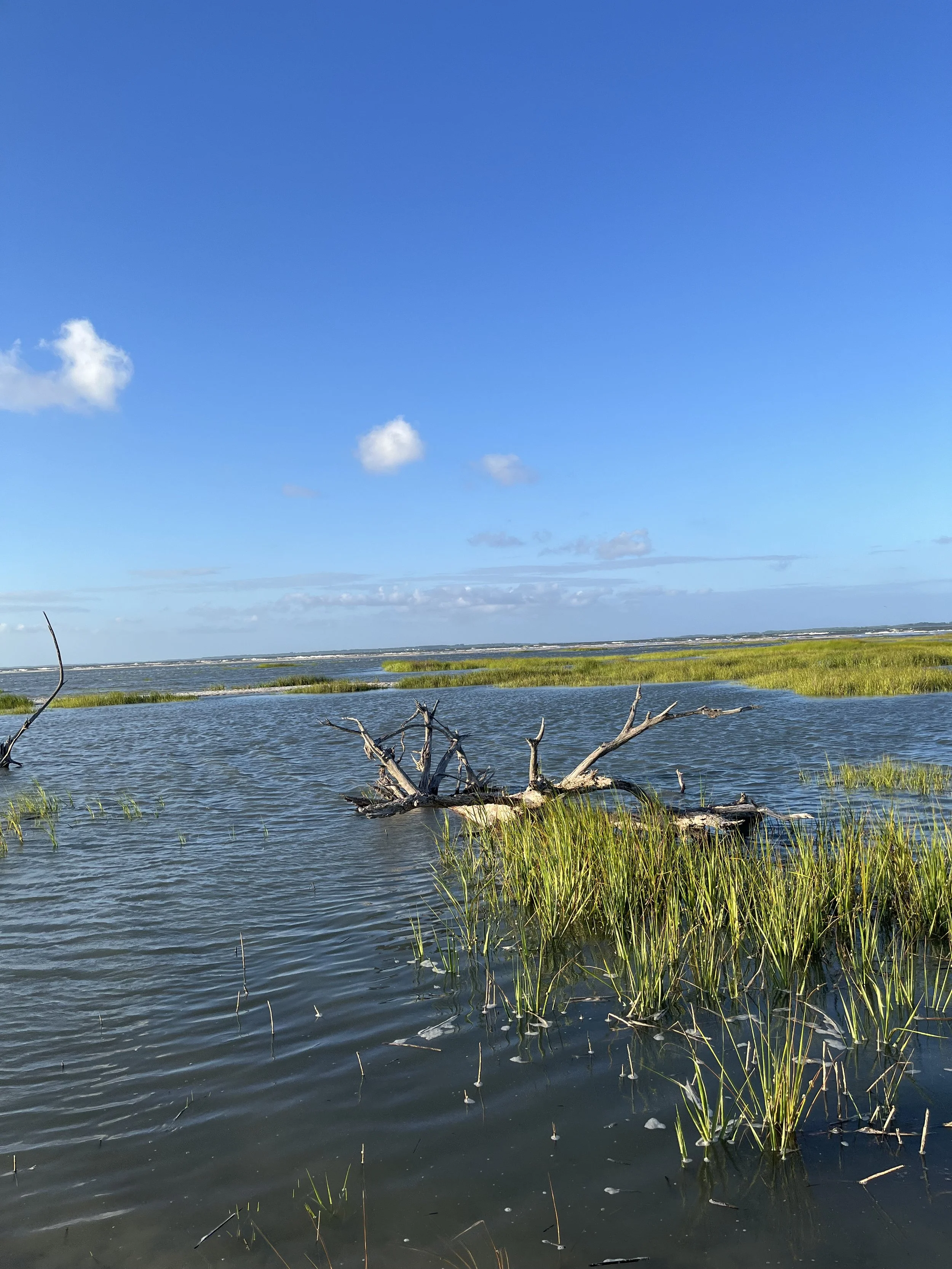
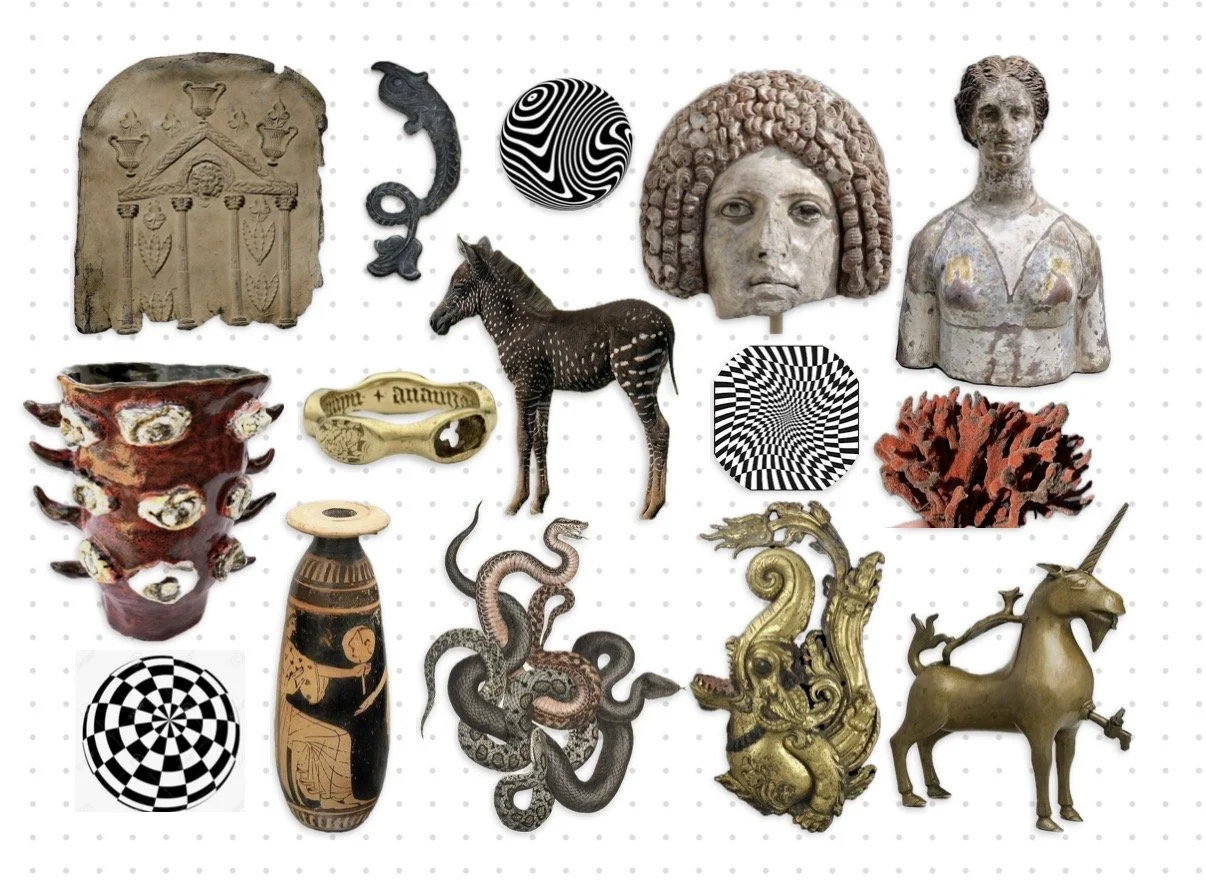
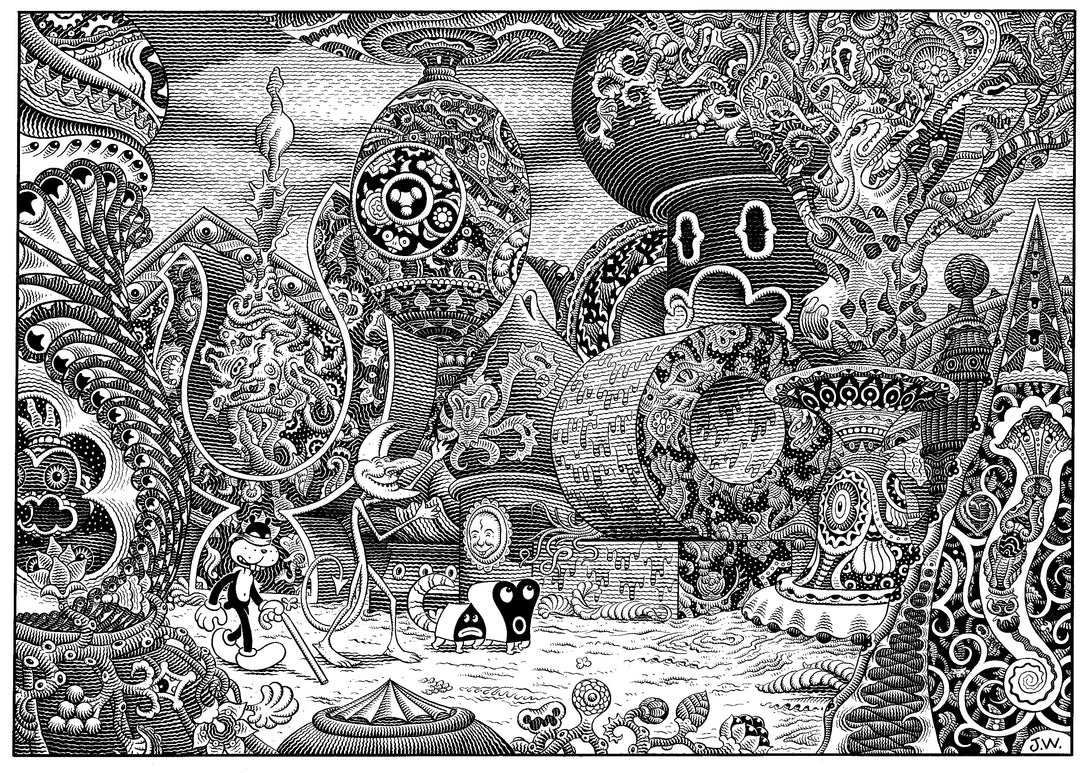
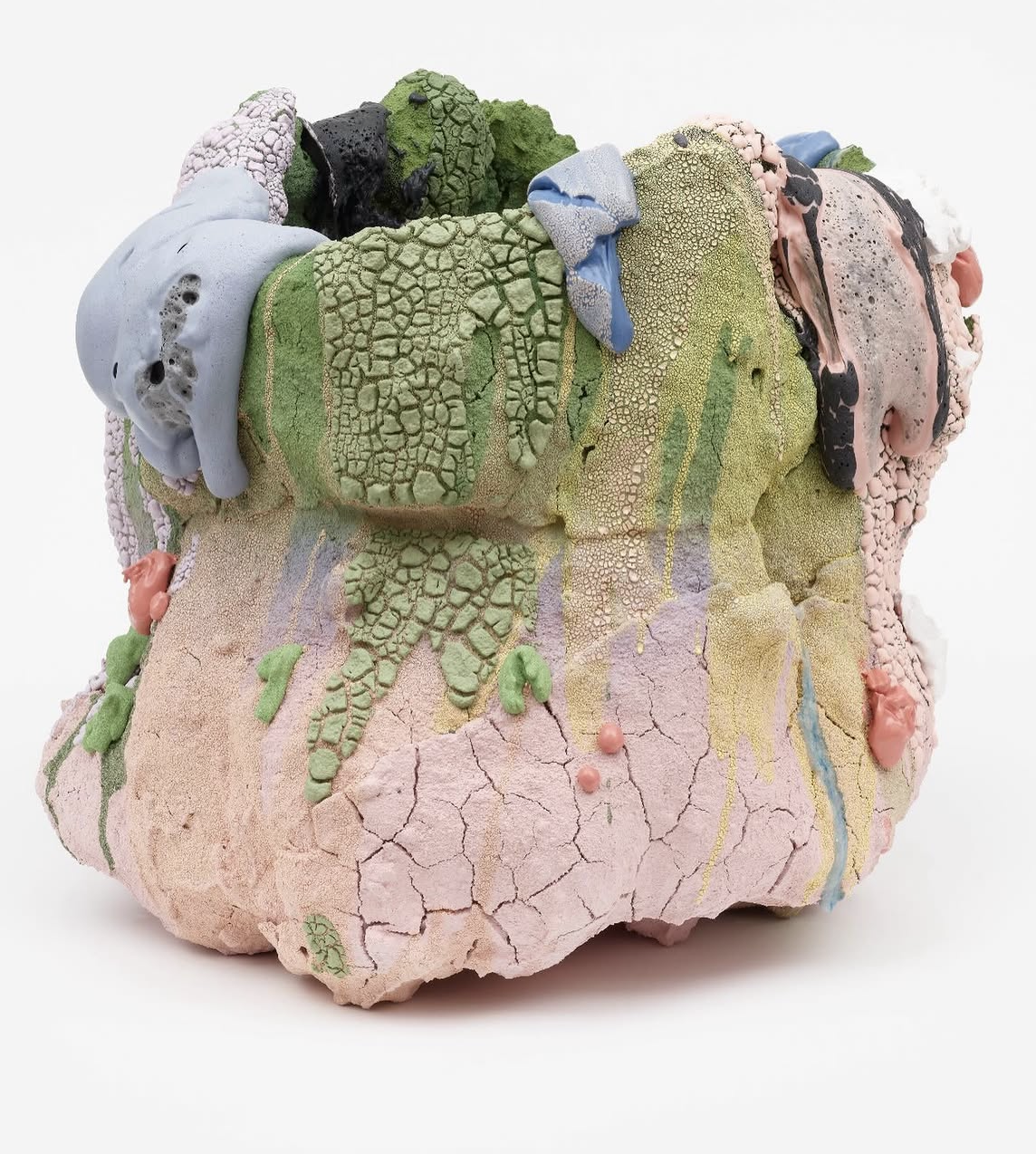
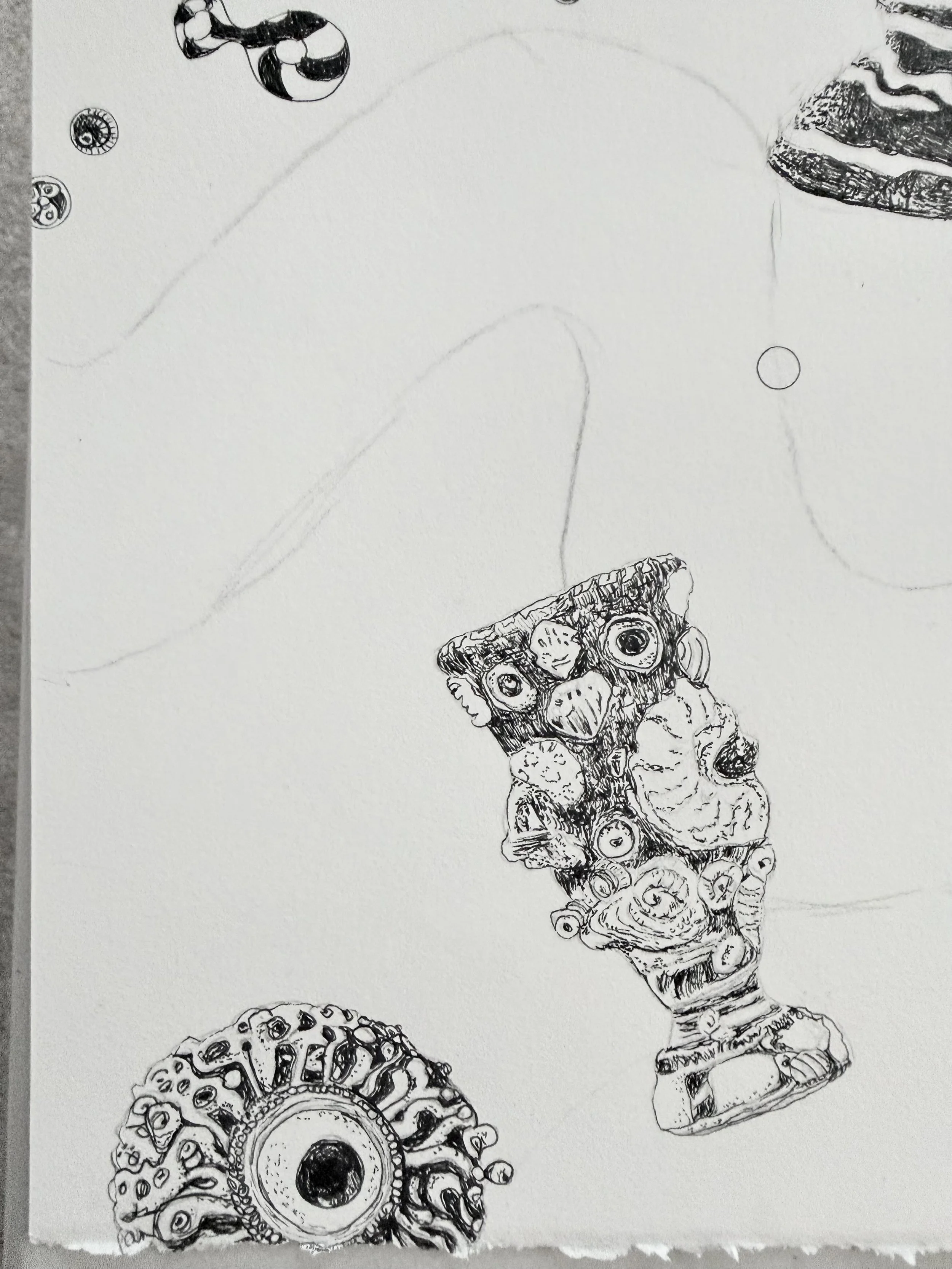
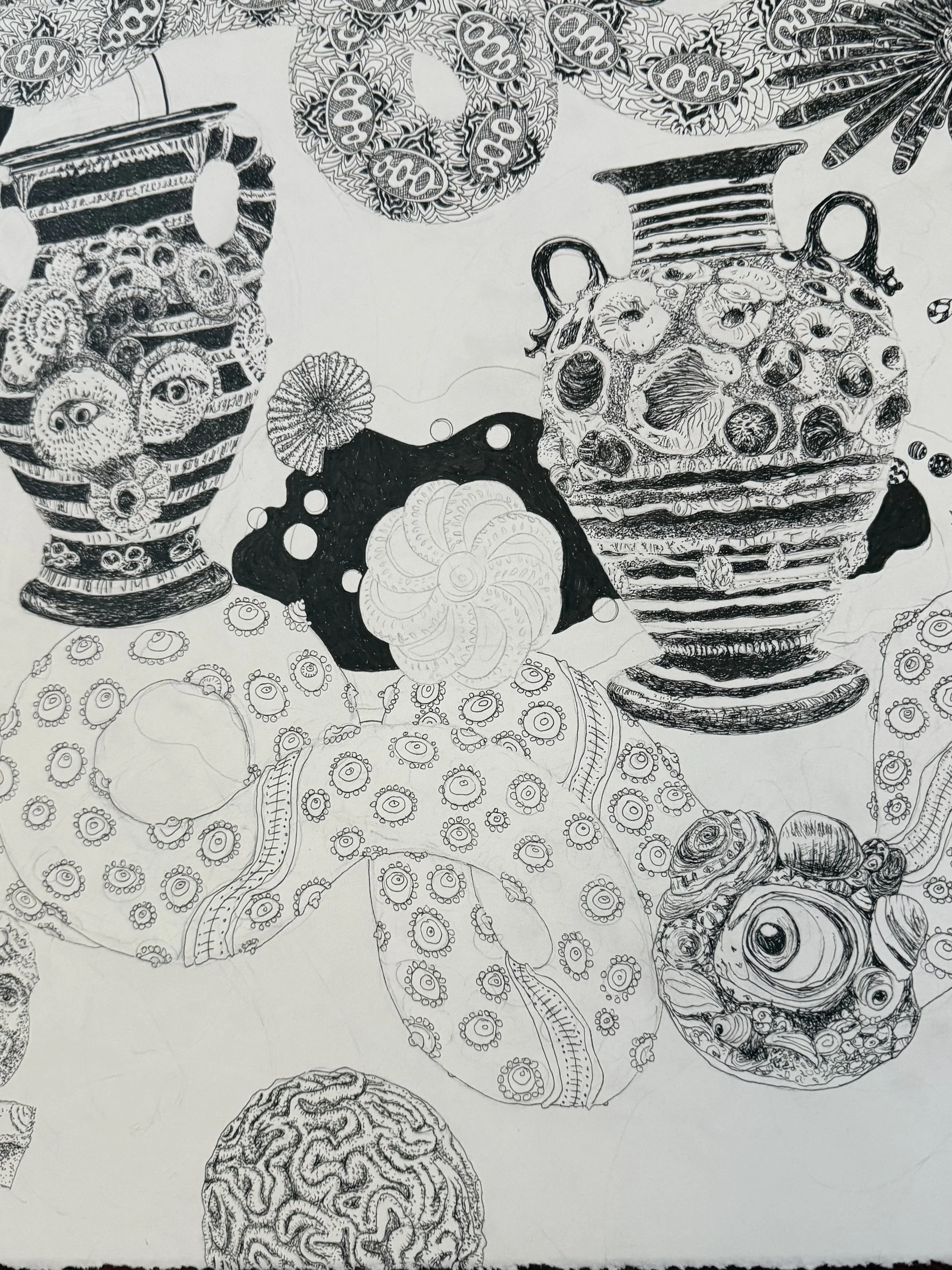
I am influenced by what is happening today in light of what has happened in the past. My current work began with a question: What might future artifacts pulled from the sea (or underground) look like after centuries of animation, mutation and transformation? Climate change, ecological decline, and rapidly advancing technologies have led me to imagine speculative relics that blur the boundaries between the ancient and the futuristic. My influences include mythology, archaeology, biology, history, and the natural world. I closely follow excavations at Pompeii and Herculaneum and am drawn to myths centered on transformation and survival. Living in South Carolina’s Lowcountry, I regularly collect shells and weathered fragments from local waterways, fueling my interest in adaptation, decay, and regeneration. I am influenced by what is happening today in light of what has happened in the past. My current work began with a question: What might future artifacts pulled from the sea (or underground) look like after centuries of animation, mutation and transformation? Climate change, ecological decline, and rapidly advancing technologies have led me to imagine speculative relics that blur the boundaries between the ancient and the futuristic. My influences include mythology, archaeology, biology, history, contemporary art (see Jim Woodring illustration and Brian Rochefort ceramics) and the natural world. I closely follow excavations at Pompeii and Herculaneum and am drawn to myths centered on transformation and survival. Living in South Carolina’s Lowcountry, I regularly collect shells and weathered fragments from local waterways, fueling my interest in adaptation, decay, and regeneration. When I feel uninspired, I return to research, instagram, galleries, drawing, and time spent near the water. Through my drawings and ceramics, I combine these influences to create hybrid objects and worlds that explore how cultures, ecosystems, and technologies evolve over time.
Challenges
One of the greatest challenges in my practice has been learning to work through uncertainty. Creative blocks and periods of doubt still happen, especially when balancing ambitious ideas with the realities of teaching and daily life. Over time, I have learned not to wait for inspiration. Instead, I keep making—sketching, drawing, experimenting with clay, collecting references, reading, or researching mythology, archaeology, and natural history. Even when a piece is not working, staying engaged with the process often creates a way forward. Balancing art with other responsibilities requires flexibility. As an artist and educator, my studio practice exists alongside teaching, family, and community commitments. Rather than viewing these as competing demands, I see them as interconnected. Teaching keeps me curious and inspired and reminds me of the value of experimentation, while everyday experiences often find their way back into the studio. Some seasons are more productive than others, but consistency matters more than intensity. Several turning points shaped my creative path. Studying abroad in Italy and New Zealand and Italy expanded my understanding of history, landscape, and cultural narratives. Later, transitioning from a career in advertising and branding to art education reaffirmed my commitment to making meaningful work. More recently, living in South Carolina’s Lowcountry has profoundly influenced my practice. Witnessing fragile waterways, changing coastlines, and ecological pressures firsthand has sharpened my focus on adaptation, transformation, and resilience. Rest is an essential part of my creative life. It often looks like reading, visiting galleries, or simply spending time outdoors walking along beaches and maritime forests. These activities replenish my attention and allow ideas to emerge naturally. Some of my strongest insights arrive when I step away from the studio. What has kept my practice alive is curiosity. I remain fascinated by the intersections of mythology, ecology, archaeology, and technology, and by the stories objects carry across time. While my practice has evolved from working primarily in printmaking and mixed media to integrating drawing and ceramics, the central questions remain the same: how do we adapt, what do we preserve, and what new forms emerge through transformation?
Reflection
Moving forward, I see my practice continuing to expand as an integrated dialogue between drawing, ceramics, and research. I’m interested in how objects and images can function together as fragmented archives—speculative relics that suggest both ecological memory and future adaptation. The Lowcountry landscape will likely remain a central point of reference, especially as changing coastlines and waterways continue to shape how I think about fragility, survival, and transformation. For sustaining a creative practice, the most important advice I return to is consistency over inspiration. Small, steady engagement with materials builds resilience over time. Equally important is staying in dialogue—with students, peers, research, and the world outside the studio. The practice cannot be isolated from lived experience. My definition of success has shifted. It is less about external validation or fixed milestones and more about sustaining curiosity and depth over time. Success now feels like maintaining a practice that remains responsive, alive, and capable of change. Ultimately, I think of art-making as a long form of attention—one that asks us to notice, adapt, and remain open to transformation, even when it is uncomfortable or uncertain.