Elham Hemmant
Hi, I’m Elham Hemmat. I’m originally from a small town in Iran famous for its ceramics, and I’ve been living in the UK since 2019 after being awarded the Global Talent Visa for my artistic practice. I turned to art because I’ve always found it easier to communicate through making things rather than words. I’m quite introverted, long conversations can leave me exhausted, but I can happily disappear into the studio for days without noticing the time. My practice sits between graphic design (my day job) and ceramics, which I began teaching myself by quietly watching generational potters at local studios. I’m drawn to the quiet stories held in materials, especially clay: how soil from different places carries its own colour, personality, and unpredictable reactions in the kiln. The clay from my hometown, for example, is full of salt and creates beautiful, unexpected effects with glazes. Process for me is about staying open to what the material wants to do, even when it breaks. My recent Shadows series grew directly out of embracing those breaks and repairs, turning accidents into part of the language of the work. I’m excited to share more of the messy, hands-on side of things over the next few days.
Process
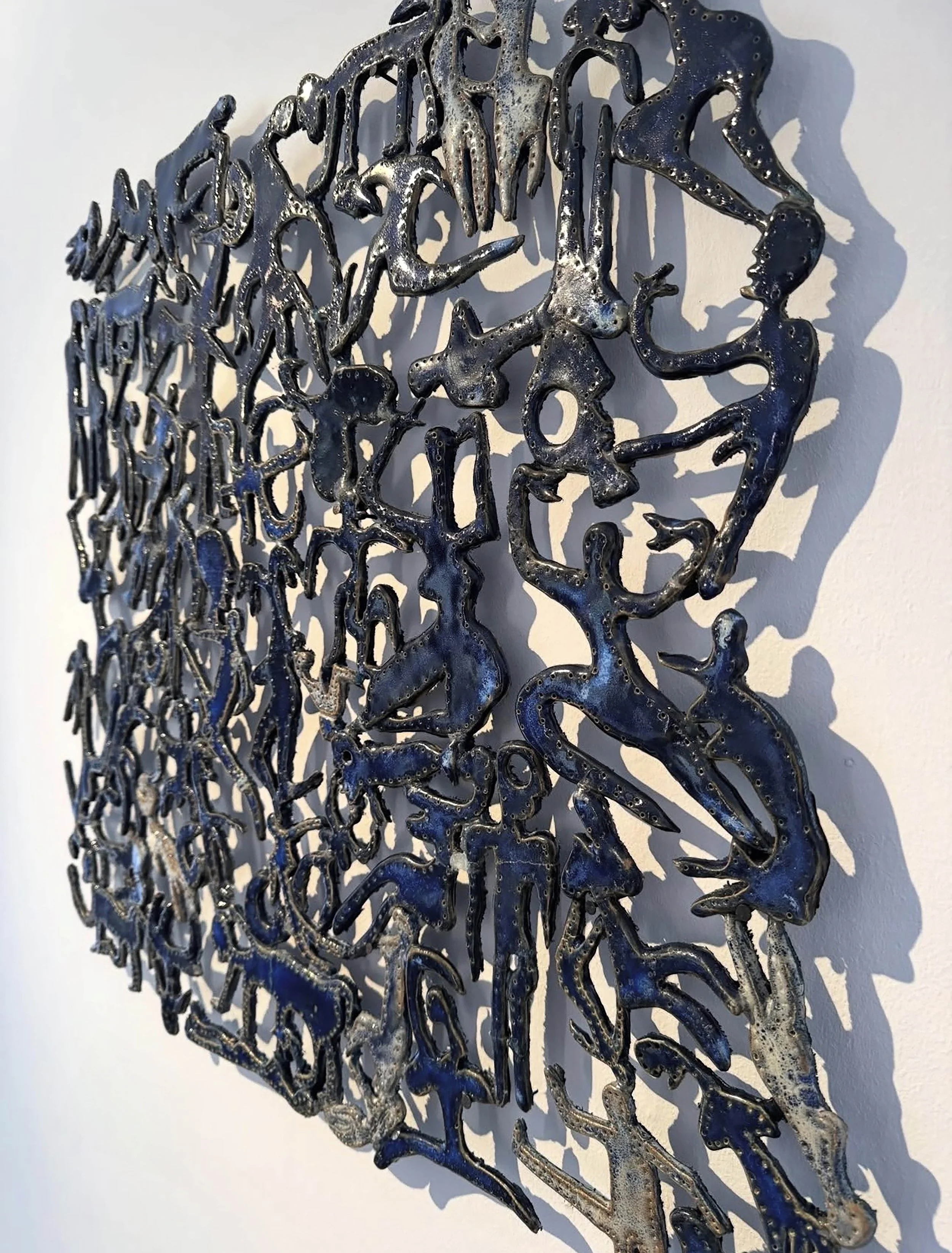
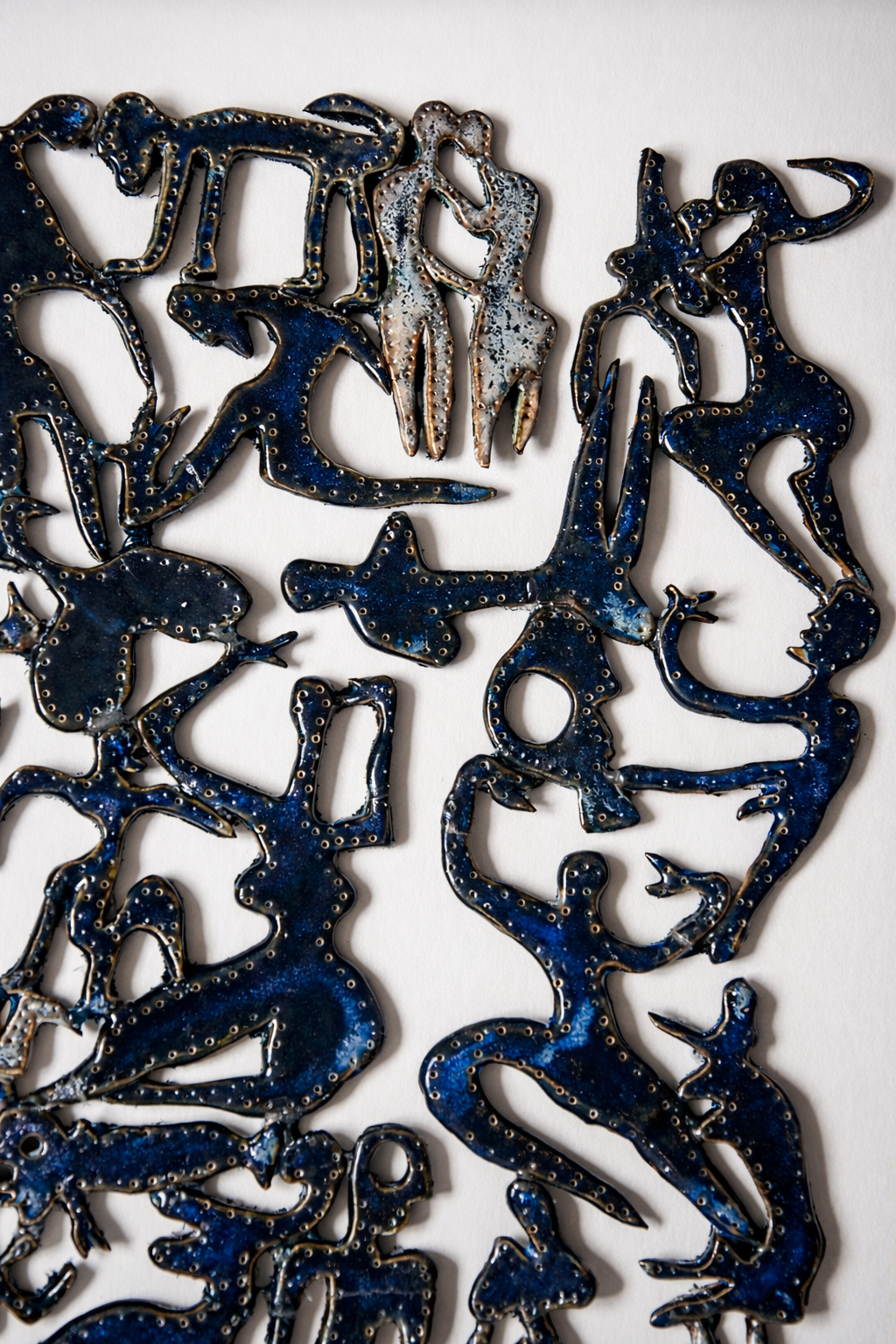
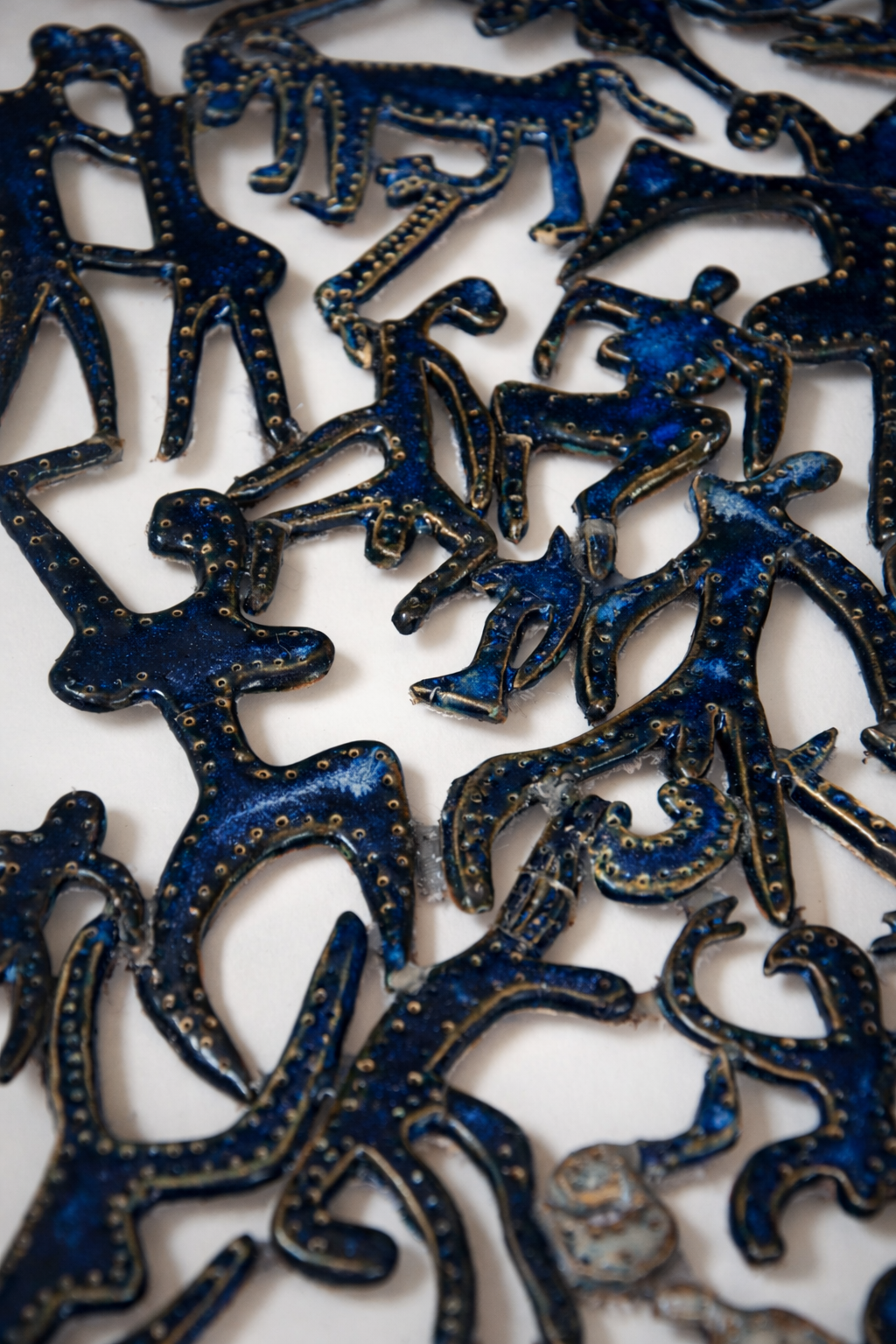
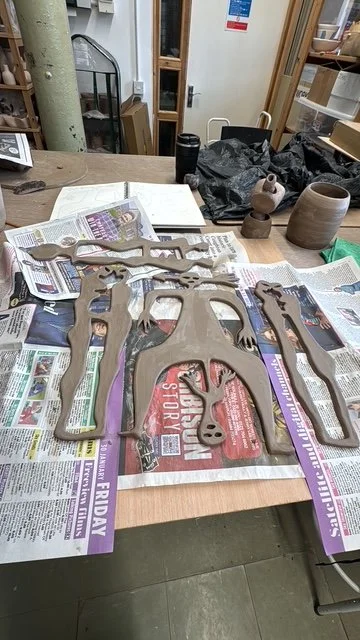
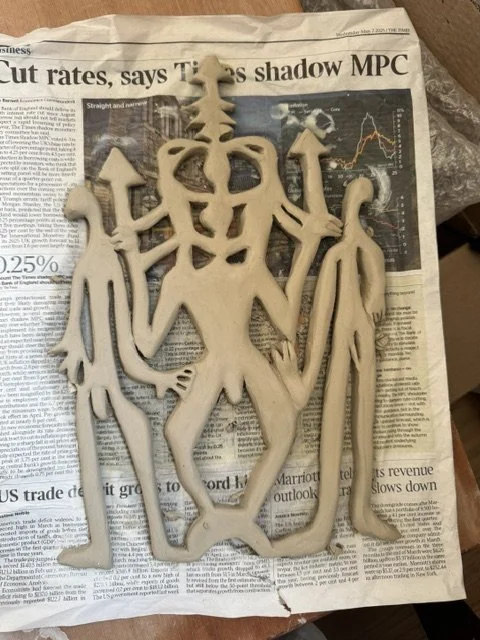
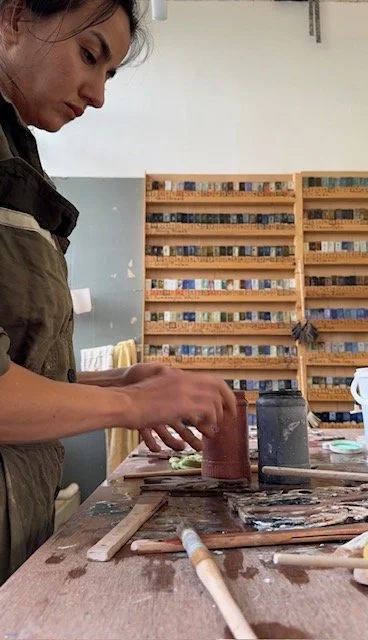
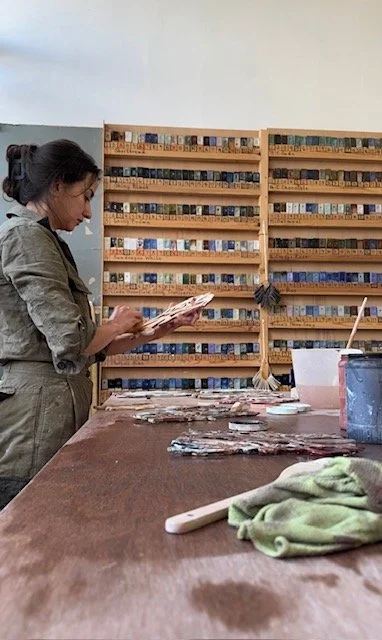
My artistic practice is rooted in ceramics — hand-building with stoneware, layering slips and glazes, and firing in reduction. It feels slow, tactile, and slightly alchemical. There’s a satisfying tension between control and surrender: I shape the clay, but the kiln always has the final say. A typical studio day doesn’t really exist — every day is different depending on where I am in the making cycle. I usually start early with coffee and a quiet walk with my dog (often through the local graveyard, which has become a rich source of ideas for my Graveyard Portraits / Remembrance tiles). Back in the studio I’ll spend time wedging clay, rolling slabs, or building delicate lace-like panels for the Shadows series. The studio smells of wet earth, and there’s a constant low hum of the fan and occasional radio in the background. Rituals & routines I always clean my workspace before starting a new piece — it helps me mentally reset. I keep a small notebook nearby to jot down glaze tests and happy accidents. Music is usually on (instrumental or quiet ambient), but sometimes I work in complete silence when I need to really listen to the material. Essential tools and materials: my hands (I rarely use tools beyond basic ribs and sponges at the beginning), a variety of clays and slips, a small electric kiln, and the unpredictable chemistry of reduction firing. The environment matters — good natural light, space to lay pieces out, and the freedom to leave things in progress without tidying them away. I know a piece is “finished” when it feels alive — when the cracks, seams, and surface textures tell their own story and I no longer feel the urge to keep adjusting. Sometimes I have to walk away for a few days to see it clearly. Other times the piece itself decides — it cracks in the kiln in such a perfect way that I accept it as complete.
Influences
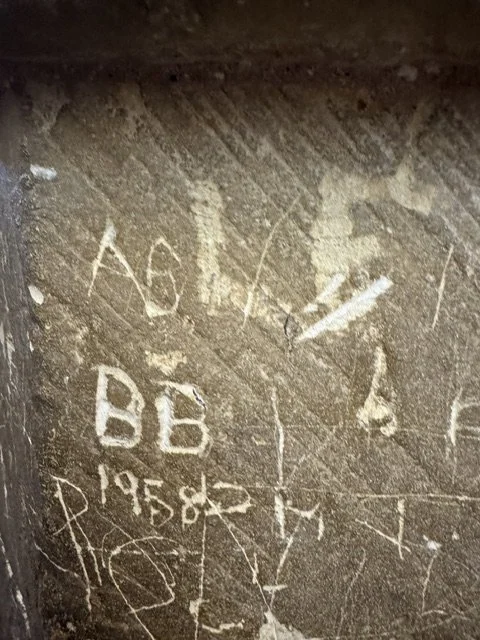
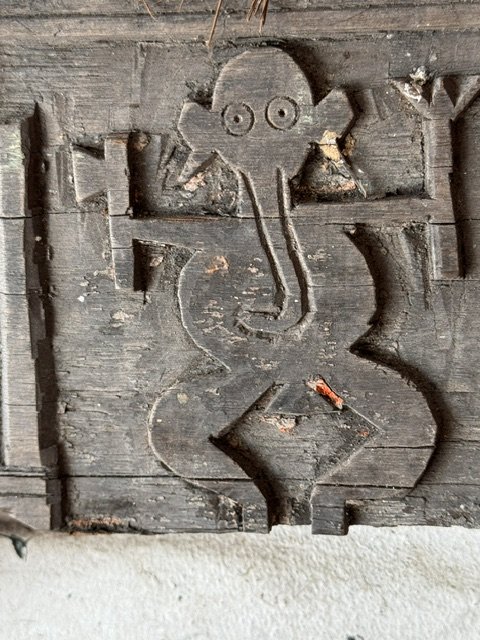
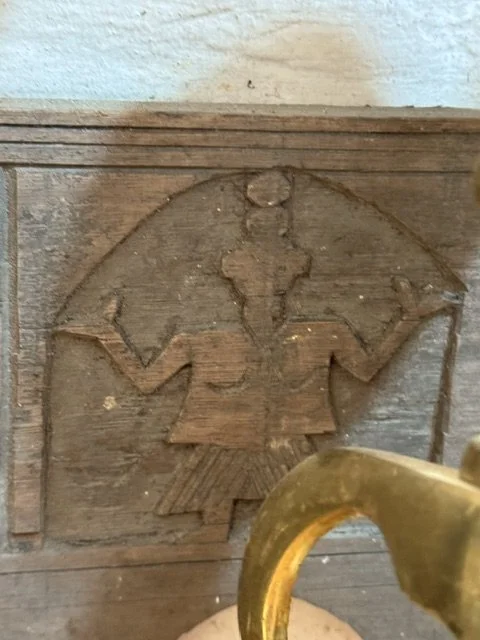
My biggest influences come from the world around me and the stories that have stayed with me since childhood. Living in a medieval town in the UK, I’m constantly surrounded by beautiful historical patterns — the stone carvings in churches, the intricate details in antique shops, old tiles, wrought iron, and architectural fragments. These everyday textures and repeating motifs quietly feed into my ceramic work, especially the delicate, lace-like surfaces in my Shadows series. I’m also deeply drawn to mythological books and ancient stories. The archetypes, transformations, and symbolic imagery (particularly Jungian ideas of the Shadow) resonate strongly with the themes of fragility, repair, and hidden strength that run through my practice. Mythology gives me a language for the unspoken — the things I struggle to express in words but can say through clay.
Challenges
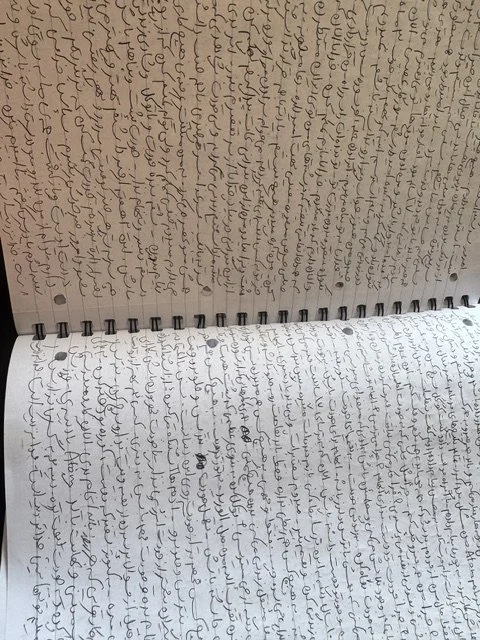
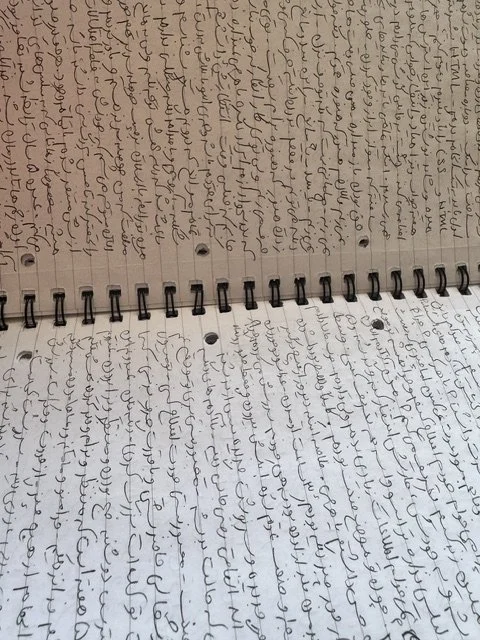
One of the biggest challenges I face is the quiet doubt that creeps in when pieces crack in the kiln, when ideas don’t translate from mind to clay, or when balancing freelance graphic design work with my own practice leaves me mentally drained. As an introvert, I also sometimes struggle with the pressure to “explain” my work or put myself out there. What helps me move through these blocks is a simple daily ritual I’ve kept for years: every single day I write three full A4 pages or fill them with lines and patterns. Some days it’s in Persian, pouring out thoughts, memories, or frustrations. Other days I just draw continuous lines until the page is full. It’s not meant to be beautiful or shared — it’s a way to clear mental space, stay disciplined, and remind myself that showing up consistently matters more than perfection. Other turning points have been learning to accept “failure” as part of the process (especially the cracks and breaks that became central to my Shadows series) and finding balance by protecting studio time as sacred, non-negotiable space. “Rest” for me often looks like dog walks in the graveyard, visiting antique shops, or simply staring at church stonework — letting my eyes absorb patterns instead of forcing ideas. My practice has evolved from trying to control every outcome to embracing unpredictability — both in the clay and in myself.
Reflection
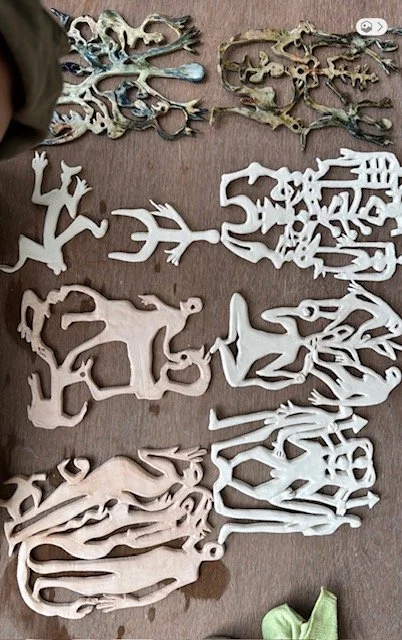
My Shadows series has become the heart of where my practice is heading. It’s an ongoing ceramic sculpture project that explores the fluid and relational nature of human identity. Drawing on Carl Jung’s ideas around the Shadow archetype and the collective unconscious, the work looks at the hidden, repressed parts of ourselves we often try to conceal. Each piece starts with small ceramic fragments that carry moments from a larger mythological narrative — creation, birth, fragmentation, and the hope of repair. I build figures around these elements, but during the making process some inevitably break. Instead of discarding them, I now deliberately keep every shard and weave them back into the composition. Those breaks have become some of the most meaningful parts of the work. The finished pieces are delicate, lace-like modular panels (around 60 × 60 cm) where individual figures and their shadows merge into bigger collective constellations. They feel fragile yet resilient — speaking to vulnerability, interdependence, and the quiet strength found in putting ourselves back together. Moving forward, I want to make Shadows larger and more immersive. I’m excited to explore bigger installations and perhaps introduce subtle interactions with light and space. I also plan to continue developing the Graveyard Portraits tiles alongside it, as both series feed each other. Success, for me, now means staying deeply connected to this process — trusting the clay, accepting the breaks, and knowing the work is quietly touching people. It has changed from wanting external validation to valuing the daily studio discipline and the personal growth that comes with it. My advice for sustaining a creative practice: Show up consistently, even on the days when nothing goes right. Protect your making time. Let accidents and limitations become part of your language. Stay close to the things that genuinely fascinate you — for me that’s mythology, historical patterns, and the unpredictability of fired clay. And be patient with yourself. The path isn’t straight, and that’s where the richness lives. Thank you for this five-day window into my studio life. It’s been meaningful to reflect on how far the work has come and where it wants to go next.